Hey there, if you’ve ever spent a late night driving down a main street and wondered why that new coffee shop’s sign stands out way more than the one next to it, chances are it’s not just the font — it’s the LED module powering it. As someone who’s been in the LED module supply game for over a decade, I get how overwhelming it is to sift through all the options out there. A quick Google search pulls up 100+ different modules, each claiming to be “the best” for signage, and half the time, the specs sound like jargon even I had to learn twice. This post is gonna cut through the noise, no fancy corporate fluff, just straight talk on what actually makes an LED module great for signs — and why picking the wrong one can turn your sign into a flop. LED Module

First off, let’s stop treating all LED modules like they’re interchangeable. A module that works for a tiny shop’s 12-inch backlit sign is gonna die within 6 months if you stick it on a highway billboard. Signage has super specific needs, right? It’s not like lighting your living room — your sign needs to be visible from 50 feet away, hold up in rain or extreme heat, and look consistent when it’s on 12 hours a day, 7 days a week. If you cut corners here, you’re not just throwing money away on replacement modules — you’re alienating customers, too. I’ve seen it happen: a restaurant in a suburban strip mall went with a cheap module from a random supplier, and within a year, half their sign was flickering so bad people thought it was broken, not just dim. They ended up paying twice as much to swap it out later.
So what do you actually need to look for? Let’s break it down by the stuff that matters, not the random specs suppliers love to brag about.
First up: brightness (but not just brightness — uniformity). I’ve had clients come to me going “I need the brightest module possible!” and 9 times out of 10, that’s not the move. If your sign has text or a logo, you don’t want parts that are blinding and parts that are barely visible. That’s where uniformity comes in. A good module spreads light evenly across the whole surface, not just a hot spot in the middle. For example, if you’re doing a channel letter sign (those 3D letters most storefronts use), you need modules with a wide enough beam angle — usually 120 to 150 degrees — so every letter glows the same way. Too narrow, and the edges of the letter will look dim, like someone forgot to turn on half the sign. Too wide, and you’re wasting light spilling onto the wall instead of out to where people are walking. Pro tip: when testing modules, hold it up a foot away from a piece of white paper. If you see a big bright circle in the center and the edges fade fast, skip it. That’s gonna look terrible on a sign that’s meant to be read from far away.
Next, durability — this is non-negotiable for outdoor signs. How many times have you seen a sign on a building where the letters are half-black, or flickering nonstop? 90% of the time, that’s a module that couldn’t handle the elements. Let’s be real: signs live outside, sometimes in 100°F heat in the desert, sometimes in freezing rain in the Pacific Northwest, sometimes in the middle of a saltwater coastal town. Cheap modules use flimsy resin that cracks when it gets cold, or poorly sealed circuits that let water seep in, killing the diodes fast. The ones I recommend for most signage are IP67 rated — that means they’re dust-tight and can handle being submerged in up to 1 meter of water for 30 minutes. Wait, but what about “IP65”? Yeah, that’s fine for indoor signs or very sheltered spots, but if your sign is exposed to rain, snow, or wind-blown debris, go IP67. Also, check the thermal management. LEDs generate heat, and too much heat kills their lifespan faster than anything. Look for modules with aluminum backing — it dissipates heat way better than plastic. I’ve had clients use modules with plastic backings on highway signs, and within a year, their diodes were at 70% brightness, vs. the aluminum-backed ones that were still at 95% after 3 years. That’s a huge difference in long-term cost.
Then there’s color quality and consistency. Let’s say you own a pizza place and your logo is a specific bright red. You don’t want the left side of your sign to be a pinkish-red and the right side to be an orange-red. Color consistency is everything here. That’s why we grade our modules by color temperature and CRI — wait, no, CRI is for color rendering, but for signage, it’s all about “binning.” Binning is when manufacturers sort LEDs by their color and brightness so every module from the same bin matches. If you mix bins, you get that patchy look no one wants. For most signs, we use 2700K to 3000K warm white for backlit signs (it looks cozy and inviting for cafes, restaurants, shops) and 4000K to 5000K cool white for hard-to-read signs like highway billboards or real estate signs — it’s brighter and cuts through glare better. If you’re doing a colored sign, like a logo with blue or green, make sure the modules are for full-color (RGB) or single-color applications. I’ve seen people use white modules for a blue sign, and it just looks gray. Trust me, that’s a mistake no one wants to explain to their boss.
Now, let’s talk about power efficiency — because everyone hates high electric bills. A lot of suppliers will tell you their modules are “energy-efficient!” but what does that actually mean? Look for modules with a high lumen-per-watt (lm/W) rating. Anything above 120 lm/W is solid, 150+ is top-tier. But here’s the catch: higher lm/W doesn’t always mean better. You don’t want a module that’s so efficient it cuts corners on durability. We’ve tested modules from suppliers with 180 lm/W, but their lifespan was only 20,000 hours vs. our 50,000 hours. That means you’re replacing them twice as often, which eats into savings. Also, check if they’re dimmable? Wait, do you need dimming? Some clients want their signs dimmer at night to save power, but if your sign is for a 24-hour gas station, dimming probably isn’t necessary. Make sure you’re not paying extra for features you don’t need.
Wait, let’s get specific on use cases, because “best” depends on what you’re using the sign for. That’s the biggest mistake people make — they pick a module based on a generic “top list” instead of their actual sign’s needs.
-
Channel Letter Signs (storefront 3D letters): These are the most common, right? You want small, compact modules with 120-degree beam angle, IP67, aluminum backing, and warm white (or your color) consistency. I recommend our SMD 2835 modules for this — they’re small enough to fit inside most channel letters, uniform light, and last 50,000 hours. We’ve had a client with a 10-year-old sign using these that still works perfectly.
-
Backlit Panel Signs (menu boards, wall displays): For these, you need modules with a wider beam angle (150 degrees) so the whole panel glows evenly, no hot spots. Our SMD 3030 modules work great here — they have a longer lifespan, and the light is super uniform, so your menu items pop, not just the edges.
-
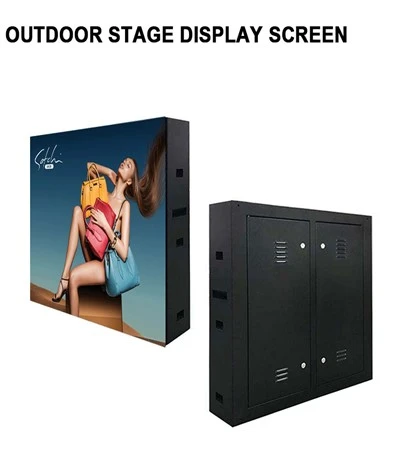
Outdoor Billboards / Highway Signs: These need to be visible from far away, so you want high brightness (5000K cool white), IP67, and high impact resistance. Our high-power COB modules are made for this — they produce 1800 lumens per module, which is enough to light a 10×20 foot billboard, and they can handle wind, rain, and extreme temps. We had a client put these on a highway billboard in Arizona, and even in the 110°F summer heat, they’ve been going strong for 4 years.
-
Small Indoor Signs (office signs, retail window signs): Here you can save a little, but still don’t go cheap. IP65 is fine, our SMD 2216 modules are perfect — small, low-power, consistent, and way cheaper than the high-output ones for outdoor use.
Now, what are the red flags to watch out for when buying modules? Let’s list these, because there are a lot of scammers out there.
-
No datasheet or spec info: If a supplier can’t tell you the lumen rating, IP rating, lifespan, or bin grade, walk away. We provide a full spec sheet for every module, including test results, so you know exactly what you’re getting.
-
Super low prices: If a module is half the price of everyone else, it’s probably using cheap diodes or no heat dissipation. We once had a client buy $100 worth of cheap modules from a random online seller, and they died in 2 months. We replaced them with our modules, and they’ve been going for 3 years. The difference was worth every extra dollar.
-
No warranty: A reputable supplier will stand behind their modules with at least a 1-year warranty, some even 3 years. If the supplier won’t give you a warranty, they don’t believe in their product. Our modules come with a 3-year warranty, and we’ll replace any that fail during that period — no hoops to jump through.
-
Vague “brightness” claims: If they say “super bright” or “ultra-bright” without a number in lumens, it’s just marketing. Ask for the actual lumen output at a 1-meter distance. That’s the only way to compare.
Wait, also, let’s talk about installation. Even the best module is useless if it’s installed wrong, but that’s not just the installer’s fault. Make sure the module’s voltage matches your power supply. Most signs run on 12V DC or 24V DC, so don’t buy a 110V module — that’s a quick way to blow them out. Also, leave enough space between modules. If they’re too close, you get hot spots; too far apart, dim spots. We usually suggest 2 to 3 modules per square foot for most channel letters, but it depends on the size of the letters. If you’re not sure, ask the supplier — we help our clients with installation tips all the time, no extra charge.
Now, let’s get back to the original question: what’s the best LED module for signage? It’s not a one-size-fits-all answer, but the sweet spot for most businesses (storefronts, cafes, restaurants, retail) is high-quality SMD modules with IP67 rating, 50,000 hour lifespan, and consistent binning. For larger outdoor signs, COB modules with high lumen output are the way to go. For indoor small signs, compact SMD modules that are budget-friendly work great.
But here’s the thing: I’ve seen a lot of suppliers push their own “top” module, but the best one for you depends on your sign’s size, location, and how long you want it to last. If you’re tired of modules that die, look patchy, or cost a fortune to maintain, let’s talk. I’ve worked with thousands of sign makers and business owners, and I can help you pick the right module for your specific project — no hard sell, no confusing jargon, just honest advice. We also offer bulk discounts for large projects, and fast shipping so you don’t have to wait around for your sign to get installed.
Don’t let a bad module ruin your sign. A good sign isn’t just about the design — it’s about the tech behind it that makes it stand out, day and night, rain or shine. Reach out to us to chat through your needs, and we’ll hook you up with the right modules at a price that makes sense.
Indoor Transparent LED Display References:
- Energy Star. (2022). LED Lighting for Commercial Signage: Efficiency and Performance Guidelines.
- Illuminating Engineering Society (IES). (2021). Lighting for Outdoor Signs: Recommended Practice.
- National Electric Manufacturers Association (NEMA). (2020). IP Rating Standards for LED Sign Modules.
- LEDinside. (2023). Global LED Module Market Report: Applications for Signage.
Shenzhen Starcolor Optoelectronics Co., Ltd.
As one of the most professional led module manufacturers and suppliers in China, we’re featured by quality products and good price. Please rest assured to wholesale discount led module in stock here from our factory. Customized orders are welcome.
Address: 2nd floor, Building A, Hongjingda Industrial Park, Shiyan town, Bao’an District, Shenzhen
E-mail: starcolorled@outlook.com
WebSite: https://www.starcolordisplay.com/
