In the realm of material science and industrial manufacturing, the role of homogenizing agents is both crucial and multifaceted. As a supplier of high – quality homogenizing agents, I’ve witnessed firsthand how these substances can significantly influence the rheological properties of mixtures. Rheology, the study of the flow and deformation of matter, is a fundamental aspect in various industries, from food and beverage to cosmetics and pharmaceuticals. Understanding how a homogenizing agent impacts the rheological behavior of a mixture is not only academically interesting but also of great practical importance for optimizing product performance. Homogenizing Agent
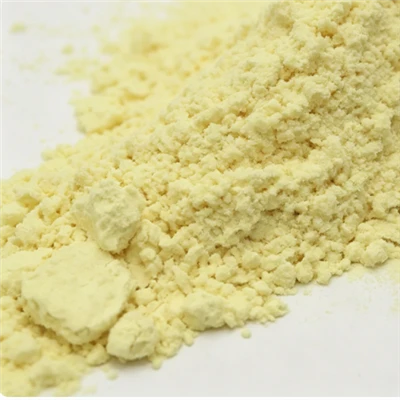
The Basics of Homogenizing Agents
A homogenizing agent is a substance that promotes the uniform distribution of components within a mixture. It works by reducing the size of particles or droplets and preventing their aggregation. In a heterogeneous mixture, different phases or components tend to separate over time due to differences in density, solubility, or other physical properties. Homogenizing agents act to counteract this separation by creating a more stable and uniform dispersion.
There are several types of homogenizing agents, including surfactants, emulsifiers, and stabilizers. Surfactants, for example, have a unique molecular structure with a hydrophilic (water – loving) head and a hydrophobic (water – hating) tail. This structure allows them to lower the surface tension between two immiscible phases, such as oil and water, and form stable emulsions. Emulsifiers are a specific type of surfactant that are particularly effective in creating and maintaining oil – in – water or water – in – oil emulsions. Stabilizers, on the other hand, help to prevent the breakdown of the dispersed phase by providing a physical or chemical barrier around the particles or droplets.
Impact on Viscosity
One of the most significant ways a homogenizing agent influences the rheological properties of a mixture is through its effect on viscosity. Viscosity is a measure of a fluid’s resistance to flow. In many industrial processes, controlling viscosity is essential for ensuring proper handling, processing, and end – use performance of the product.
When a homogenizing agent is added to a mixture, it can either increase or decrease the viscosity, depending on the nature of the agent and the components of the mixture. In some cases, homogenizing agents can cause an increase in viscosity by forming a network structure within the mixture. For example, in a food product like mayonnaise, emulsifiers help to create a stable oil – in – water emulsion. The emulsifier molecules surround the oil droplets, preventing them from coalescing. As a result, the mayonnaise has a higher viscosity, which gives it a thick and creamy texture.
Conversely, homogenizing agents can also reduce viscosity. Some surfactants can disrupt the intermolecular forces between the components of a mixture, making it easier for the molecules to move past each other. This is often the case in some industrial lubricants, where homogenizing agents are used to reduce the friction and improve the flow properties of the lubricant.
Influence on Shear Thinning and Thickening
Shear thinning and shear thickening are two important rheological phenomena that describe how the viscosity of a fluid changes under the influence of shear stress. Shear stress is the force per unit area that causes a fluid to deform or flow.
A homogenizing agent can play a significant role in determining whether a mixture exhibits shear thinning or shear thickening behavior. In shear – thinning fluids, the viscosity decreases as the shear rate increases. This is a common behavior in many polymer solutions and suspensions. Homogenizing agents can help to break down the aggregates or network structures in these mixtures, allowing the components to flow more easily under higher shear rates. For example, in paint formulations, homogenizing agents are used to ensure that the paint can be easily applied with a brush or roller. When shear stress is applied during the painting process, the viscosity of the paint decreases, making it more fluid.
On the other hand, shear – thickening fluids have an increase in viscosity as the shear rate increases. This behavior is often observed in some concentrated suspensions, such as cornstarch in water. Homogenizing agents can sometimes enhance the shear – thickening effect by promoting the formation of larger aggregates or network structures under high shear conditions. This can be useful in applications where a sudden increase in viscosity is desired, such as in some protective coatings or shock – absorbing materials.
Effects on Elasticity and Viscoelasticity
Elasticity and viscoelasticity are also important rheological properties that describe a material’s ability to deform and recover its original shape. A viscoelastic material exhibits both elastic (reversible) and viscous (irreversible) behavior.
Homogenizing agents can influence the elasticity and viscoelasticity of a mixture by altering the interactions between the components. In some polymer – based mixtures, homogenizing agents can help to improve the dispersion of the polymer chains, which can enhance the elastic properties of the material. For example, in rubber compounds, homogenizing agents are used to ensure a uniform distribution of fillers and other additives. This results in a more elastic and durable rubber product.
In viscoelastic materials, the presence of a homogenizing agent can also affect the balance between the elastic and viscous components. By adjusting the concentration and type of homogenizing agent, it is possible to fine – tune the viscoelastic properties of the mixture to meet the specific requirements of the application. For instance, in some adhesives, a proper balance of viscoelasticity is needed to ensure good bonding strength and easy application.
Practical Applications
The influence of homogenizing agents on the rheological properties of mixtures has numerous practical applications across different industries.
In the food industry, homogenizing agents are used to improve the texture, stability, and shelf – life of products. In addition to mayonnaise, they are also used in dairy products, such as milk and ice cream, to prevent creaming and to ensure a smooth and uniform texture. In the beverage industry, homogenizing agents can be used to stabilize suspensions of fruit particles or to prevent the separation of oil – based flavors in soft drinks.
In the cosmetics industry, homogenizing agents play a crucial role in formulating creams, lotions, and other skincare products. They help to create stable emulsions of oil and water, which are essential for delivering active ingredients to the skin. The rheological properties of these products, such as viscosity and spreadability, are carefully controlled using homogenizing agents to ensure a pleasant user experience.
In the pharmaceutical industry, homogenizing agents are used in the formulation of oral suspensions, creams, and ointments. They help to ensure the uniform distribution of drugs and other active ingredients, which is important for consistent dosing and efficacy. The rheological properties of these formulations can also affect the ease of administration and the absorption of the drugs.
Quality Assurance and Customization
As a homogenizing agent supplier, we understand the importance of quality assurance and customization. We use advanced manufacturing processes and strict quality control measures to ensure that our homogenizing agents meet the highest standards. Our products are tested for purity, stability, and performance to ensure that they can effectively influence the rheological properties of mixtures.
We also offer customization services to meet the specific needs of our customers. Different industries and applications require different types of homogenizing agents with specific properties. For example, a food manufacturer may need a homogenizing agent that is safe for human consumption and has a specific emulsifying capacity. A pharmaceutical company may require a homogenizing agent that is compatible with the active ingredients and can provide a stable suspension.
By working closely with our customers, we can develop customized homogenizing agents that are tailored to their specific requirements. This not only helps to optimize the performance of their products but also reduces costs and improves efficiency.
Conclusion

In conclusion, homogenizing agents have a profound influence on the rheological properties of mixtures. They can affect viscosity, shear thinning and thickening behavior, elasticity, and viscoelasticity. Understanding these effects is essential for optimizing the performance of products in various industries.
Rubber Accelerators As a reliable homogenizing agent supplier, we are committed to providing high – quality products and excellent customer service. Our expertise in the field of homogenizing agents allows us to offer solutions that meet the diverse needs of our customers. If you are interested in learning more about how our homogenizing agents can improve the rheological properties of your mixtures or if you would like to discuss a potential purchase, please feel free to contact us. We look forward to the opportunity to work with you and help you achieve your product goals.
References
- Bird, R. B., Stewart, W. E., & Lightfoot, E. N. (2007). Transport Phenomena. John Wiley & Sons.
- McClements, D. J. (2005). Food Emulsions: Principles, Practice, and Techniques. CRC Press.
- Morrison, F. A. (2001). Understanding Rheology. Oxford University Press.
Heze Great Bridge Chemical Co., Ltd.
With abundant experience, we are one of the most professional homogenizing agent manufacturers and suppliers in China. We warmly welcome you to buy high quality homogenizing agent in stock here and get pricelist from our factory. Good service and reasonable price are available.
Address: No.1679 Renmin Road,Heze City,Shandong,China
E-mail: export@greatbridge-chem.com
WebSite: https://www.greatbridgechem.com/
