Hey there! As a supplier of finned tube evaporators, I often get asked about the surface area of these nifty devices and why it matters. So, let’s dive right in and break it down in a way that’s easy to understand. Finned Tube Evaporators
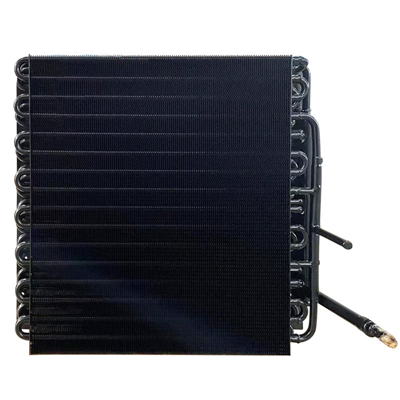
First off, what exactly is the surface area of a finned tube evaporator? Well, think of it like this. A finned tube evaporator is made up of tubes with fins attached to them. The surface area is basically the total area of all those tubes and fins combined. The tubes are where the refrigerant flows, and the fins are there to increase the area that comes into contact with the air or the fluid that needs to be cooled.
Let’s talk about how we calculate this surface area. It’s not as simple as just measuring the length and width of the tubes. The fins add a whole new level of complexity. You’ve got to consider the shape, size, and number of fins on each tube. For example, if you have a tube with a lot of thin, closely spaced fins, it’s going to have a much larger surface area compared to a tube with fewer, thicker fins.
Mathematically, to calculate the surface area of the tubes themselves, you use the formula for the lateral surface area of a cylinder (2πrh, where r is the radius of the tube and h is its height or length). But then you’ve got to account for the fins. The fins’ surface area is more complicated because of their shape. Usually, manufacturers use advanced software or empirical formulas based on a lot of testing to get an accurate estimate.
Now, why is the surface area of finned tube evaporators so important? Well, it all comes down to heat transfer. The whole purpose of an evaporator is to transfer heat from the surrounding air or fluid to the refrigerant inside the tubes. The larger the surface area, the more contact there is between the refrigerant and the air or fluid. And more contact means more efficient heat transfer.
Let’s say you have two finned tube evaporators of the same size, but one has a larger surface area due to its fin design. The one with the larger surface area will be able to cool the air or fluid much faster. This means it can handle a higher heat load, which is super important in industrial applications where you might have a lot of heat generated.
In commercial settings, like supermarkets, a larger surface area evaporator can keep the refrigerated display cases colder and more evenly. This not only helps in keeping the food fresh but also reduces energy consumption. Since the evaporator can transfer heat more efficiently, it doesn’t have to work as hard or as long, which saves on electricity bills.
Another important aspect is the cost-effectiveness. While a finned tube evaporator with a larger surface area might cost a bit more upfront, the long – term savings can be huge. You’ll see lower energy bills, and you’ll also have less wear and tear on the equipment because it’s not operating at full capacity all the time. This means fewer repairs and a longer lifespan for your evaporator.
In the chemical and pharmaceutical industries, precise temperature control is crucial. A finned tube evaporator with an appropriate surface area can ensure that the temperature remains stable during various processes. This is vital for maintaining the quality and integrity of the products being manufactured.
As a supplier, I’ve seen firsthand how different surface area designs can impact the performance of our customers’ systems. Some of our clients are looking for high – efficiency units for large – scale industrial facilities. In these cases, we recommend evaporators with a large surface area to handle the high heat loads. On the other hand, some smaller businesses might need a more compact and cost – effective option. For them, we can suggest evaporators with a more moderate surface area that still meet their specific requirements.
We also offer custom – designed finned tube evaporators. If a customer has unique needs, like a specific space constraint or a particular heat transfer requirement, we can design an evaporator with the right surface area to fit the bill. Our team of engineers uses the latest technology and materials to ensure that the evaporators we produce are of the highest quality.
When it comes to choosing a finned tube evaporator, it’s not just about the surface area. You also need to consider the type of refrigerant being used, the flow rate of the air or fluid, and the operating conditions. But the surface area is definitely one of the most important factors.
If you’re in the market for a finned tube evaporator, don’t just go for the cheapest option. Think about your long – term needs. Consider the surface area and how it will impact the efficiency and performance of your system. And if you have any questions, don’t hesitate to reach out. We’re here to help you make the best decision for your business. Whether you’re a small shop owner or a large industrial manufacturer, we have the expertise and the products to meet your requirements.
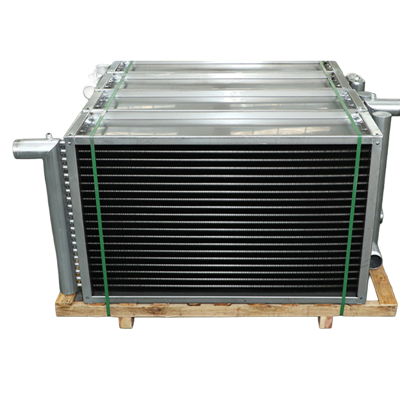
In conclusion, the surface area of a finned tube evaporator plays a crucial role in its performance and efficiency. It affects everything from heat transfer capabilities to energy consumption and cost – effectiveness. As a supplier, I’m committed to providing high – quality finned tube evaporators with the right surface area for each customer’s unique needs. If you’re interested in learning more or want to discuss your specific requirements, feel free to contact us. We’d love to have a chat and help you find the perfect finned tube evaporator for your business.
Evaporator References
- Incropera, F. P., & DeWitt, D. P. (2002). Introduction to Heat Transfer. Wiley.
- Holman, J. P. (2002). Heat Transfer. McGraw – Hill.
Xiangshui Derkang Refrigeration Equipment Co., Ltd.
Address: No. 2, Xiaojian Town Entrepreneurship Park, Xiangshui County
E-mail: 505745223@qq.com
WebSite: https://www.xsderk.com/
