As a non-standard flange supplier, I’ve spent the last 12 years troubleshooting the “forgotten half” of pressure system performance: the fasteners that hold flanges tight. I’ve stood in warehouses with plant managers who lost $80k in a single shift when a pipe flange leaked, traced the root cause not to a misformed flange but to an undersized bolt, and even helped a refinery rework 70+ connections because someone grabbed generic hardware instead of matching our custom flanges. Too many teams see fasteners as an afterthought—until that catastrophic leak, or that frustrating downtime that cuts into their quarterly numbers. If you’re working with non-standard flanges (let’s be real, 30% of flanges in process piping aren’t ANSI/ASME B16.5 standard anyway, per API 650), here’s how to pick the right fasteners without the guesswork. Non-standard Flange
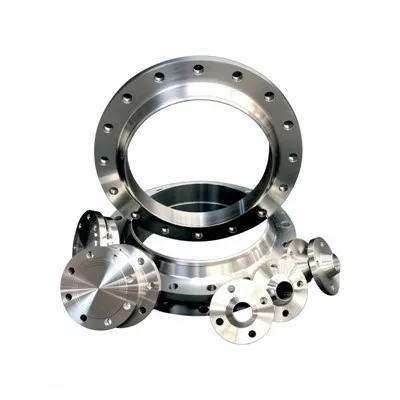
First, you can’t select a fastener in a vacuum. Non-standard flanges have unique dimensions, pressure loads, and operating environments that standard off-the-shelf parts can’t accommodate. I learned this the hard way early in my career: a midwestern chemical plant reached out for custom weld-neck flanges rated for 3,000 psi at 750°F, but the first fasteners the procurement team grabbed were ANSI Grade 8 bolts—perfect for 150 psi standard flanges, but they suffered 12% creep at that temperature, leading to 3 re-tightenings a month. We had to source B7M stud bolts with molybdenum alloy for high-temperature resistance, and a full set of 316 stainless steel nuts. That mistake cost that plant 2 weeks of downtime before they called us back to fix the fastener mismatch. So step one: map your flange’s non-standard specs first—thickness, bolt circle diameter, number of holes, load requirements—to avoid forcing a fastener that doesn’t align.
Next, material matching is non-negotiable, especially for non-standard flanges where material specs are often custom to the application. When I say material matching, I mean three layers: flange-to-fastener compatibility, operating environment, and galvanic corrosion risk. For example, if you’ve got a non-standard carbon steel flange made for a food-grade brewery’s piping, generic galvanized steel fasteners will leave zinc residue that contaminates beer batches. I’ve also seen duplex stainless steel flanges paired with regular 304 bolts—they look similar, but duplex has higher chromium and molybdenum content, and using 304 leads to crevice corrosion at the bolt-flange interface because the two metals react differently in humid or chemical environments. For our own flanges, we always flag material pairing in our custom drawings, but I can’t tell you how many engineers ignore that, only to come back with a leak months later. Another example: non-standard flanges used in offshore oil and gas need fasteners resistant to saltwater and sour gas—so we recommend super duplex stainless steel or Inconel 718 here, not just any alloy that fits the hole. Check NACE MR0175/ISO 15156 specs if you’re working with sour service; that’s non-negotiable.
Then there’s size and quantity, which get tricky with non-standard flanges because standard fastener charts don’t apply. Standard flanges have fixed bolt counts (12 for 12-inch 150# ANSI, for example), but our non-standard flanges often have 8, 10, or 14 bolt holes because the load requires more clamping force spread across a larger circle. I once had a customer order a custom 20-inch non-standard blind flange with only 8 bolt holes, thinking that was enough, but when we ran the calculations, the clamping force per bolt was 45% over the safe limit for their 2,500 psi load—they almost ordered M20 bolts, but we adjusted to 12 holes and M24 studs, which fixed the load distribution. A quick rule of thumb: the number of bolts multiplied by their tensile strength (adjusted for material) needs to exceed the maximum pressure load on the flange. But with non-standard bolt circles, you can’t just grab the next size up—measure the hole clearance: non-standard flanges often have slightly oversized holes for gasketing and alignment, so you need fasteners that fit snug but aren’t so tight they bind during installation. And don’t forget studs vs. bolts: most non-standard weld-neck flanges require studs (two nuts per stud) for even tension, whereas slip-on flanges might use hex bolts—again, check your flange’s custom design for that; we specify stud type for flanges over 300 psi as standard.
Gasket compatibility ties directly to fastener selection, and this is where non-standard flange projects go off the rails every time. The gasket is the middle layer that needs even clamping force to seal, so if your fasteners don’t apply uniform tension around the bolt circle, the gasket will have hot spots where it compresses too little or too much. I worked with a power plant that had a non-standard flange for a steam line with a spiral-wound gasket; they used standard bolts and tightened them in a crisscross pattern, but their non-standard flange had an asymmetric bolt circle (we had machined it that way to fit existing piping). The crisscross pattern left one side of the gasket under-compressed, leading to a 2% steam leak that ran for 6 months before we reworked it. For non-standard flanges, you also have to adjust fastener length to account for the gasket thickness and flange thickness—too short, and you can’t get the nut tight enough; too long, and the threads stick out, risking interference with adjacent piping. We always calculate fastener length as: (flange thickness + gasket thickness) x 2 + 1/4 inch for nut engagement—simple, but people skip this all the time for non-standard projects.
Temperature and pressure ratings are the make-or-break factors for fasteners on any flange, but non-standard ones are often rated for extreme conditions that standard fasteners can’t handle. API 6AA says for flanges over 10,000 psi, you need fasteners rated for that specific pressure, not just material. A recent project for a geothermal plant: their non-standard flanges were rated for 550°F and 4,000 psi, and the engineer tried to use A193 B7 bolts, which max out at 700°F for short periods—but at 550°F, their tensile strength drops by 20%, making them unsafe. We swapped in A193 B16 studs, which retain their strength at that temperature, and added high-temperature anti-seize compound to prevent galling. Anti-seize is another often-overlooked detail: non-standard flanges often have custom installation requirements, and galling (where bolts stick in the holes) can lead to uneven tension or broken fasteners during disassembly. We recommend nickel-based anti-seize for most high-temperature or corrosive applications, and copper-based for low-pressure, food-grade uses.
Installation method matters too, and you can’t ignore it when selecting fasteners for non-standard flanges. Preloading fasteners to the correct torque or tension is critical, but non-standard flanges might not have the same torque specs as standard ANSI flanges. For example, a non-standard flange for a cryogenic piping system (operating at -320°F) needs fasteners that won’t become brittle—we suggest A193 B8M studs here, and instead of torque, we recommend tensioning with hydraulic bolt loaders, because torque can vary by up to 30% based on friction from anti-seize or bolt condition. I’ve seen teams torque non-standard flange bolts with a regular wrench and end up with 50% variation in tension, leading to leaks. For non-standard projects, we always provide custom torque or tension specs based on the flange’s load, not just generic tables—something standard flange suppliers don’t usually bother with.
Wait, but let’s talk about a common myth I hear all the time: “If the fastener fits the hole, it works.” That’s only true if you’re using a standard flange. For non-standard flanges, fit isn’t enough—material, load, environment, and installation all have to align. I once had a customer who ordered non-standard 16-inch flanges for a water treatment plant, grabbed M16 bolts from their stock, and wondered why they leaked. The flanges had 18mm bolt holes, so M16 bolts were too small, leading to uneven clamping force—they thought the hole was just a little bigger, so the bolt would “work.” That’s the kind of small mistake that turns a 2-hour install into a 2-day repair. Our team always sends a detailed spec sheet with every non-standard flange we ship, outlining exact fastener size, material, type, and even anti-seize recommendation, because we know how easy it is to grab the wrong part when you’re working with a custom component.
Another angle: long-term maintenance. Non-standard flanges are often used in critical, hard-to-reach locations—offshore, refineries, remote mining sites—so your fasteners need to be durable enough to last between planned shutdowns. I have a client in the oil sands who uses non-standard flanges for pipeline connections in remote areas, and they used to use generic bolts that corroded in 18 months, leading to unplanned shutdowns that cost $150k each. We switched them to carbon steel flanges with hot-dipped galvanized fasteners rated for outdoor, high-humidity environments, and now those connections last 5+ years. The cost of the fasteners went up 10%, but the downtime cost went down 80%—a no-brainer, but only if you factor in long-term maintenance when selecting fasteners, not just upfront cost.
Let’s wrap this up with a quick checklist I’ve developed over years of working on non-standard flange projects, because I know people need actionable steps, not just theory. 1. Cross-reference your non-standard flange’s custom dimensions (bolt count, circle diameter, hole size, thickness) with fastener specs—don’t force a standard size. 2. Match fastener material to your flange material, operating environment, and industry standards (NACE, API, ASME) to avoid corrosion. 3. Calculate fastener size and length based on load requirements, not just hole fit—account for gasket thickness and nut engagement. 4. Verify compatibility with your gasket material to ensure uniform clamping force. 5. Align fastener temperature and pressure ratings with your flange’s custom operating specs. 6. Confirm installation method (torque vs. tension) and get custom specs, not generic tables. 7. Plan for long-term maintenance by selecting fasteners rated for your application’s lifespan.
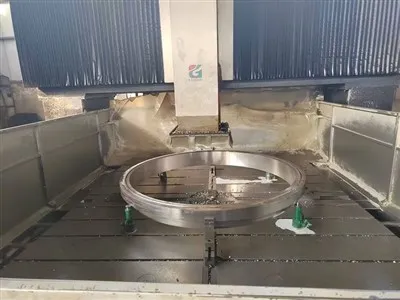
At the end of the day, non-standard flanges solve unique problems—they’re for custom piping, extreme environments, legacy system repairs where standard parts won’t work. The fasteners that hold them together shouldn’t be an afterthought. Too many teams assume fasteners are interchangeable, but as someone who’s seen the cost of that mistake first-hand, I can tell you that the right fastener for your custom flange is the difference between a smooth installation and a costly, disruptive leak. If you’re working on a non-standard flange project and want to make sure you’re picking the right fasteners, or if you need custom flanges paired with compatible fasteners, reach out to our team to discuss your needs. We’ve supported projects across industries, from food and beverage to oil and gas, and can help you avoid the mistakes that waste time and money.
En1092-1 Flange API 650 (Welded Tanks for Oil Storage), API 6AA (Design and Operation of High-Pressure Wells), NACE MR0175/ISO 15156 (Materials for Use in Sour Oil and Gas Environments), ASME B16.5 (Pipe Flanges and Flanged Fittings).
Shanxi Xinshunda Flange Manufacturing Co., Ltd.
As one of the most professional non-standard flange manufacturers and suppliers in China, we also support customized service with competitive price. We warmly welcome you to wholesale high quality non-standard flange for sale here from our factory. For quotation, contact us now.
Address: Zhunagli Industrial Zone,jinchang Town,dingxiang,shanxi,china
E-mail: sales01@xinflange.com
WebSite: https://www.xinflange.com/
