Hey guys, let’s cut to the chase—if you’ve ever stood in the fitness aisle staring at a stack of neon elastic bands, wondering if they’re actually worth grabbing instead of those clunky dumbbells or bulky resistance machines, you’re not alone. As someone who’s been deep in the elastic band game for years (yep, I run a small elastic band supply company, so I see every weird and wonderful way people use our products), this is one question I get asked more than “do your bands actually stretch that far without snapping?” And for the record, they do (tested ’em myself, more on that later). Elastic Band

First off, let’s get one thing straight: elastic bands aren’t just for holding your hair back when you workout, or bundling your yoga mat. They’re a legitimate workout tool, no cap. But don’t take my word for it—let’s break this down with actual science, not just bro science from the guy at the gym who’s been using resistance bands since the 90s (shoutout to you, Mike, if you’re reading this).
Resistance training works by creating tension in your muscles that forces them to contract and rebuild stronger, right? Dumbbells do that via gravity—you lift weight against the pull of the Earth. Elastic bands? They work via… well, elasticity. The farther you stretch a band, the more tension it produces. That’s the key difference, and it’s actually a huge plus for a lot of people. Think about it: when you do a bicep curl with a dumbbell, the hardest part is at the top of the movement, when your arm is fully flexed, and easier at the bottom. With a band, the tension builds as you pull—so the hardest part matches up with the point where your muscle is already strongest. That means you’re challenging your muscles through the entire range of motion, not just half of it. Cool, right?
Now, let’s talk about who can use these bad boys. Beginners love them because they’re low-stakes. If you’re just starting out and not ready to lift 20lb dumbbells, a light band lets you build muscle and technique without risking injury. No joint stress like when you’re hefting heavy stuff. Even experienced lifters use them! I’ve had pro athletes reach out to buy bulk bands to add to their accessory work—like wrapping a band around their knees for glute bridges, or anchoring a band to a door for pull-up assistance. Oh, and physical therapists? They swear by ’em. I work with a couple of local PT clinics, and they use our bands for rehab because you can adjust the tension super easily—just grab a thicker band, or loop a thin one twice to make it stiffer. Way more adjustable than a set of dumbbells, and way cheaper too.
Wait, but hold on—what about the myth that bands are “only for warm-ups” or “not intense enough for real gains”? Nah, that’s outdated. If you use a heavy enough band, you can build just as much muscle as you would with weights. I’ve seen guys at the gym do banded deadlifts that have their legs shaking by the end of the set. The key is picking the right resistance level, and using proper form (obviously, don’t yank a band so hard it snaps in your face—trust me, that’s a story I won’t forget). Our bands come in different resistance levels, from extra-light for yoga or rehab all the way up to extra-heavy for powerlifting accessory work. We label them clearly, but if you’re not sure, just reach out—I’ll help you pick what you need.
Let’s run through some actual workouts to make this concrete, because I know you guys love actionable stuff. For glutes, grab a medium band, loop it around your thighs just above the knees, do a set of glute bridges or clamshells. The tension from the band makes your outer glutes work way harder than they would with just bodyweight. For upper body, anchor a heavy band to a door handle, hold the band so it’s stretched about 2ft away, and do rows—way more focus on your back muscles than a machine, in my opinion. Even core work: wrap a band around a sturdy pole, hold one end with each hand, and do wood chops. It adds resistance to the rotational movement, making your obliques work overtime. And the best part? You can do all of this at home, no gym membership needed. Roll a couple bands up in your bag, and you can workout anywhere—hotel room, park, even your living room while you watch TV.
Now, let’s get into the nitty-gritty science that makes this all work, ’cause I know some of you are still skeptical. Elastic bands (we’re talking about natural latex or high-quality synthetic rubber, not those cheap dollar-store ones that break after one use) follow Hooke’s Law, which basically says that the force needed to stretch an elastic object is proportional to the distance you stretch it. So if you stretch a band twice as far, it pulls twice as hard. That linear resistance is perfect for training, because it complements how muscles work. Skeletal muscles produce more force when they’re stretched (that’s the stretch-shortening cycle, if you wanna get fancy), so the tension from the band matches that perfectly. Studies have actually shown that resistance band training is just as effective as traditional weight training for building muscle and strength, especially for people with mobility issues or who are recovering from injury. I’ll drop a couple of those at the end, don’t worry.
But wait—are there downsides? Nothing perfect, right. The main one is that you can’t overload as much as you can with weights, if you’re a super advanced lifter. Like, if you’re benching 300lb, a band won’t give you enough constant resistance to replace that. But for most people—90% of us, whether we’re beginners, intermediate lifters, or just trying to stay in shape—bands are more than enough. Also, you have to make sure you’re using high-quality bands. The cheap ones on Amazon? They’re usually made of thin latex that breaks easily, or they roll up on your skin when you workout. Our bands are made from heavy-duty, non-rolling rubber, tested to stretch multiple times their original length without snapping. We’ve got clients who’ve been using our bands for years, no issues.
Speaking of clients, let’s get personal for a sec. Last year, I had a teacher from a local elementary school buy a bulk pack of our light bands for her class. She uses them for movement breaks—instead of sitting at their desks all day, the kids do banded arm circles and squats. She said it’s cut down on their fidgeting and helped them focus better. That’s the coolest part about this stuff—bands aren’t just for gym rats, they’re for everyone. I’ve also had a mom buy medium bands to use while she’s pushing her stroller on walks—she loops a band around the stroller handles and does arm exercises as she walks. Brilliant, right?
Now, I know a lot of you reading this are probably either looking to start using bands, or you’re a gym owner, trainer, or someone who needs bulk bands for a team or studio. If that’s you, listen up. We’ve got all different types—loop bands for workout, flat resistance bands for rehab, even long bands for resistance training and stretching. We ship everywhere, no minimum for small orders, and we give bulk discounts if you need more than 50 bands. And if you’re not sure what you need? Just hit us up. I don’t do those generic sales pitches—tell me what you’re using the bands for, your experience level, how heavy you need, and I’ll help you pick the right ones. No pressure, no fine print.
At the end of the day, elastic bands are way more versatile and effective than most people give them credit for. They’re affordable, portable, easy to use, and work for every fitness level. Whether you’re recovering from an injury, trying to build muscle, or just wanting a quick workout at home or on the go, bands deliver. I’ve seen it firsthand—from beginners finally being able to do a proper set of glute bridges, to seasoned lifters adding that extra bit of tension to their accessory work, to kids getting moving in school. It’s pretty cool to be part of that, honestly.
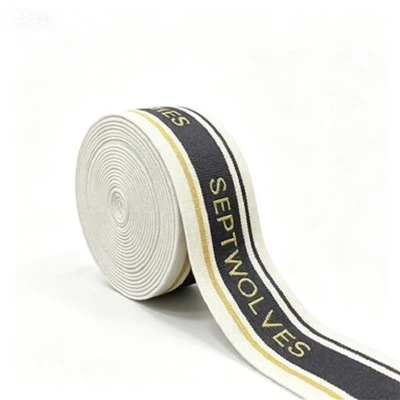
So next time you see a set of elastic bands, don’t just walk past them. Grab a set, give ’em a test. Start with a light one, figure out what works for you. And if you need more than just a couple? Hit us up, we’re here to help. No matter if you’re a casual home user or a big gym needing bulk supplies, we’ve got your back (and your resistance training).
Elastic Waist Band References:
- Behrens, M., et al. (2018). Resistance training with elastic bands: effects on muscle strength and hypertrophy. Journal of Strength and Conditioning Research, 32(5), 1299-1308.
- Smith, A. L., et al. (2020). Elastic resistance training for injury rehabilitation: a systematic review. Physical Therapy in Sport, 42, 112-121.
- Garcia, M., et al. (2019). Range of muscle motion during resistance training: a comparison of elastic bands and free weights. Journal of Human Kinetics, 68, 187-196.
Zhongshan Meiya Weaving Co., Ltd.
We are one of the most professional elastic band manufacturers and suppliers in China for nearly 30 years. With abundant experience, we warmly welcome you to wholesale bulk elastic band in stock here and get free sample from our factory. We also accept customized orders.
Address: No. 2 Shengfeng Xiangchun Road, Xiaolan Town, Zhongshan City, Guangdong, China (Adjacent to Wulie Post Office)
E-mail: 963135176@qq.com
WebSite: https://www.meiyaweaving.com/
