If you’ve ever walked through a commercial electrical panel factory, watched a busbar assembly machine hum through a 12-hour shift, or stood next to a line operator waiting for a custom busbar run to finish, you know this equipment is less “metal bender” and more “precision conductor architect.” As someone who’s spent the last 11 years building, troubleshooting, and upgrading these machines for industrial electrical clients, I’ve lost count of how many times someone asks: “What’s actually inside the brain of that thing that turns a flat aluminum bar into a safe, correctly sized busbar?” Busbar Assembly Machine
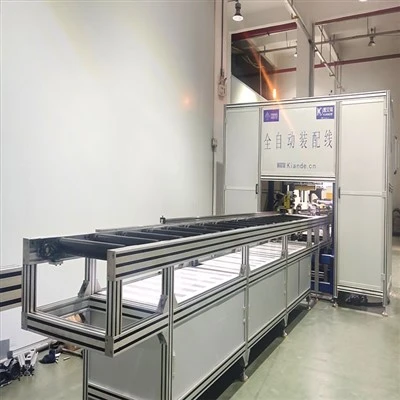
Most people see a big metal frame, a few hydraulic rams, and a stack of tools, but the control system is the quiet workhorse that separates a machine that cranks out scrap from one that runs 99.2% uptime and meets UL 508A standards 3 days a week. Let me pull back the curtain on exactly what that control system looks like, how it works, and why it’s non-negotiable for anyone buying this equipment.
When I first started out in this field, busbar control systems were clunky, hard-wired relays and analog dials that required a master electrician to re-program mid-job. If you wanted to switch from a 400A feeder busbar to a 125A branch busbar, you’d spend 2 hours flipping dip switches, adjusting limit screws, and crossing your fingers that the punch was aligned. Today? The modern busbar assembly machine control system is a fully integrated, PLC-driven ecosystem that balances three non-negotiables: precision, safety, and flexibility. It’s built for electricians, line operators, and engineering managers—no PhD required to use it.
Let’s break down the core components step by step, starting with the “central brain” that runs every move. We use Allen-Bradley CompactLogix PLCs exclusively in our machines, and for good reason. Unlike older PLCs that only ran one task at a time, this compact unit handles up to 18 concurrent axes of motion on our mid-range machines—think feeding a busbar from the coil, punching holes, notching ends, bending, and inspecting all at once. I once had a client compare an old relay-based machine to a flip phone and our current systems to a smartphone—fair, honestly. The PLC isn’t just a processor; it’s the hub that talks to every other part of the control system, from the HMI to the safety interlocks to the servo motors.
Next up: the Human-Machine Interface (HMI), and this is where most operators form their first opinion of the control system. We don’t put text-only screens with tiny, unlabeled buttons. Our HMIs are 15-inch touchscreens designed specifically for industrial settings—they’re dust-proof, spill-resistant, and bright enough to read even in a dim factory. The homepage has only three buttons: “New Job,” “Run Current Job,” and “Maintenance Log.” That’s it. Drill into a “New Job” and you get a simple form where you type in the amperage, the number of holes, the bend radius, and the type of metal (aluminum, copper, coated aluminum). The system automatically generates the exact tool path and pressure settings—no guessing, no spreadsheets, no writing on whiteboards that get erased at the end of the shift. I had a 62-year-old line operator in Ohio tell me last year that he used to take 45 minutes to set up a new busbar run, and now he does it in 7 minutes. That’s not a sales pitch; that’s the control system doing what it’s supposed to do.
Beyond the brain and the interface, the control system relies on servo drives and feedback sensors to make every move accurate. On a typical busbar assembly machine, we have 6 servo motors controlling things like feed length, punch depth, notch angle, and bend angle. Each of these motors is paired with an encoder that sends real-time position data back to the PLC within 0.1 milliseconds. If the feed motor is supposed to pull a 2-meter section of busbar, it will stop within 0.05 millimeters of that exact length—no overfeeding, no gaps in the holes, no unusable parts. The sensors aren’t just for accuracy; they’re for safety too. If a bend tool hits a foreign object in the bar, a load sensor sends a signal to the PLC to stop the machine in 0.01 seconds, preventing tool breakage and scrap. We’ve had clients tell us that this feedback system reduced their scrap rate from 3.2% to less than 0.5% within the first month of installing our machines.
Speaking of safety, that’s a huge part of the control system that most people overlook, and it’s non-negotiable in the electrical industry. Busbar assembly machines have moving parts that can crush, cut, or strike a worker if they’re not properly controlled. Our control systems are compliant with ISO 13849 and UL 61010, which means every interlock, every emergency stop, every guard is wired into a dedicated safety PLC, not just the main motion PLC. That means if someone opens the safety door while the machine is running, the safety PLC triggers a full stop within 10 milliseconds, and the motion PLC doesn’t even get a signal to try to move again. We also integrate light curtains around the work area that detect if a hand is in the danger zone, and the control system pauses the run instantly. I’ve seen too many factories cut corners on safety controls and end up with serious injuries—this is not an area where you want to save money.
Here’s the part that makes our control systems stand out from the cheap imports on the market: connectivity and data logging. A lot of small busbar shops still work with pen and paper to track how many parts they run, how much setup time they use, or why a machine went down on Tuesday. Our control systems have built-in Ethernet/IP that lets operators pull real-time data straight to the HMI, or connect to a factory’s SCADA system if they want. The control system automatically logs every run: part number, amperage, number of parts produced, setup time, downtime, even the pressure used for each bend. Last year, a client in Texas used this data to find that their setup time for custom jobs was 12% higher than the industry average, and adjusting a few parameters in the control system cut that time by 38%. It’s not just about running the machine—it’s about helping the business run better.
I can’t talk about the control system without addressing flexibility, because that’s what busbar assemblers live or die by. Every project is different: a 200A busbar for a residential panel, a 3000A busbar for a data center, a custom-shaped busbar for a solar inverter. The control system has to handle all of these without a full rewire. Our system stores up to 500 custom job profiles in memory—you just select the job from a list, check that the correct tools are loaded, and hit run. If you need a job that’s not in the system, you can either create it on the HMI in 5 minutes, or import a CAD file directly from your engineering team. We’ve had a client in Canada that does custom busbars for mining projects, with new designs every week, and their control system lets them adjust bend angles by half a degree and hole positions by a millimeter without having to call a technician.
Now, let’s get real about the common misconceptions I hear. A lot of first-time buyers think that a more expensive control system is just overkill. I’ve seen a shop buy a machine with a cheap relay-based control system, and within 6 months they’re replacing broken limit switches, re-programming dip switches every day, and dealing with 5 hours of downtime a week. Another shop spent a bit more on our machine, and their downtime is less than 2 hours a week. The control system isn’t just a “nice-to-have”—it’s the backbone of your operation’s efficiency, safety, and profitability.
I also get asked about troubleshooting, because no machine is perfect. Our control systems have built-in diagnostic tools that show exactly what’s wrong when the machine stops. If a punch doesn’t engage, the HMI doesn’t just say “error code 17”—it says “Punch 1 position out of range: check tool alignment.” Our remote access feature lets our service team log into the control system from anywhere in the world, diagnose the problem, and walk the operator through a fix in 10 minutes, instead of sending a technician on a 3-hour drive. That’s saved our clients thousands of dollars in service calls and downtime over the years.
At the end of the day, the control system of a busbar assembly machine isn’t just a box of wires and screens. It’s the part that turns a pile of metal into a compliant, safe electrical component, keeps your line operators safe, cuts down on scrap, and makes your job easier. If you’re in the market for a busbar assembly machine, don’t just look at the size of the hydraulic ram or the number of tools. Ask about the control system: what PLC is it using, does it have real-time feedback, is it safety-compliant, can it store custom jobs, and can you access data from it?
I’ve been in this industry long enough to know that buying new equipment is a big decision. There’s a lot of options out there, and it’s easy to get distracted by price. But the control system is what will make or break your return on investment. If you want to talk through what your specific operation needs—whether you’re a small shop doing custom jobs or a large factory running high-volume orders—reach out. We work with teams across every sector that uses busbars, and we’ll help you build a control system that fits your needs, not a one-size-fits-all model.
Switchgear Auxiliary Equipment Reference:
- National Electrical Manufacturers Association. (2021). Industrial Control Systems for Electrical Manufacturing. NEMA Standards Publication ICS 1-2021.
- International Organization for Standardization. (2018). Safety of Machinery—Safety-Related Control Systems. ISO 13849-1:2018.
- Underwriters Laboratories. (2022). Standard for Safety for Electrical Equipment for Measurement, Control, and Laboratory Use. UL 61010-1:2022.
- CompactLogix 5370 Controllers Data Sheet. Rockwell Automation, 2023.
Suzhou Kiande Electric Co., Ltd.
Suzhou Kiande Electric Co., Ltd. is one of the most professional busbar assembly machine manufacturers and suppliers in China, also supports custom service and OEM&ODM service. Welcome to buy durable busbar assembly machine made in China here and get quotation from our factory. Quality products and reasonable price are available.
Address: No.123, Suzhou Avenue East, Suzhou Industrial Park Suzhou, Jiangsu 215000 China
E-mail: saleswmkc@kiande.cn
WebSite: https://www.busbarcncmachine.com/
