Hey there! If you’ve ever shopped for a towed lime spreader—whether you’re a small farm owner, a landscaper, or someone looking to prep a big patch of soil for a new lawn—you’ve probably wondered: how much lime can one of these actually hold? Spoiler alert: it’s not a one-size-fits-all number, and that’s exactly where I come in. I’ve been selling towed lime spreaders for years, and I get questions like this every single day. Let’s break it down like we’re chatting over a coffee at a farm supply trade show—no jargon, no fancy charts, just real talk. Towed Lime Spreader
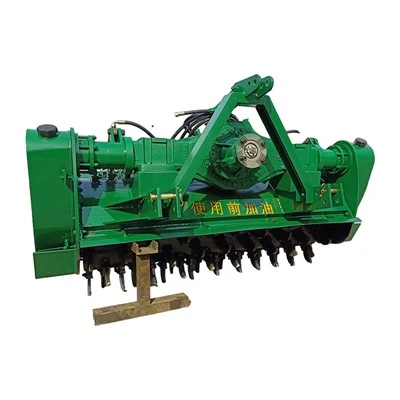
First off, let’s make sure we’re on the same page about what a towed lime spreader even is. This isn’t the tiny hand-held spreader you use for your front yard flower bed. It’s the one you hook to your ATV, tractor, or even a small utility vehicle for bigger jobs. You don’t carry it—it gets towed. That right there is the biggest clue to how much it can hold: the size of the tow vehicle you’re using, plus how much weight you want to move without killing your ride or burning through way too much fuel.
Now, let’s get to the numbers. For a long time, I’ve seen folks guess between 500 pounds and 2,000 pounds, but the sweet spot for most people who actually use these spreaders (not just test them in a parking lot) is between 800 and 1,500 pounds. Wait, why the range? Because “how much you need” depends on what you’re spreading lime for. If you’re tending to a 1-acre backyard garden plot, 500 pounds might be overkill, but if you’re managing a 10-acre hay field, you’re gonna want something that can carry more to avoid stopping every 20 minutes to refill.
Let’s dive into that range a little more. Smaller towed spreaders—think for ATVs or sub-compact tractors—usually clock in around 500 to 800 pounds. These are perfect for small farms, residential properties with a few acres, or someone doing spot treatment on a yard. They’re lightweight, easy to maneuver around fence lines or trees, and you don’t need a beefy tractor to pull ’em. I sell a ton of these to new farmers who’re just starting out—they don’t wanna drop a bunch of cash on a big spreader they won’t fill up half the time.
Then there’s the medium size: 800 to 1,200 pounds. This is the workhorse for most commercial landscapers and mid-sized farms (5 to 20 acres). If you’re spreading lime to adjust soil pH for a vegetable field, or prepping a new sports field, this is the sweet spot. Why? It balances capacity and weight. You can load enough lime to cover a few acres before refilling, but it’s not so heavy that you’re straining your tractor’s engine or tearing up your lawn when turning. I’ve had customers tell me these cut their spreading time in half compared to the small ones—no more stopping every hour to haul a 50-pound bag of lime to the spreader.
And for the big jobs—large farms, golf courses, industrial land prep—we have the heavy-duty towed spreaders that hold 1,500 to 2,000 pounds. These are for folks with tractors or even semi-truck hitches. I remember a customer last year who owned a 100-acre cattle ranch—he needed to spread lime across all his pastures to fix acid soil, and this big spreader let him load 20 one-hundred-pound bags at once. He said he only had to refill three times in a full day, instead of 12 times with his old, smaller spreader. That’s the kind of time-saver that makes the investment worth it.
But wait—before you go ordering the biggest one you can find, there are some real-world factors that change how much lime you can actually use, and how much your spreader can safely hold. Let’s talk about those, because I’ve seen people make mistakes here.
First, lime weight vs. volume. A lot of new customers see the “2,000-pound capacity” on a spreader and think they can just pile 2,000 pounds of lime in it. But hold on—ground agricultural lime is lighter than, say, concrete mix. It’s got a lot of air between the granules. A 50-pound bag of lime is pretty voluminous, so even if the spreader’s frame says it can hold 2,000 pounds, you can’t always fill it to the brim without the lime spilling out when you tow it over bumpy ground. That’s why we build a little “headspace” into our spreaders—usually 10 to 15 percent of the total capacity. So a spreader with a 1,000-pound rated capacity will actually hold about 850 to 900 pounds of lime if you’re being smart, not just cramming it to the top.
Second, your tow vehicle’s limits. This is non-negotiable. If you’re towing a 1,500-pound lime spreader with a 20-horsepower sub-compact tractor that only has a 1,200-pound total payload, you’re gonna have a bad time. The engine will work too hard, you’ll get stuck on wet ground, and you might even damage your tractor’s hitch or axles. I always tell customers to check two things: their tow vehicle’s maximum payload (that’s how much weight it can carry itself, not just tow) and its maximum towing capacity. A general rule of thumb: the combined weight of the spreader plus the lime in it should never exceed 80 percent of your tow vehicle’s payload. For example, if your tractor’s payload is 1,500 pounds, don’t load more than 1,200 pounds total—so if the spreader itself is 300 pounds, that leaves 900 pounds for lime. That’s a real number, not a guess. I’ve had a customer last spring who ignored this rule, tried to tow a big spreader with his small ATV, and ended up stuck in a mud pit for 2 hours. Don’t be that guy.
Third, the terrain you’re working on. If you’re spreading lime on flat, paved land (like a golf course driving range), you can probably fill the spreader right up to its rated capacity. But if you’re working on sloped pastures, rocky fields, or uneven backyard ground, you don’t want to overload the spreader. More weight means more stress on the tires and the frame, and you’re more likely to have the lime shift around, which can throw off your spread pattern (bad for even soil pH) or even tip the spreader if you’re going around a sharp corner. I usually suggest cutting capacity by 10 percent for sloped or rough terrain.
Now, let’s circle back to why this all matters to you—the person actually buying a towed lime spreader. It’s not just about how much you can carry; it’s about doing the job right and saving time and money. If you get a spreader that’s too small, you’re spending half your day running back and forth to refill, which means more fuel, more time, and more hassle. If you get one that’s too big, you’re paying for capacity you don’t need, risking damage to your tow vehicle, and wasting money on fuel for a heavy load you don’t actually have to move.
I also wanna mention that we build our spreaders with different features that affect how much lime you can safely load. For example, our models with a sealed, hopper-style design (no open top) let you load a little more, because you don’t have to worry about lime blowing out when you’re towing on a windy day. The wide, low-profile spreaders we make for ATVs have a lower center of gravity, so you can safely carry more weight without worrying about tipping. We even have adjustable hopper lids that let you control how much headspace you have, depending on the type of lime you’re using (some types are dustier, so you need more room to keep the dust from escaping).
Wait, let’s talk about lime types for a second, because that’s a small detail that makes a big difference. There’s agricultural lime (the most common, crushed limestone), dolomitic lime (which has magnesium), and pelletized lime (small, round pellets that are easier to spread). Pelletized lime is denser than powdered ag lime, so a 1,000-pound spreader will hold more pelletized lime by volume than powdered. If you’re using pelletized, you might be able to fill it a bit closer to the rated capacity than if you’re using fine dust. That’s a quick tip I always share with customers—adjust your load based on what kind of lime you’re spreading.
Now, let’s answer a common question I get: what if I’m not sure what size to get? That’s easy—shoot me a message, tell me what you’re using the spreader for (how many acres, what type of land, what tow vehicle you have), and I’ll point you to the right one. I don’t push the biggest spreader just because it’s more expensive. I’d rather you get a spreader that works for your needs, not a fancy one that sits in your barn half-empty.
I’ve been in this game long enough to know that the best part of my job is helping people find the right tool. I’ve seen new farmers go from struggling with a tiny hand spreader to a mid-sized towed one and save hundreds of hours a year. I’ve seen landscapers finish jobs faster and make their clients happier because their soil pH is perfect. And I’ve watched small residential property owners get a spreader that’s easy to use, no big equipment required, so they don’t have to hire someone to prep their lawn.
If you’re in the market for a towed lime spreader, or you have questions about how much lime you can safely load, or even if you need a different type of spreader for other materials (like seed or fertilizer), just reach out. We can chat about your specific needs, show you the models that fit your budget, and make sure you don’t end up with a spreader that’s too big, too small, or not built to last.
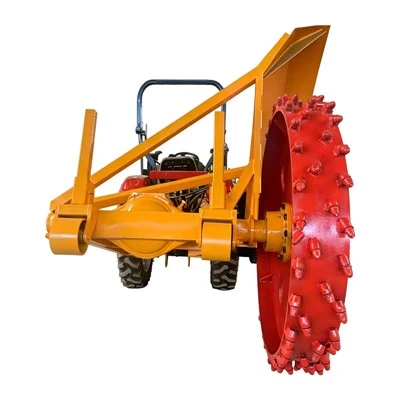
No matter if you’re a small-time homeowner with a 2-acre yard or a big farm with 50 acres, there’s a towed lime spreader that’s perfect for you. You don’t have to guess about capacity, or worry about damaging your tow vehicle, or waste time and money on a product that doesn’t work. Just get in touch, and we’ll make it happen.
Disc Trencher References:
- USDA Natural Resources Conservation Service. (2021). Agricultural Lime Application Guidelines for Soil pH Adjustment.
- National Agricultural Machinery Dealers Association. (2022). Towed Spreader Weight Limits and Tow Vehicle Compatibility.
- Soil Science Society of America. (2020). Bulk Density Variations in Agricultural Liming Materials.
- International Society of Arboriculture. (2021). Lime Spreader Recommendations for Residential Landscape Soil Management.
Zhihao Highway Engineering Machinery Co., Ltd.
As one of the most professional towed lime spreader manufacturers and suppliers in China, we have world-leading production equipment and strong manufacturing capabilities. Please rest assured to wholesale customized towed lime spreader made in China here from our factory. For price consultation, contact us.
Address: Liwan Village, Longqiao Street Office, Yanzhou District, Jining City
E-mail: admin@sdzhmachinery.com
WebSite: https://www.zhroadmach.com/
