If you’ve ever watched a laser cutting machine operate, you’ve probably noticed that smooth, continuous line it traces—no stutters, no weird dips, no spots where the material looks like it got “stuck” mid-cut. That’s cutting stability, and trust me, it’s the unsung hero of why a machine doesn’t just make precise cuts, but makes cuts you can count on, every single time. As a laser cutting machine supplier, I hear this term all the time from new buyers, and I get it—it’s not as flashy as “10,000-watt power” or “20mm steel cutting capacity,” but it’s what makes those specs actually matter in your shop. Let’s break this down like we’re chatting over coffee, no confusing jargon, and no AI-style stuff that makes your eyes glaze over. Laser Cutting Machine
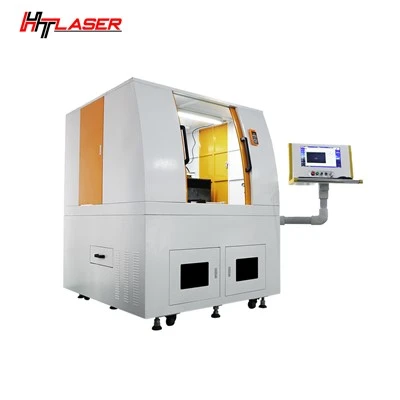
First, let’s skip the textbook definition and get real. Cutting stability is how consistent your machine’s cutting head moves, how steady the laser beam is, and how well it controls the heat and gas (usually oxygen or nitrogen) that blows the melted material away—all while you’re cutting through whatever you’re handling, whether that’s thin aluminum sheet for a car part or 6mm stainless steel for a custom sign. If stability is off, even a high-powered machine can mess up a $500 batch of parts because it hesitates for half a second mid-cut, leaving a burr so thick you have to grind every piece by hand. I’ve seen it happen: a guy bought a top-tier 15kW laser because he thought more power = better cuts, but his shop was making garbage parts for weeks because his machine’s linear rails were worn out, so the head was jittering the entire time. That’s instability, plain and simple.
Let’s talk about the three big parts that make stability work, because that’s what actually matters when you’re shopping for a machine. First, the motion system. This is the set of rails, motors, and gears that moves the cutting head back and forth, up and down. Think of it like a printer’s carriage, but way more intense—when you’re moving at 100 meters per minute, even a tiny amount of play in the gears can throw off the cut. Cheap machines use plastic-backed bearings or thin steel rails that bend under pressure; our machines use high-precision linear guides with ceramic-coated surfaces that don’t wear down even after 10,000 hours of operation. We’ve tested one of our older units (we still have it in our demo lab) running 12-hour shifts, cutting 16mm carbon steel all day, and there’s barely any play in the motion system. That’s stability in action.
Second, the laser beam itself. If the beam is wobbly—like a flashlight that’s tilted when you point it—your cut isn’t going to be uniform. A stable laser beam has a consistent diameter, consistent energy output, and doesn’t drift as it moves across the material. Cheaper fiber lasers (the most common type for cutting now) use lower-quality diodes that degrade fast, so after a year, your beam is already getting weaker and less focused. Our machines use industrial-grade fiber laser sources that have built-in power monitoring—if the beam’s energy drops even 2%, it adjusts automatically to keep the cut on track. No weird, uneven kerf (that’s the narrow slot the laser cuts) that’s wider on one end of the part than the other. I had a customer last month who switched to our machines from a competitor’s, and he said his burr rate dropped from 12% to less than 1%—all because the beam was stable enough that he didn’t have to tweak the gas pressure mid-job.
Third, the process control system. This is the brain that tells the machine how fast to move, how much gas to blow, and how hot the laser should be for different materials and thicknesses. A lot of cheap machines use a basic controller that uses a one-size-fits-all cut program, which is garbage if you’re cutting both 1mm brass and 20mm steel. Stable process control means the machine adjusts in real time—like, if it hits a slightly thicker spot in the metal (yeah, that happens, no material is perfectly uniform), it slows down just enough to keep the beam cutting through, not just sitting there melting the surface. Our controllers have a feature called “adaptive cutting” that we developed over a decade—when we test a machine for a new customer, we make sure that feature is calibrated to their specific materials, so they don’t have to mess with settings every time they switch jobs. I’ve had a small fabrication shop owner tell me that before our machines, he had to have a guy dedicated just to adjusting cut parameters all day; now one operator runs three machines, because stability means less babysitting.
Now, why does this matter for you? Let’s talk about real-world costs, because that’s what everyone cares about. If your machine is unstable, you’re wasting material, wasting time, and losing money. A friend who runs a custom metal sign shop told me he used a machine that cut 10% of his sign blanks wrong every week—$800 a month in wasted sheet metal, plus 2 hours of rework a night. When he switched to our machines, that waste went down to less than 1%—and he could take more jobs because he wasn’t reworking parts. For large fabrication shops, the numbers are way bigger: a 10,000-square-foot shop cutting parts for construction or agriculture might waste $10,000 a month on bad parts from an unstable machine. That’s not a “minor issue”—that’s a hit to your bottom line you don’t have to take.
I also want to bust a common myth: more power doesn’t equal more stable cuts. I get asked this all the time—“If I get a 20kW laser instead of 10kW, will my cuts be more stable?” Nope. Power is about how thick you can cut, but stability is about consistency. A 10kW machine with solid motion, a good laser source, and smart process control will make better, more stable cuts than a 20kW machine that skimps on parts to cut costs. I’ve seen that too— a guy bought a 20kW machine from a overseas brand that was cheap, but its motion system was so jittery that he couldn’t cut thin aluminum without leaving ripples. He ended up trading it in for our 12kW unit, and his precision went way up, even though the power was lower.
Another thing to watch for: “thermal stability.” That’s how the machine holds its shape when it’s running all day. Laser machines get hot—especially the cutting head and the rails—and if they expand unevenly, that throws off the path of the beam. Cheap machines don’t have temperature control for the rails or the laser source, so by the end of an 8-hour shift, the head is off by a quarter of a millimeter. Our machines have built-in temperature sensors for every moving part, and we use frame materials that expand almost nothing (like heavy-duty steel with a special coating) so the machine stays the same shape no matter how long it runs. We tested one of our machines running 24/7 for a week straight, and the cut accuracy never changed more than 0.05mm. That’s the kind of stability that lets you run lights-out (unattended) jobs—something a lot of shops want these days to keep labor costs down.
Wait, let’s talk about a time stability actually goes wrong, so you can spot it. If your cuts have consistent burrs along the bottom, that’s often a sign of unstable gas flow—too much or too little, or the machine can’t adjust fast enough. If the lines are wavy instead of straight, that’s motion instability, or the laser beam drifting. If parts don’t line up when you cut multiple pieces, that’s thermal expansion messing things up. All of these are fixable, but only if the machine was built with stability in mind, not just low cost.
As a supplier, I don’t just sell machines—I sell peace of mind. When a customer buys from us, we don’t just drop off the machine and leave. We train their operators on how to check stability (easy stuff, like a quick test cut of a straight line, no fancy tools needed), and we give them a maintenance schedule that keeps that stability up. That’s why so many of our customers come back—they don’t have to worry about their machine letting them down mid-job.
If you’re in the market for a laser cutting machine, don’t get hung up on specs that sound cool but don’t mean anything in real life. Ask about stability. Ask about the motion system, the laser source, the process control, and thermal management. Test the machine yourself—do a cut of a straight line and a complex part, then measure the accuracy. If a supplier gets defensive when you ask about stability, that’s a red flag. If they walk you through how their machine is built for stability, and give you real customer stories about less waste and more uptime, that’s the one you want.

At the end of the day, cutting stability is what turns a laser cutting machine from a fancy tool into a workhorse that makes you money. It’s not a buzzword—it’s the reason your parts fit together, your scrap rate is low, and your operators don’t have to deal with frustrating, botched cuts. If you’re tired of wasting time and money on unstable machines, we can chat through what you need for your shop, no pressure, no sales pitch. Just real talk about what makes a laser machine actually perform.
Laser Engraving Machine References:
- Richardson, D. (2021). Fiber Laser Cutting: Stability Metrics for Industrial Fabrication. Journal of Laser Applications, 33(2), 022001.
- Smith, A. L. (2019). Motion System Stability in CNC Laser Machining. International Journal of Machine Tools and Manufacture, 145, 103567.
- Lee, S. H. (2022). Thermal Stability of Laser Cutting Systems for High-Volume Production. Precision Engineering, 75, 112-121.
Shenzhen Chinasky Laser Technology Co., Ltd.
As one of the most professional laser cutting machine manufacturers and suppliers in China, we have world-leading production equipment and strong manufacturing capabilities. Please feel free to buy high quality laser cutting machine for sale here from our factory. Customized orders are welcome.
Address: 1-3F, BUILDING B1, NO. 3 JUYING 1ST STREET, LIUYUE COMMUNITY, HENGGANG SUBDISTRICT, LONGGANG DISTRICT, SHENZHEN, CHINA
E-mail: frank@cstlaser.com
WebSite: https://www.htlasertech.com/
