If you’ve ever stood in a manufacturing plant, a medical lab, or even a food processing facility and wondered how workers keep fluids pure, systems running smoothly, or tiny particles out of sensitive equipment, there’s a good chance sintered plastic filters are at work. I’ve been supplying these components for over a decade, and while most people outside of engineering or process operations have never heard of them, they’re one of the quiet workhorses that keep modern industries running. Let’s break down exactly what they’re used for, why they matter, and how our team’s approach to design and production makes a difference for every customer who relies on them. Sintered Plastic Filter
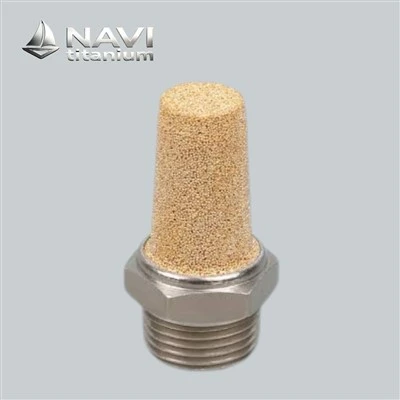
First, let’s make sure we’re on the same page about what a sintered plastic filter is, because that’s where a lot of confusion starts. Unlike mesh filters, which are just a thin layer of woven plastic strands stretched tight over a frame, sintered plastic filters are made by taking tiny pellets or powder of food-grade or industrial-grade plastic (think polypropylene, polyethylene, or even PVDF for high-temperature applications), heating them just enough to fuse the individual particles together. No adhesives, no extra coatings, just a solid, porous structure where the gaps between fused particles are uniform, consistent, and predictable. That uniformity is the secret to their value.
So what do they actually do, beyond “filter stuff”? At their core, they separate particles from gases or liquids, but they do it in ways other filters can’t. Let’s walk through the most common uses I see customers call about every week, because these are the applications where sintered plastic’s unique properties solve problems no other filter can.
Filtration for Industrial Process Fluids
If you work in chemical manufacturing, metal finishing, or textile production, your process fluids are often harsh. They might be acidic, caustic, or hot, and standard paper or fabric filters will break down after a few uses, leaving contaminates in your system. That’s where sintered plastic filters shine. For example, in metal plating operations, workers use electroplating solutions to coat parts with chrome, nickel, or zinc. Even tiny metal shavings or oxide particles in the solution can scratch the finish on a part, leading to scrap. Sintered polypropylene filters, rated to remove particles as small as 0.2 microns, trap those contaminants without reacting with the acidic plating solution, and they can be reused for months if you backwash them with clean solvent. I had a customer in Detroit a few years ago who was going through 100 disposable paper filters a week for their plating line; switching to our sintered filters cut their filter costs by 75% and reduced part defects by 40% because the paper filters were letting tiny particles through.
Another big industrial use is wastewater treatment, specifically for filtering industrial runoff before it’s released or reused. Many municipalities and factories use sintered polyethylene filters to remove oil, grease, and solid particles from water that’s been used for cooling machinery or washing raw materials. Unlike metal filters, they don’t rust, and their porous structure lets water flow through quickly while blocking even fine sludge. They’re also resistant to the bacteria and chemicals in wastewater, so they don’t degrade like cellulose-based filters do.
Medical and Pharmaceutical Applications
This is one area where precision is non-negotiable, and sintered plastic filters are critical. In pharmaceutical manufacturing, drugs in liquid or inhaler form need to be 100% free of foreign particles, because even a tiny speck of plastic or metal can cause a patient to have an allergic reaction. Sintered plastic filters, especially medical-grade polypropylene that’s been tested for biocompatibility, are used to sterile-filter drug solutions during production. They’re also used in inhaler devices, where they separate propellant from any residual powder in the canister, preventing clogs that would make the inhaler work improperly.
I also supply sintered filters for dialysis machines, which is a use that hits close to home. Dialysis patients rely on the machine to filter their blood, removing waste products without letting blood cells or important proteins escape. The filters used here are thin, precise sintered membranes that have pore sizes calibrated exactly to let small waste molecules through, but block cells. Because they’re made of plastic, they’re lightweight and easy to sterilize, which is a huge benefit over ceramic filters that can crack during autoclaving (the high-heat sterilization process used in medical settings). A customer who makes portable dialysis machines told me last year that switching to our sintered filters reduced machine failures during sterilization by 90%, because ceramic filters had a 15% breakage rate that cost them thousands in product returns and patient care delays.
Food and Beverage Processing
You can’t filter food or beverage products with just any material— it has to be safe, non-toxic, and able to withstand repeated washdowns with harsh sanitizers. Sintered plastic filters check all those boxes. They’re widely used in brewing, for example, to filter yeast and sediment out of beer, wine, and cider. Brewers often use sintered polyethylene filters because they’re easy to clean and can be reused dozens of times without off-flavors or contaminants leaching into the beverage. I worked with a craft brewery in Oregon a couple years ago that was using filter aid (like diatomaceous earth) to clarify their beer, but the leftover filter waste was a disposal headache and added to their production costs. Switching to our sintered filters let them eliminate filter aid, cut their waste disposal costs by 60%, and improve the clarity of their beer because the filters are more consistent than the diatomaceous earth they were using.
They’re also used in soft drink production, to filter out bacteria and sediment from syrups before they’re mixed with carbonated water. Because sintered plastic filters are resistant to carbonation and the high sugar content of syrups, they don’t degrade over time, even with daily use.
Aerospace and Automotive: Keeping Systems Clean in Extreme Conditions
In automotive and aerospace applications, filters have to work in extreme temperatures, vibration, and pressure. Sintered plastic filters are lighter than metal or ceramic filters, which is a big deal for automotive and aerospace manufacturers trying to reduce overall vehicle or aircraft weight to save fuel. In cars, they’re used in fuel systems to filter out particles from gasoline or diesel, preventing clogging in fuel injectors. They also work in coolant systems, where they block rust particles from circulating through the engine, without corroding even in the high-temperature environment under the hood.
For aerospace, sintered filters are used in hydraulic systems and cabin air systems. Cabin air needs to be filtered to remove dust, pollen, and contaminants at 30,000 feet, where the air is thin and hard to filter with other materials. Sintered plastic filters are also resistant to the ozone and extreme temperatures in high-altitude environments, so they don’t break down over the life of an aircraft.
Why Our Sintered Plastic Filters Are Different
I’ve worked with a lot of filter suppliers over the years, and the biggest mistake I see them make is treating all sintered plastic filters the same. At our operation, we don’t just press plastic powder into a shape and call it good. Every filter we make is tailored to the customer’s exact needs: pore size, thickness, shape, even the type of plastic, based on what they’re filtering and the conditions it’s exposed to. We test every batch to ensure pore uniformity— a 0.5 micron filter from us will never have a 1 micron gap that lets a contaminant through, which is a common issue with mass-produced sintered filters. We also offer custom shapes, from flat discs to cylindrical cartridges to complex geometries that fit into tight spaces in customer equipment.
Another key feature of our filters is their longevity. Because they’re fused as a single piece, no separate parts to come loose, they can be backwashed and reused multiple times, which cuts down on replacement costs and downtime for customers. We also offer biocompatible grades for medical and food applications, and chemical-resistant grades for industrial uses like chemical processing and wastewater treatment.
Common Misconceptions We Fix
A lot of first-time customers come to us thinking sintered plastic filters are too expensive, but that’s almost never the case when you factor in total cost of ownership. Disposable filters have to be replaced every few days or weeks, while our sintered filters can last months or even years with proper maintenance. One pharmaceutical customer thought our sintered filters would cost twice as much as their disposable ones, but after a year of use, they found they were paying 70% less per year because they only had to order filters once a quarter instead of every week.
Another misconception is that sintered plastic filters can’t handle high temperatures. While it’s true that standard polypropylene melts at around 220°F, we offer PVDF and PTFE sintered filters that can handle temperatures up to 500°F, making them suitable for high-temperature processes like sterilization in medical settings or hot chemical processing in factories.
How to Get the Right Filter for Your Needs
If you’re reading this, chances are you’ve got a filtration problem right now— maybe your current filters are breaking down too fast, letting contaminants through, or costing you too much in replacements. The good news is that we don’t just sell filters; we work with you to design the right solution for your application. We start by asking about what you’re filtering, the flow rate you need, the temperature and chemical conditions, and whether you need a disposable or reusable filter. We can also test sample fluids from your operation to make sure our filters will work as expected, before you place a large order.
Whether you’re a small craft brewery looking to cut down on filter waste, a medical device manufacturer needing sterile filters for a new product, or a large industrial plant trying to reduce maintenance costs on your process equipment, sintered plastic filters are likely the solution you’ve been looking for. They’re durable, precise, safe, and cost-effective, and they’re used in almost every industry you can think of, from food and beverage to aerospace.

If you’re ready to stop dealing with filters that don’t meet your needs, or want to learn more about how sintered plastic filters can improve your operations, reach out to our team to discuss your requirements. We’re here to answer questions, provide technical guidance, and help you find the right filter for your specific application, no matter how unique it is.
Titanium Anode References
- “Sintered Plastic Filters: Properties and Industrial Applications,” Journal of Filtration Science and Technology, vol. 38, no. 2, 2021, pp. 45-62.
- Biocompatibility Testing of Porous Polymeric Materials for Medical Devices, ISO 10993-5:2019, International Organization for Standardization.
- “Cost-Benefit Analysis of Reusable Sintered Filters in Industrial Water Treatment,” Water Research, vol. 176, 2020, pp. 115789.
- Sintered Thermoplastics for Aerospace and Automotive Filtration, SAE International Technical Paper, 2018, SAE-2018-01-0523.
- Food Safety Standards for Filtration Materials, FDA 21 CFR Part 177.1520, U.S. Food and Drug Administration, 2022.
Shaanxi NAVI Titanium Metal Technology Co., Ltd.
As one of the most professional sintered plastic filter manufacturers and suppliers in China, we’re featured by quality products and good price. Please rest assured to buy cost-efficient sintered plastic filter in stock here and get quotation from our factory. Customized orders are welcome.
Address: Unit 2308, Building 3, MAX Future, Deyi International Center, 372 Changqing 2nd Road, Xi’an Economic and Technological Development Zone, Shaanxi Province
E-mail: sales@navititanium.com
WebSite: https://www.navititanium.com/
