Let me start by setting this up like a conversation I’d have if I were sitting across from a shop owner who’s just complained about stepping into a sweltering work van. I run a small—but growing—Parking Air Conditioner supply business, so every time someone asks if these units are worth it, I pull from what our clients tell me and the data we’ve dug through to stand behind our products. Parking Air Conditioner
A couple of years back, one of our first regulars was a local long-haul delivery driver named Dave. He’d been ignoring me when I’d tried to explain our parking AC units for weeks, always muttering that he could roll his window down or just wait for the truck to cool off once he was back behind the wheel. Then one hot July afternoon, he called me in a panic—his dog had been in the van for 10 minutes while he ran to a post office, and the vet had told him he’d narrowly missed a heatstroke emergency. That day, he drove to our shop, bought a unit, and later sent me a text saying it paid for itself in three weeks: he no longer had to buy $12 ice packs that melted by the time he finished his run, and his mechanic had noted less strain on his truck’s engine because he wasn’t idling all day in parking lots. That’s the kind of real, on-the-ground story that makes this question—are parking air conditioners worth it—less a sales pitch and more a thing that solves actual, everyday headaches.
First, let’s break down why idling your engine for cooling is a terrible idea. I’ve crunched a lot of numbers for different vehicles, but the Environmental Protection Agency’s (EPA) data has stuck with me: a half-hour of idling for a semi-truck can waste about a gallon of diesel, and for a light-duty work van, that’s roughly a quart. Multiply that by 12 work hours a day, five days a week, and you’re looking at 10–15 gallons of fuel a week, depending on the vehicle. Now add maintenance costs: idling leads to more carbon buildup in the engine, which means you’ll need oil changes sooner, higher wear on alternators and batteries, and even premature part replacements. I’ve had a fleet manager tell me their idle time alone added $1,800 a year to their maintenance bill—money that could’ve gone to raises, equipment upgrades, or even just keeping their drivers happier.
Then there’s the human cost. A few years back, the National Institute for Occupational Safety and Health (NIOSH) released a study that found truck drivers and delivery workers have a higher risk of heat-related illnesses than most blue-collar workers. When you’re sitting in a vehicle that’s parked in 90-degree weather, interior temps can hit 140 degrees in 10 minutes flat. That’s not just uncomfortable—it’s dangerous. Dehydration, heat exhaustion, impaired focus on the road later, even long-term organ strain. Our units let drivers stay cool in their parked vehicles without running the engine, so they can hydrate properly, take a real break, and get back on the road safer. We’ve had so many drivers tell us their mood shifted once they stopped coming back from stops soaked in sweat, snapping at dispatch or coworkers. A cooling driver is a productive, safe driver, and that’s a huge part of the value.
Now, let’s get specific about the investment itself. Parking air conditioners aren’t one-size-fits-all, which is why we work with everyone from single van owners to small fleets. Most units we sell use either lithium-ion batteries or run off the vehicle’s battery system, but they’re designed to last 8–10 years with regular use, not just a few months. Let’s do a quick math check for a single delivery van: if you’re idling 10 gallons a week at current diesel prices (which right now hover around $4 a gallon, but even if they swing), that’s $40 a week in fuel. Over a year, that’s $2,080. Our most popular basic unit costs around $1,200, and with tax breaks or fleet incentives that many areas offer for cutting emissions, that can drop even more. Throw in the maintenance savings—another $1,500–$2,000 a year—and you’re looking at a payback period of 6–10 months, not years. For fleets of 10 vans, that’s 10 times that savings, no extra work required.
But I know what a lot of skeptics say: “Why not just get a window fan or a portable cooler that uses ice?” I get it, those are cheaper upfront, but they’re a band-aid. Ice melts in an hour or two, so you’re buying $10–$15 worth every day, which adds up to $2,500–$3,750 a year, way more than a parking AC unit. They’re also not as effective on a 95-degree day, and you can’t use them to cool the whole cab evenly—just the spot where you’re sitting. Plus, you still have to leave a window cracked for air flow, which lets in bugs and even theft risks if you’re parked in a busy lot. Our units seal the cab properly, so they keep the cold in, no cracked windows needed. That’s a big one for drivers who keep tools or packages in their vans too.
Another thing people don’t talk about enough is emissions. Idling isn’t just a waste of gas—it’s bad for the environment and for air quality in the cities where most of our clients work. The EPA estimates that a single heavy-duty truck idling for an hour emits about 1 pound of nitrogen oxides, which are a main cause of smog. Multiply that by 10 trucks idling all day, and you’ve got a lot of pollution in residential areas where kids and seniors breathe it. Many cities now have anti-idling laws that fine you anywhere from $50 to $500 for excessive idling. I’ve had a driver get a $120 fine last summer, and he told me that was more than his monthly payment on our parking AC unit. Suddenly, the investment stops being a “nice-to-have” and becomes a way to avoid fines that can sink a small business’s budget.
Now, let’s address the common downsides I hear about: “Parking AC units are too heavy” or “They’re hard to install.” Back when we first started, early units were clunky, weighing 50+ pounds, and took hours to mount. But over the last five years, we’ve refined our designs to be lightweight (most of our models are 25–30 pounds), and we include clear, step-by-step instructions—even video tutorials—for someone with basic mechanical skills to install it in under an hour. For fleets that want faster setup, we work with local mechanics who can do installations at a discounted rate. We also make units that fit all kinds of vehicles: semi-trucks, box trucks, passenger vans, even delivery vans with compact cabs. No matter what you’re driving, there’s a model that fits, so you don’t have to compromise.
I also want to talk about the stories behind the numbers, because that’s what matters most to me. Take Maria, who runs a small courier business here in Chicago. She had five vans, and her drivers were constantly complaining about heat in the summer, high fuel bills, and idling fines. She took a chance and bought two of our units. A month later, she emailed me saying her fuel costs dropped $180 a week, and her drivers’ feedback had improved so much that two of them asked for raises. Then, three months after that, she bought units for all five vans. She told me, “I didn’t just save money—I got my drivers back, and that’s priceless.” That’s not just a sale; that’s a partnership, which is what our whole business is built on.
Another story: Tom, a single owner-operator who drives a semi cross-country. He used to idle all night to stay cool during rest breaks, which cost him about $150 a week in fuel. Our unit let him cut that idling completely, so he saved over $7,000 a year, and his truck’s engine runs better now because he’s not putting hours of unnecessary wear on it. He even brings it up at truck stops now, telling other drivers how the unit paid for itself in a matter of months. Word of mouth is huge for this industry, and every time a driver recommends us, we know we’re doing something right.
Now, I should be honest: parking air conditioners aren’t for everyone. If you only drive your vehicle a few times a week, or if you live in a climate where it’s rarely over 80 degrees, the investment might not make sense. But for anyone who drives regularly, parks for more than an hour at a time, or has ever dealt with heat, fuel costs, idling fines, or maintenance headaches? They’re absolutely worth it. The key is to look at the total cost, not just the upfront price. You’re not buying a gadget—you’re buying something that saves you money over time, keeps you (or your employees) safer, and reduces stress on both your vehicle and the environment.
At the end of the day, when a customer asks me if it’s worth it, I don’t just throw numbers at them. I tell them about Dave’s dog, Maria’s drivers, Tom’s cross-country trips. I tell them about how a parking AC unit isn’t just about cooling—it’s about taking a small, consistent expense that adds up to a big problem, and turning it into a solution that pays for itself. If you’re tired of sweating through stops, wasting fuel, or dealing with engine maintenance from idling, it’s time to take a look at what our units can do for you.
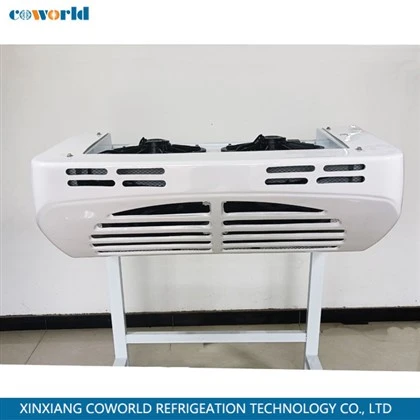
If you’re ready to learn more about which model fits your vehicle, or want to talk through how much you could save, reach out to our team to discuss your needs and get a tailored quote. We’re here to make the investment work for your budget, not against it.
Refrigerated Truck Body References
U.S. Environmental Protection Agency. (2023). Idling: Wasting Fuel and Polluting Air.
National Institute for Occupational Safety and Health. (2022). Heat Exposure Among Commercial Vehicle Operators.
North American Council on Freight Efficiency. (2023). Parking Coolers: Fuel and Maintenance Savings for Medium and Heavy-Duty Vehicles.
Small Business Administration. (2022). Energy Efficiency Incentives for Commercial Vehicle Fleets.
Xinxiang Coworld Refrigeration Technology Co., Ltd.
As one of the most professional parking air conditioner manufacturers and suppliers in China, our products have good reputation in the market. We warmly welcome you to buy cheap parking air conditioner for sale here from our factory. If you have any enquiry about cooperation, please feel free to email us.
Address: B103 ROOM, GT CITY, NO.199 ZHENGZHONG ROAD, HIGH TECH ZONE, XINXIANG CITY, HENAN PROVINCE, CHINA
E-mail: coworldfrio@hotmail.com
WebSite: https://www.coworldthermo.com/
