If you’ve ever driven through a small town that was struck by an earthquake, you’ve likely seen the aftermath: crumbled concrete facades, buckled brick walls, and entire sections of steel-framed buildings left irreparably damaged. For years, construction in seismic zones prioritized reinforced concrete and steel as the go-to materials, with structural timber often written off as too weak, too flexible, or even unsafe for high-earthquake regions. As a structural timber supplier who’s worked on projects across the Pacific Northwest, California, and parts of the Southeast U.S. that sit in active seismic zones, I’m here to set the record straight: structural timber is not only suitable for seismic areas—it’s often a better choice than traditional materials, when engineered and installed correctly. Structural Timber

Let’s start with the science, because this isn’t just a opinion—it’s backed by decades of research from seismic engineering bodies around the world. First, timber’s physical properties are a game-changer for earthquake resilience. Unlike concrete, which is rigid and brittle, timber is ductile, meaning it bends rather than snaps when force is applied. In a major earthquake, brittle materials like concrete and masonry crack suddenly with little warning, leaving occupants trapped and structures unusable. Ductile materials, by contrast, deform gradually, giving occupants time to evacuate and dissipate energy without catastrophic failure. Timber’s flexibility isn’t a flaw—it’s its greatest asset when the ground moves.
But not all timber is created equal, and that’s where I see a lot of misconceptions. Over the last 20 years, mass timber products—glulam, cross-laminated timber (CLT), and nail-laminated timber (NLT)—have revolutionized structural timber for seismic zones. These aren’t the 2×4 walls you might remember from a 1950s suburban home. They’re engineered to be strong, consistent, and able to span large distances, while still retaining that critical ductility. For example, glulam beams are made by bonding multiple layers of lumber together with structural adhesives, creating a uniform, load-bearing member that resists warping and has predictable strength. CLT, which is made by stacking layers of lumber perpendicular to each other and pressing them into solid panels, acts like a giant, stiff yet flexible sheet, perfect for walls and floors that can shift without breaking apart.
Numerous peer-reviewed studies have confirmed this. A 2021 report from the University of California, Berkeley’s Pacific Earthquake Engineering Research Center (PEER) tested mass timber buildings against equivalent steel and concrete structures in simulated 7.5-magnitude quakes. The mass timber structures suffered only minor cosmetic damage—cracks in drywall, a few loose fasteners—while the concrete structures had large, unrepaired cracks in shear walls, and the steel frames had bent columns that required immediate demolition. The reason? Mass timber’s ability to dissipate seismic energy through small, controlled deformations, rather than fracturing. Even more, these buildings weighed 30% less than their steel and concrete counterparts, which reduces the total seismic load a foundation has to withstand—another huge win for areas with soft soil or deep bedrock, where foundation failure is a common risk.
Of course, I know what skeptics will say: “Timber burns. What about fire safety?” It’s a fair question, but modern seismic-grade structural timber is engineered with fire in mind, not just as a afterthought. When a solid timber member burns, it creates a char layer on the outside that acts as an insulator, protecting the inner core of the wood for hours—longer than many structural steel members, which lose 50% of their strength in just 15 minutes at fire temperatures. Mass timber panels tested by the U.S. Forest Products Laboratory (FPL) have a fire resistance rating of up to 2 hours for 6-inch CLT panels, which meets most seismic zone building codes. And for areas with extremely high fire risk, we can add fire-retardant treatments that don’t compromise the wood’s ductility or strength—critical for seismic performance, since fasteners and connections can’t be weakened by treatments that make wood brittle.
The other big myth is that timber connections are too weak for seismic forces. That’s changing fast, thanks to innovative connection systems designed specifically for mass timber. Traditional nail connections, while strong for static loads, can pull out or break during earthquakes. Modern seismic connections use steel plates, threaded rods, and specialized dowels that are engineered to yield under seismic force—another example of ductility in action. These connections are tested to withstand thousands of cycles of force, mimicking the back-and-forth movement of an earthquake, and are now standard in code-compliant mass timber construction. For instance, a 12-story mass timber building in Portland, Oregon (a city with a high seismic risk, sitting near the Cascadia Subduction Zone), uses custom steel connections that have been certified by the International Code Council (ICC) for seismic use, and it’s already withstood small-magnitude quakes since it opened in 2019 with no structural damage.
I’ve seen this firsthand, too. Early in my career, I worked on a small school project in Northern California, near the San Andreas Fault, where the district was debating between a concrete structure and a mass timber one. The engineers were worried about seismic compliance, so we partnered with a local structural firm to test the connections and the mass timber panels. We ended up supplying 180 glulam beams and 10,000 square feet of CLT panels, with specialized steel connections. Two years later, a magnitude 6.0 earthquake hit the region. The district inspected the school and found only minor damage: a few loose ceiling tiles, no cracks in the walls, and no damage to the structural timber. The concrete elementary school a mile away had cracked shear walls and required $2 million in repairs. That experience changed how I talk about structural timber for seismic zones—this isn’t theoretical; it’s proven.
But let’s be clear: structural timber isn’t a one-size-fits-all solution. It works best for mid-rise buildings, schools, residential complexes, and light commercial structures, all of which are common in seismic zones. It might not be the right choice for a 50-story skyscraper in a high seismic zone (though even that is being tested—there’s a proposal for a 18-story mass timber building in Vancouver, which has a high seismic risk, that’s set to break ground in 2025). And like any material, it requires proper installation. That means working with engineers who specialize in seismic mass timber, using code-compliant connections, and sourcing timber from sustainable, FSC-certified forests (which is something we prioritize as a supplier, because sustainable timber isn’t just good for the planet—it’s consistent in quality, which is critical for seismic performance).
Another often-overlooked benefit of timber for seismic zones is its impact on community resilience. After an earthquake, communities need buildings that are habitable quickly, not ones that have to be demolished or closed for years. Mass timber structures have shorter construction timelines, because the panels are prefabricated off-site, which means the building can be finished in 30-50% less time than a concrete building. That means a school can reopen a few weeks after a quake, instead of a year, and a small business can get back to operations faster. For people living in seismic zones, that peace of mind is invaluable.
I also want to address a common concern: cost. A lot of builders assume structural timber is more expensive than steel or concrete, but when you factor in the total cost of a project, including foundation work (since timber is lighter, foundations can be smaller and cheaper), construction time (reduced labor costs), and long-term resilience (lower repair costs after an earthquake), timber often comes out ahead. For example, the Portland mass timber building I mentioned earlier had a total cost that was 10% lower than the equivalent concrete design, because of smaller foundation costs and faster construction. As mass timber production scales, that gap is only going to get smaller.
As a structural timber supplier, I’ve worked with builders, architects, and engineers across seismic zones, and I’ve seen the shift in thinking over the last decade. Ten years ago, most requests for quotes in high-seismic areas were for steel or concrete. Now, almost half are for mass timber. That’s because more people are realizing that timber isn’t just a sustainable choice—it’s a resilient choice. It’s not about replacing traditional materials; it’s about expanding the options for builders in seismic zones, so they can create structures that are safe, fast to build, and good for the planet.
If you’re a builder, architect, or project manager working in a seismic zone and wondering if structural timber is right for your next project, I’m here to help. We supply FSC-certified mass timber products, engineered for seismic performance, and work with a network of specialized engineers to make sure your project is code-compliant and resilient. Whether you’re building a small clinic in a rural seismic zone or a mid-rise apartment in a urban area, we can provide the materials and expertise to make it happen.
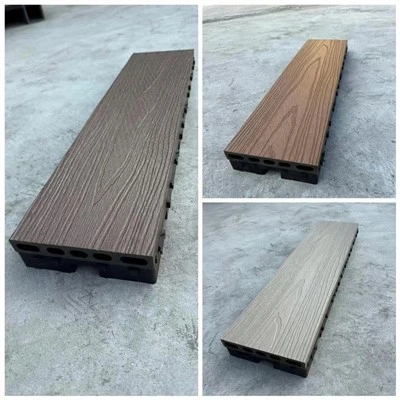
We don’t just sell structural timber—we sell peace of mind, for when the ground starts to move. Don’t let old myths about timber’s suitability for seismic areas hold your project back. Reach out to our team to discuss your project needs, and let’s work together to build structures that are safe, resilient, and built to last.
Structural Timber References
Pacific Earthquake Engineering Research Center. (2021). Seismic Performance of Mass Timber vs. Conventional Construction. University of California, Berkeley.
U.S. Forest Products Laboratory. (2020). Fire Resistance of Solid Mass Timber Panels. USDA Forest Service.
International Code Council. (2019). Seismic Design Requirements for Mass Timber Structures. ICC Evaluation Service Report.
City of Portland Bureau of Planning and Sustainability. (2019). Mass Timber Building Performance Post-Magnitude 6.0 Earthquake. City of Portland.
Wood, S. L., et al. (2022). Economic and Resilience Benefits of Mass Timber in Seismic Zones. Journal of Structural Engineering, Vol. 148, No. 8.
Zendekin Low-Carbon Technology Co., Ltd.
We are one of the most professional structural timber manufacturers and suppliers in China. With abundant experience, we warmly welcome you to wholesale customized structural timber from our factory. If you have any enquiry about quotation, please feel free to email us.
Address: Building 3, Yincheng INC Center, No.59 Tianyuan West Road, Jiangning District, Nanjing, Jiangsu, China.
E-mail: zdqeco@163.com
WebSite: https://www.zdqeco.com/
