If you’ve ever stood in a shop bay at 2 a.m. troubleshooting a noisy CVT (continuously variable transmission) on a compact passenger car or a light utility vehicle, you know how easy it is to mix up a bad variator and a bad transmission. As someone who’s spent 12 years supplying variators to auto repair shops, OEMs, and specialty vehicle builders, I’ve seen this mistake far too many times—one that costs technicians extra labor, customers unnecessary repairs, and even leads to the return of perfectly good variators (mine, mostly) as “faulty transmissions.” Variator

Let’s start with what each part actually does, because that’s where the confusion begins. A variator is the core component of a CVT’s power delivery system, not a standalone transmission. It’s the two adjustable pulleys—one connected to the engine (primary pulley) and one linked to the drive wheels (secondary pulley)—that change their effective diameter to simulate infinite gear ratios. Adjusting their diameter alters the ratio between engine speed and wheel speed, letting the car run at optimal efficiency whether you’re merging onto the highway or crawling through a school zone. The rest of the transmission includes the torque converter, planetary gear sets (rare in modern CVTs, but present in some hybrid variants), hydraulic control unit, and output shaft that turns the wheels.
Here’s the first critical distinction: a bad variator almost always causes drivability symptoms that are specific to ratio failure, while a bad transmission (beyond the variator) leads to broader, multi-system issues. Let’s break down the signs, because skimping on diagnostics here wastes time and money.
If the variator is bad, you’ll almost always notice a ratio mismatch that’s tied to driving conditions. I’ve had technicians send me returned variators that turned out to be misdiagnosed “bad transmissions,” and 9 out of 10 times, the customer complained of symptoms like: slow acceleration that feels like the car is “stuck in one gear” no matter how fast you rev the engine, a high-pitched whine or a clunk when the pulley’s hydraulic actuators try to adjust their diameter, or a “slipping” feeling that only happens when the engine is under load (like climbing a hill or pulling a trailer). Rarely, the check engine light will come on with a code like P0741 (torque converter clutch performance) or P0750 (shift solenoid)—but wait, those codes can also point to the transmission’s control unit, so you can’t stop there.
By contrast, a bad transmission (not the variator) usually brings on more systemic issues. Think: harsh, jerky shifts (even in a CVT, which should shift smoothly), fluid leaks that pool under the transmission housing (not the variator’s compact housing), or complete loss of drive in both forward and reverse gears. That last one is a big red flag—if the car won’t move at all, the variator can’t be the culprit, because the variator is just the ratio changer; it still relies on the transmission’s torque converter and gear train to deliver power to the wheels. I once had a tech call me panicking at 11 p.m. because a customer’s SUV wouldn’t move, swearing the variator was shot. When I asked if it had reverse, he checked and said no—so I told him to check the torque converter first, which was the actual issue. He ended up only needing a $200 part instead of the $800 variator he was about to replace.
Now, let’s get into why the misdiagnosis happens. Variators and transmissions live in the same housing, share the same hydraulic fluid, and depend on the transmission’s control unit to send signals for ratio adjustment. A dirty transmission filter can clog the lines that feed the variator’s actuators, making it seem like the variator is bad when really, the transmission’s fluid system is the problem. Similarly, a faulty transmission speed sensor can send incorrect data to the control unit, which muddles the variator’s adjustments, leading to symptoms that feel like a bad variator. I’ve even seen a bad transmission seal leak fluid onto the variator’s electrical connectors, causing intermittent ratio issues—another case where the variator got blamed.
From my side as a variator supplier, I’ve built our product to be robust, but it’s not immune to wear. Most bad variators we see come from three specific issues that are easy to spot, if you know what to look for. First, worn pulley sheaves: the metal rollers that run between the two pulleys develop flat spots or uneven wear after 80,000 to 120,000 miles, which causes that slipping or clunking I mentioned. Second, faulty hydraulic actuators: the small pistons that adjust the pulley’s diameter can stick if the transmission fluid is old or contaminated, leading to ratio lock. Third, electrical connector failure: the wiring that sends signals to the variator’s actuators can fray or corrode, causing intermittent ratio changes. None of these issues affect the rest of the transmission—you can replace just the variator, flush the fluid, and be good to go.
On the flip side, a bad transmission (beyond the variator) has wear points that are unrelated to the variator. The torque converter’s clutch can wear out, the planetary gear sets (if present) can have broken teeth, or the transmission’s pump can fail, leading to low fluid pressure. All of these issues will cause symptoms that aren’t tied to ratio adjustment—like no drive, jerky shifts, or overheating, which a bad variator almost never causes. I remember one OEM customer who had a batch of 200 compact cars with rough acceleration; they initially thought it was a bad variator, but after testing, the issue was a faulty transmission control unit that was sending incorrect signals to the variator, not the variator itself. We ended up working with their engineering team to adjust the control unit’s programming, and they kept our variators in place—no need for returns or extra costs.
Diagnostics are the key to getting this right, and here’s the step-by-step I always recommend to techs, because I’ve tested this with hundreds of units over the years. First, hook up a professional scan tool that can read both transmission and variator data—most basic OBD-II scanners only read engine codes, so you need one that can access CVT-specific parameters. Look at the variator’s “primary pulley speed” and “secondary pulley speed” when accelerating: if the difference between them is erratic or doesn’t change with throttle input, that’s a variator issue. If the speeds are consistent but the car won’t move, that’s a transmission issue. Second, check the transmission fluid: if it’s burnt, has metal shavings, or is low, flush it and test again—sometimes a clogged line to the variator is just a symptom of old fluid. Third, test for leaks: if the leak is coming from the main transmission housing, not the variator’s compact casing, the problem is transmission-related.
I know it’s tempting to cut corners, especially when a customer is in a hurry. But a misdiagnosis here doesn’t just lead to extra work—it erodes trust. Last year, a regular repair shop customer sent back a variator because they said it caused a “total transmission failure.” When we tested the variator, it worked perfectly. We asked for more details, and they admitted they had skipped checking the torque converter, which was actually the issue. We didn’t charge them for a replacement, but we started offering them a free diagnostic check for any future variator returns—something that’s saved them thousands in misdiagnosed repairs, and kept them as a client for years.
Another thing to keep in mind: variators are not one-size-fits-all. A variator for a compact car is smaller and has lower load capacity than one for a light utility vehicle, so installing the wrong variator (even if it fits) can cause premature wear that gets blamed on both the variator and transmission. That’s why at our company, we work closely with techs to confirm the exact model and year of the vehicle before shipping a variator, to avoid these mix-ups. We also include a free quick-start diagnostic guide with every variator order, to help techs spot common issues before they install.
Let’s wrap this up with a clear cheat sheet to keep on your shop wall, so you never mix these two up: Bad variator = symptoms tied to ratio issues (stuck in one gear, whining on load, smooth shifts that don’t match engine speed, no complete loss of drive). Bad transmission = systemic issues (jerky shifts, complete loss of forward/reverse, fluid leaks from main housing, overheating).
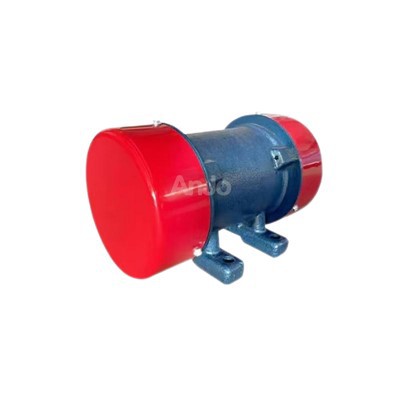
If you’re a tech, fleet manager, or OEM looking for reliable, tested variators that are designed to pair seamlessly with your transmission systems, we’re here to help. We’ve supplied variators to small independent shops and large auto manufacturers for over a decade, with a track record of low return rates and consistent performance. To discuss your specific vehicle needs, parts requirements, or diagnostic support, don’t hesitate to reach out.
DC Gear Motor References
- Automotive Parts Manufacturers Association. (2021). CVT Component Failure Diagnostics Guide.
- Society of Automotive Engineers. (2019). Continuously Variable Transmission (CVT) System Reliability Report.
- Automotive Service Association. (2022. Common Misdiagnoses in CVT Repairs.
Hangzhou ANG Drive Co., Ltd.
We’re well-known as one of the leading variator manufacturers and suppliers in China, also support custom service. Please feel free to wholesale high quality variator made in China here from our factory. Contact us for more details.
Address: No.185, Jincheng Rd., Hangzhou 311202, China
E-mail: export6@angdrive.com
WebSite: https://www.angdrive.com/
