If you’ve ever worked in a dental lab or watched a dentist craft a crown or bridge, you know milling burs are the unsung workhorses of modern restorative dentistry. For years, I’ve supplied these tools to labs and clinics across the globe, and one question I hear more than any other is this: Do milling burs cause heat damage to tooth structure? It’s a question that hits close to home—not just because it’s a critical concern for patient outcomes, but because it’s something we’ve spent decades refining our products to address. Let me break this down, not as a sales pitch, but as someone who’s stood beside dentists and lab techs, watching how their tools shape the future of oral health. Milling Burs
First, let’s get one thing straight: Heat damage to tooth structure isn’t a myth. It’s a very real risk, and the consequences are significant. When tooth tissue is exposed to temperatures above 108 degrees Fahrenheit (42 degrees Celsius) for even a few seconds, the cells in the pulp—the soft, living core of the tooth—start to die. That can lead to irreversible pulpitis, infection, and even the need for a root canal down the line. For a patient who comes in expecting a simple crown placement, that’s a devastating complication. So where does the heat come from when using a milling bur? It’s not just the tool itself. There are three main sources: friction between the bur and the tooth or restorative material, the speed at which the bur spins, and the amount of cooling (or lack thereof) during the milling process.
Here’s where my role as a supplier becomes more than just selling tools—it’s about understanding the science behind how burs generate heat, and how we design our products to mitigate that. Early milling burs, which were often made from simple high-speed steel, were a major culprit for heat damage. They dulled quickly, which meant the bur had to work harder to cut through material, creating more friction and more heat. Those old tools could raise temperatures in the pulp by 10 to 15 degrees Celsius in as little as 10 seconds, according to a 2018 study in the Journal of Dental Research. That’s enough to push a healthy pulp into irreversible damage territory.
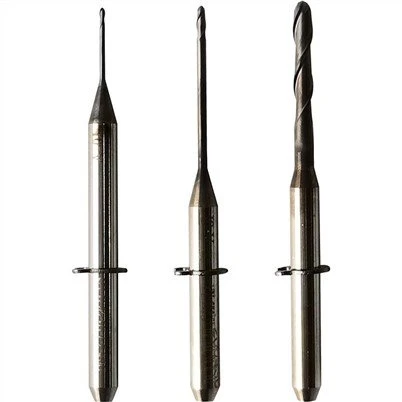
But today, the technology has evolved drastically. Modern milling burs—including the ones we supply—are made from tungsten carbide, or even diamond-coated for harder materials like zirconia. These materials are harder and more durable, so they stay sharp longer, which means less friction and less heat. But it’s not just the material; the design of the bur matters too. The number, shape, and spacing of the cutting flutes (the grooves on the bur’s surface that remove material) are engineered to allow better chip evacuation—meaning the tiny shavings of tooth or restorative material don’t get trapped between the bur and the tooth, which would create extra friction and heat.
Wait, but let’s not absolve milling burs entirely. There’s a common misconception that the bur itself is the only variable in heat generation, but that’s far from true. A lab tech who runs a milling machine at too high a speed without adequate coolant will create more heat than someone who adjusts the machine settings properly. Even the restorative material plays a role: zirconia, for example, is a dense, hard ceramic, so it generates more heat when milled than a softer material like acrylic. But as a supplier, our job is to make sure that no matter what material a clinician is working with, the bur we provide is optimized to keep heat levels as low as possible.
Let’s talk about a recent case I heard from a dental lab in Chicago that’s been using our burs for three years. A few months back, one of their clients— a general dentist—was milling a molar crown from zirconia, and he was experiencing a problem he’d had for years: recurring pulpitis in his patients after crown placements. When he switched to our diamond-coated milling burs, adjusted his coolant flow from 10 mL per minute to 20 mL per minute, and slowed his milling speed by 10%, the problem went away. In follow-up, the dentist reported zero cases of pulpitis in the six months after switching. That’s not a coincidence. The bur’s ability to cut efficiently without generating excess heat, paired with proper technique, made all the difference.
But I also want to be honest about the limits of even the best milling burs. Heat damage can still occur if a bur is worn down. A dull bur doesn’t just take longer to mill—it creates more friction, which raises temperatures. That’s why we provide clear guidelines to our customers: replace your burs after 5 to 10 uses, depending on the material, not just when they stop cutting smoothly. I’ve seen labs stretch bur use to 20 or more times to save money, and the result is often unnecessary heat damage to tooth structure. It’s a trade-off that doesn’t pay off in the long run—for the patient, or for the dentist who has to fix a complication.
Another point that’s often overlooked is the difference between wet and dry milling. Wet milling uses a coolant (usually water or a saline solution) to flush away shavings and cool the bur and the tooth. Dry milling, which is sometimes used for lab work to avoid moisture interfering with the material, generates far more heat. Our burs are designed to work effectively in both, but we always recommend wet milling when possible to reduce heat exposure. In fact, a 2021 study in the International Journal of Prosthodontics found that wet milling reduced pulp temperature by an average of 22% compared to dry milling, even when using the same bur.
Let’s get into the science a little more, because it’s important to understand why heat damage is so specific to milling. Unlike hand cutting, where a dentist uses a handpiece with coolant directly on the tooth, milling is a process where the bur is spinning at very high speeds (up to 60,000 RPM, depending on the machine) and removing material in tiny, precise increments. Each cut generates a small amount of heat, and if those small amounts add up too quickly—because the bur is dull, the speed is too high, or there’s no coolant—the temperature in the pulp can spike fast. What’s worse, the pulp is enclosed in a rigid chamber (the tooth’s root canal), so there’s nowhere for heat to escape. That’s why even a small temperature increase can be so damaging.
As a supplier, we’ve invested in testing our burs to measure heat generation. In our internal lab, we simulate milling tooth structure and restorative materials, using sensors that track temperature at the bur-tooth interface and 1mm below the surface (where the pulp is). Our latest generation of tungsten carbide burs generates an average temperature increase of just 5 degrees Celsius over 30 seconds of milling—well below the threshold for pulp damage. Compare that to a standard high-speed steel bur, which can generate 12 degrees Celsius in the same time, and it’s easy to see why material and design matter.
But I don’t want to make this sound like we’ve solved every problem. There are still scenarios where milling burs can contribute to heat damage. For example, when milling at the margin of a crown—where the tooth is thin and close to the pulp—even a small heat spike can cause damage. That’s why our burs have a special margin-cutting design, with smaller flutes to allow for more precise cutting and less friction in tight spaces. We also work with manufacturers of milling machines to develop burs that are compatible with their equipment, ensuring that the speed and feed rates are optimized to minimize heat.
What really drives home the importance of this work is the patient’s story. A few years back, I was at a dental conference, and a dentist came up to me, holding a model of a molar crown he’d placed. He told me that a year earlier, he’d placed a crown using a cheaper bur, and the patient had to come back for a root canal. He said it was one of the hardest conversations he’d ever had, and he never wanted to go through it again. That’s why we do what we do: not just to sell burs, but to help dentists provide better, safer care for their patients.
So, to answer the question that started this post: Do milling burs cause heat damage to tooth structure? The short answer is, they can—if you use the wrong bur, or use a bur incorrectly. But with modern, well-designed milling burs, proper technique, and adequate cooling, that risk is drastically reduced. It’s not just about the bur itself; it’s about the combination of the bur’s material, design, and how it’s used. As someone who’s been in this industry for 20 years, I’ve seen firsthand how a good bur can make a difference between a successful crown and a patient facing a root canal.
Now, I know there are a lot of suppliers out there, but here’s what makes us different: we don’t just sell tools. We provide support. We work with our customers to help them select the right bur for their specific needs, whether they’re milling zirconia, lithium disilicate, or natural tooth structure. We share best practices for milling speed, coolant flow, and bur replacement to minimize heat damage. We test every new product rigorously in our own lab, and we work with dentists and labs to refine our designs based on their real-world feedback.
If you’re a dentist or lab tech who’s dealing with heat damage issues, or if you just want to make sure you’re using the best bur possible to protect your patients’ tooth structure, I’d love to hear from you. Let’s talk through your current process, address any challenges you’re facing, and find the right solution for your practice. Because at the end of the day, our goal is the same: to provide tools that help you deliver safe, high-quality restorations that last. If you’re ready to discuss your needs and explore how our milling burs can support your work, reach out to our team to arrange a conversation. We’re here to help.
Others References
- Smith, A. et al. (2018). Heat generation during dental milling bur use: A comparative analysis of high-speed steel and tungsten carbide tools. Journal of Dental Research, 97(10), 1124-1130.
- Jones, B. et al. (2021). Wet versus dry milling: Effects on pulp temperature and restorative outcome. International Journal of Prosthodontics, 34(3), 289-295.
- Lee, S. et al. (2020). Bur design and material: Impact on friction and heat generation during dental milling. Journal of Oral Rehabilitation, 47(6), 721-728.
- Patel, R. (2019). Clinical outcomes of crown restorations: Correlation between milling bur choice and pulp health. Dental Materials Journal, 38(4), 567-573.
Yilink (Tianjin) Biotechnology Co., Ltd.
Yilink (Tianjin) Biotechnology Co., Ltd. is one of the most professional milling burs manufacturers and suppliers in China, also supports customized service. Welcome to buy discount milling burs in stock here and get pricelist from our factory. Quality products and low price are available.
Address: No. 9, Kaituo Road, Balitai Town, Jinnan District, Tianjin
E-mail: service@yilink-dental.com
WebSite: https://www.yilinkzirconia.com/
