As a supplier who’s spent over a decade working directly with artisanal and commercial bakeries to design, install, and optimize pastries production lines, I’ve seen firsthand how the right equipment turns a home-style pastry recipe into a consistent, scalable, and profitable product. It’s not just about buying machines—it’s about understanding the unique rhythm of pastry production, where delicate doughs, precise temperatures, and repeatable processes make or break a final product that’s flaky, tender, and uniformly delicious. Over the years, I’ve talked to bakers who’ve tried to cut costs with mismatched equipment only to deal with wasted dough, inconsistent bake times, or bottlenecks that slow their entire operation. That’s why I want to break down every piece of equipment your pastries production line needs, from prepping raw ingredients to packaging the finished goods, and explain how each part works together to keep your line running smoothly. Pastries Production Lines
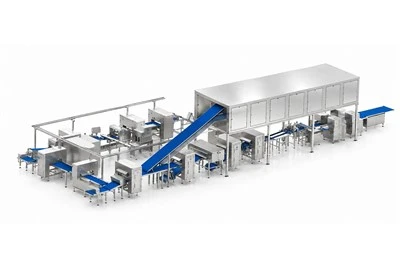
First, let’s start with the foundation: ingredient preparation. You can’t make consistent croissants, danishes, or fruit tarts without high-quality, prepped raw materials—flour, butter, sugar, and fillings each need specific handling. Many small bakeries skip this step by mixing dough by hand, but as you scale, hand mixing leads to uneven dough development, inconsistent butter distribution (critical for laminated pastries like croissants), and wasted labor hours. The core piece here is a commercial dough mixer, and not all mixers are created equal. For laminated pastries, you need a spiral mixer specifically—its slow, kneading action gently develops gluten without overheating the dough, which would melt the butter layers you rely on for flakiness. A spiral mixer with a variable speed setting is even better; you can start slow to combine dry ingredients, then increase speed to develop the dough without adding excess heat. For non-laminated pastries like muffins or scones, a planetary mixer works well, but always opt for a model with a large enough bowl to handle your batch size—too small, and you’ll be mixing multiple times a day, wasting time and risking inconsistency.
Next up, lamination equipment, which is the make-or-break step for pastries like croissants, puff pastry, and palmier cookies. Lamination is the process of folding butter into dough in multiple thin layers, and getting that right requires precision. A lot of bakers try to use a manual dough sheeter for small batches, but manual models limit how thin you can roll dough and how uniform your folds are—leading to uneven layers that don’t rise properly in the oven. A commercial automatic dough sheeter is non-negotiable for any line producing laminated pastries. These machines have adjustable rollers that maintain a consistent gap between dough and butter, and some even have built-in folding mechanisms to do the 3-fold or 4-fold turns needed for lamination in a single step. For larger operations, you can pair a sheeter with a dough laminator conveyor that moves dough and butter through the machine automatically, eliminating hand fatigue and reducing human error. One thing I always warn bakers about: don’t skimp on sheeter roller quality. Stainless steel rollers are essential, as they don’t absorb excess butter or dough residue, making cleaning easier and preventing cross-contamination between batches.
Once your dough is laminated or mixed, it’s time for shaping and portioning—another step where consistency directly impacts your final product. Manual shaping works for tiny artisanal batches, but for a production line, you need equipment that can portion dough into exact weights every time, so every croissant is the same size and every scone bakes evenly. Dough portioners come in two main types: volumetric and weight-based. For most pastries, a weight-based portioner is better because it adjusts for variations in dough density (which can happen if humidity changes or flour brands shift). These machines cut dough into precise, uniform pieces with no waste, and many can be paired with shaping attachments—like rounders for rolls or dividors for croissants. For pastries that require specific shapes, like danishes with a fruit filling or filled turnovers, a combination portioner-shaper might be the right fit. Some newer models even have programmable settings, so you can switch between batch sizes or pastry shapes quickly without recalibrating every time. This flexibility is key if you’re producing multiple types of pastries in one line, which most bakeries do to meet customer demand.
Once shaped, pastries need to go through proofing—this is the step where dough rises before baking, and it’s the most temperature- and humidity-sensitive part of the process. Too dry, and the crust will crack; too hot, and the yeast will die, leading to flat pastries. A commercial proofing cabinet (or proof box) is designed to maintain a consistent temperature, usually between 80–90°F, and 70–80% humidity, which is the sweet spot for yeast activity. For lines producing large volumes, a multi-level proofing cabinet with adjustable shelves lets you proof multiple batches at once, and some models have programmable cycles, so you can set specific times for different pastry types (croissants need longer proofing time than mini muffins, for example). I also recommend adding a proofing conveyor if you’re moving pastries through a continuous line—this lets proofing happen as dough moves from shaping to baking, eliminating the need to transfer trays manually and reducing the risk of damaging soft, risen dough.
Then comes baking—arguably the most important step, where raw dough turns into golden, flaky pastries. The type of oven you choose depends on your production volume and the type of pastries you’re making. For small to medium lines, a deck oven is a popular choice; it has separate stone decks that mimic a traditional bakery oven, providing even bottom heat which is perfect for pastries like tarts or flatbreads. Deck ovens also have individual temperature controls for each deck, so you can bake multiple types of pastries at different temperatures in the same oven. For larger, high-volume lines, a convection oven or a tunnel oven is better. Convection ovens use a fan to circulate hot air, which cooks pastries evenly and reduces bake time—ideal for items like cookies or mini croissants. Tunnel ovens, which are continuous conveyor ovens, move pastries through a long heated chamber, so each item gets the same amount of heat, making consistency across thousands of pastries easy. The key here is temperature control; modern ovens have digital thermostats that stay within ±5°F of your set temperature, which is critical for laminated pastries that rely on precise heat to melt butter and create flaky layers without burning the crust. Also, look for ovens with steam injection—adding a small amount of steam at the start of baking keeps the pastry crust soft, letting it rise properly before setting, which is a trick that makes a huge difference in flakiness.
After baking, pastries need to cool completely before packaging—another step that many bakeries overlook, but cooling too fast or too slow can ruin texture. Hot pastries get soggy if packaged too soon, so a proper cooling system is essential. For small lines, a wire cooling rack works, but for high-volume production, a commercial cooling conveyor is the way to go. These conveyors have multiple levels of fans that blow cool air evenly over pastries as they move, reducing cooling time from hours to just 15–20 minutes, and preventing condensation buildup. Some cooling conveyors even have humidity controls, so you can adjust airflow based on the pastry type—flaky croissants need gentle airflow to preserve layers, while denser muffins can handle stronger airflow.
Finally, packaging equipment. Once your pastries are cool, you need to seal them for freshness, add labels, and prepare them for distribution. The type of packaging equipment depends on your packaging style, but for most bakeries, a flow wrap machine (horizontal form-fill-seal) is the most efficient. These machines wrap individual pastries in airtight plastic film, keeping them fresh for longer, and can print expiration dates, brand logos, or ingredient labels right on the packaging—eliminating the need for separate labeling steps. For bulk packaging for wholesale accounts, a case sealer and palletizer work together to box finished pastries and stack them for shipping. If you’re selling pastries directly to consumers (like at a bakery cafe), you might also need equipment for bagging or display packaging, but that’s a smaller scale than a production line.
I want to be clear here: every part of this equipment doesn’t have to be brand new, but it does have to be compatible with your line. I’ve seen bakeries save money by buying gently used sheeters or ovens, but only when they fit seamlessly with their mixers and proofing cabinets—mismatched equipment, like a large mixer paired with a tiny sheeter, will create a bottleneck that slows your entire line. That’s why as a supplier, I don’t just sell machines; I work with bakers to design a line tailored to their specific needs—whether they’re making 500 croissants a day or 10,000. We talk about their current batch sizes, their future growth plans, and the types of pastries they want to produce, so every piece of equipment works together to minimize waste and maximize output.
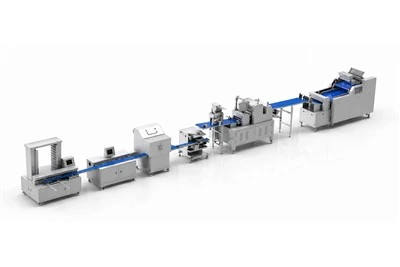
At the end of the day, a successful pastries production line isn’t just about having all the right machines—it’s about having equipment that’s reliable, easy to clean, and consistent. Bakers who invest in quality, compatible equipment see lower labor costs, less wasted dough, and a product that customers love, time after time. If you’re in the market to set up or upgrade your pastries production line, let’s connect to discuss your requirements and find the right equipment for your operation.
Automatic Meatball Production Line References
- "Commercial Bakery Equipment Guide: Laminated Pastry Production" – American Bakers Association, 2022.
- "Temperature and Humidity Control in Proofing for Artisanal Pastries" – Journal of Food Processing and Preservation, Vol. 45, Issue 3, 2021.
- "Efficiency and Consistency in Convection Ovens for Commercial Pastries" – Bakery Production and Technology, 2023.
- "Dough Lamination Techniques and Equipment for Scaled Pastry Production" – International Association of Food Industry Suppliers, 2020.
Shanghai Longyu Electro-Mechanic Technology Co., Ltd.
Shanghai Longyu Electro-Mechanic Technology Co., Ltd. is one of the most professional pastries production lines manufacturers and suppliers in China, featured by quality products and good service. Please feel free to wholesale advanced pastries production lines made in China here from our factory. Also, custom service is available.
Address: No.66, Guangfulin East Road, Zhongshan Subdistrict, Songjiang District, Shanghai, China
E-mail: sales4@longyu-sh.com
WebSite: https://www.longyu-sh.com/
