If you’ve ever walked through a busy public park, a low-income neighborhood grocery store, or a parking lot on the edge of a small town, you’ve probably spotted them: rows of slim, stainless steel boxes tucked under a canopy or next to a gas station, their digital screens flashing “FRESH PURIFIED WATER $1.50 PER GALLON.” As a water vending machine supplier, I talk to customers all the time—from small business owners looking to add a side income stream to city officials trying to expand access to clean drinking water—who ask the same question: Do these machines need a permanent water line connection to work? Water Vending Machine
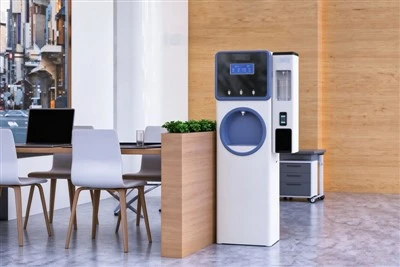
I get why this question comes up. Most people are used to big commercial appliances, like office water coolers or restaurant ice machines, that plug straight into a building’s existing plumbing. Those models are designed to run on a steady, high-pressure water line, so it makes sense to assume all water vending machines work the same way. But the truth is, there’s no one-size-fits-all answer. The answer depends on where you’re placing the machine, what kind of water quality is available at the site, and what kind of service you’re comfortable providing as an owner. After 7 years selling and servicing these machines across 12 states, I’ve seen both setups work—and both cause headaches when chosen for the wrong spot. Let’s break this down, because making the wrong choice here can mean the difference between a profitable machine and one that’s costing you money every month.
First, let’s start with what a permanent water line setup actually requires. If a machine runs on a water line, it’s plumbed directly to a municipal water supply or a private well line already running at the site. The machine connects to that line via a standard ¼-inch or ½-inch supply tube, with a built-in pressure regulator to keep water flow steady (too much pressure can damage the machine’s filters, too little will slow down vending speeds). Most line-connected models also have a built-in drain line, which routes wastewater (the leftover water that gets filtered out during the purification process) straight to the site’s existing sewer or septic system.
The big upside here is consistency. Municipal water supplies are tested regularly, so you know the incoming water quality is reliable—no surprises. That means you don’t have to haul heavy jugs of water to refill the machine, which cuts down on labor costs and the risk of human error (like forgetting to refill, or spilling water during the process). Line-connected machines also work faster. Because they’re constantly drawing from a steady supply, they can fill a 5-gallon jug in 2 minutes or less, which keeps lines moving on busy days at a grocery store or transit hub. For owners with multiple machines, line setups also mean less maintenance tracking for water levels—you only have to worry about replacing filters every 6 to 12 months, not restocking tanks.
But here’s the catch: line connections aren’t cheap or easy to install. In most cases, you have to hire a licensed plumber to run a new water line from the site’s main supply to the spot where you want to put the machine, plus hook up a dedicated drain line. That can cost anywhere from $500 to $2,000, depending on how far the line has to run and whether there are obstacles (like concrete sidewalks or thick tree roots) in the way. On top of that, not every site has easy access to plumbing. If you’re placing a machine in a remote park, a rural community center without updated plumbing, or a parking lot that’s not connected to the city sewer system, running a line might not be possible at all. Even if it is possible, some property owners don’t want to pay for the plumbing work, or worry about the risk of leaks damaging their property—something that’s not always a concern with other setups.
That’s where non-line, or bottle-fed, water vending machines come in. These models don’t connect to a permanent water line. Instead, they have a large, built-in tank (usually between 50 and 100 gallons) that you refill periodically with large 5-gallon or 55-gallon food-grade jugs of purified water. Some owners even source water from local natural springs, as long as it meets EPA standards for drinking water. The purified system in the machine still works the same way—ro reverse osmosis, carbon filtration, UV disinfection—to ensure the final product is safe—but it’s working with pre-filtered, pre-purchased water instead of incoming tap water.
The biggest benefit here is flexibility. You can put a non-line machine almost anywhere: a remote hiking trailhead, a small town’s community center with no plumbing, a temporary event space for a festival or county fair, even a backyard if you’re testing a machine before installing it permanently. There’s no plumber needed, so setup costs are just the price of the machine itself, usually between $3,000 and $6,000. Non-line setups are also great for sites with variable water quality. If a location has hard, cloudy, or high-mineral tap water, you don’t have to worry about clogging the machine’s filters with unexpected contaminants because you’re already using pre-filtered source water. I’ve had customers in small towns where the well water has high iron use non-line machines exclusively, because line models would need a whole extra pre-filter system to remove the iron—adding thousands to the long-term maintenance cost.
But non-line setups have their own flaws, and I’ve seen plenty of owners get tripped up by these. The biggest one is labor. You have to refill the built-in tank every 1 to 2 weeks, depending on how much the machine is used. That means you’re spending gas money to drive to sites, lifting heavy 55-gallon jugs (each weighing 450 pounds when full) with a dolly, and taking time out of your day to restock instead of focusing on growing your business. I had a customer in western North Carolina who started with two non-line machines in small mountain towns, and within six months he was working 12-hour days just refilling tanks—he couldn’t add more machines because he didn’t have the time. There’s also a higher risk of running out of water unexpectedly. If you forget to check the tank level, or a jug gets delayed in delivery, the machine will stop working for hours or days, which means lost revenue and frustrated customers. And while pre-filtered spring water is an option, it’s also an ongoing cost—you’re paying for the source water, whereas line-connected machines use free municipal water (you only pay for the tiny amount of electricity needed to run the filters and vending system). For a machine that sells 200 gallons a month, that adds up to $50 to $100 a month in water costs for non-line, vs. $5 to $10 for line setups.
So which is right for you? As a supplier, my first question when a customer asks is: Where are you placing the machine, and how much traffic does the site get? If it’s a high-traffic location—like a grocery store, a school, or a busy gas station with 500+ cars a day—line-connected is almost always the better choice. The lower monthly costs and faster vending speeds will make the machine profitable much sooner. But if it’s a low-traffic spot, or a remote location with no plumbing access, non-line is the only realistic option. I also ask about local water quality. If the area has known issues with contaminants, non-line might be safer long-term, even if it’s a higher upfront labor cost, because you avoid the risk of filter clogs that can break the machine.
Wait a second—there’s a third option I should mention, because it’s growing in popularity lately, and I get a lot of questions about it: self-priming water line setups. These are kind of a middle ground. They don’t connect directly to a permanent water line, but they do have a pump that draws water from a larger external tank (not the machine’s built-in tank) that you refill. The external tank holds 200 to 500 gallons, so you only have to refill it every 1 to 2 months, cutting down on labor. They work well for sites that have access to a water source nearby, like a community well, but no way to run a dedicated line to the machine. For example, I had a customer in a rural Ohio town that had a shared well for the local park. He couldn’t run a line from the well to the vending machine (the park’s board wouldn’t approve the cost), so he installed a self-priming machine that draws water from a 300-gallon tank connected to the well line near the park entrance. He only has to refill the tank once a month, and the machine works almost as fast as a line-connected model. It’s a great solution for sites that fall between the two extremes.
I also want to talk about regulatory stuff, because that’s a big part of this that many new owners overlook. All water vending machines, no matter the setup, have to meet EPA drinking water standards, plus local health department rules. For line-connected machines, most health departments will require a backflow preventer to stop contaminated water from flowing back into the municipal supply—another thing that adds to the installation cost, usually $100 to $200. For non-line machines, you have to provide proof that the source water you’re using is safe for drinking, and most health departments require you to test the machine’s product water monthly. I always make sure my customers know to check with their local health department before installing any machine, because some areas have specific rules about both setups. For example, in parts of California, line-connected machines have to have a separate shutoff valve for easy maintenance, while in Texas, non-line machines have to be installed at least 10 feet away from septic systems to prevent contamination.
I’ve had to help customers fix mistakes they made by choosing the wrong setup. Last year, I worked with a small business owner in a suburb of Atlanta who bought two non-line machines because he thought it was cheaper upfront. He placed them at two convenience stores with 300+ customers a day each. Within three months, he was spending $300 a month on gas to refill tanks, and he had to replace two pumps in the machines because the consistent cycling (since he was refilling so often) caused wear and tear. By switching one of them to a line-connected setup (we worked with a local plumber to run the line for $1,200), he cut his monthly costs by $250 and increased his monthly revenue by 10% because the machine could fill jugs faster. It was a good fix, but it would have saved him money in the long run if he’d chosen line setup from the start.
Another example: a customer in rural Montana who wanted a machine for a small community center that only had a well and no sewer line. He tried a line setup, but the local health department wouldn’t approve it because there was no sewer line to connect the drain to. He switched to a non-line setup with a closed wastewater tank (instead of a drain line) that he has to pump out every 6 months, which cost more upfront but was the only option that met local rules. That machine is now the only clean drinking water source for the town’s 400 residents, so it’s been a huge success, even with the extra maintenance.
At the end of the day, there’s no “one right answer” to whether water vending machines need a water line connection. It’s all about matching the setup to your specific location, your budget, and your long-term goals. If you have a high-traffic site with easy access to plumbing, line-connected will give you the lowest operating costs and fastest growth. If you have a remote or low-traffic spot, non-line is the flexible, practical choice. And if you’re somewhere in between, the self-priming setup might be the sweet spot.
As a supplier, I don’t push one setup over the other—my job is to give you the facts, so you can pick what works for you. If you’re thinking about adding a water vending machine to your property or starting a vending business, and you’re still not sure which setup is right, I’d be happy to walk through your site and help you make a plan. We can talk about traffic levels, local plumbing access, water quality, and your budget, so you don’t have to make the same mistakes I’ve seen other new owners make. Whether you’re looking for one machine or a whole network, we can work together to build a setup that’s profitable and meets all local regulations.
To learn more about water vending machine setups and get a customized quote for your needs, reach out to our team to discuss your project and next steps.
Ceramic‑Membrane References
- U.S. Environmental Protection Agency. (2022). Drinking Water Requirements for States and Public Water Systems. https://www.epa.gov/dwreginfo/drinking-water-requirements-states-and-public-water-systems
- National Automatic Merchandising Association. (2021). Water Vending Machine Best Practices Guide.
- World Health Organization. (2020). Guidelines for Drinking-water Quality, 4th ed.
- Centers for Disease Control and Prevention. (2022). Preventing Backflow and Cross-Connections in Drinking Water Systems.
- Food and Agriculture Organization of the United Nations. (2021). Small-Scale Water Vending for Rural Communities.
Zhejiang Tianxingjian Water Co., Ltd.
With over 20 years’ experience, we are one of the most professional water vending machine manufacturers in China. We warmly welcome you to buy durable water vending machine in stock here and get quotation from our factory. All customized equipment are with high quality and low price.
Address: No.128 Anhe Road, Zhongxing Village, Zhangzhen Town, Shangyu District, Shaoxing City, Zhejiang Province, P.R. China
E-mail: chen.f@tjian.com
WebSite: https://www.tianjianshuiwu.com/
