If you’ve ever stood next to a large industrial cooling unit, a ventilation system in a commercial warehouse, or even the blower that keeps your HVAC running in the summer, you’ve almost certainly felt the push of an axial flow fan. These workhorses are everywhere, but most people don’t stop to wonder how they actually move air the way they do—especially when so many other fan styles (like centrifugal fans) seem more complex. As a supplier of axial flow fans, I spend a lot of time walking customers through this exact process, because understanding the science behind it helps them pick the right fan for their space, whether that’s a small workshop, a factory floor, or a large agricultural facility. Let’s break it down simply, no confusing jargon, and you’ll see why axial flow fans are such a go-to for so many applications. Axial Flow Fans

First, let’s start with the basics: what “axial flow” even means. The word “axial” refers to an axis, or a central straight line that runs through the center of the fan. So an axial flow fan moves air parallel to that central axis, unlike centrifugal fans which throw air outward at a right angle to the axis. That’s a tiny difference in terminology, but it’s huge for how the fan works. Think of a propeller on an airplane: the blades spin around a central hub, and air moves straight forward along the same line the propeller is pointing. That’s exactly how an axial flow fan operates, just scaled up for industrial or commercial use instead of small aviation.
Now, let’s get into the actual components you’ll find in a typical axial flow fan, because each part plays a specific role. The core is the hub, the solid central cylinder that all the blades attach to. Attached to the hub are the blades—usually two to six, depending on the fan’s size and purpose. These blades aren’t flat; they’re shaped like airfoils, the same curved shape you see on an airplane’s wing. That airfoil design is the secret to how the fan generates airflow. A motor sits behind the hub, connected directly or via a gearbox to spin the hub (and blades) at a set speed. Most axial flow fans also have a cylindrical housing, or shroud, around the blades. This shroud does two key things: it keeps air from spilling around the edges of the blades instead of being pushed forward, and it straightens out the airflow as it exits the fan, making the movement more efficient. Some larger industrial fans also have stator blades—stationary blades positioned right behind the spinning rotor blades. These stator blades don’t move; their job is to straighten out any swirling motion in the air that the rotor blades created, so the entire airflow is smooth and forward-moving instead of chaotic.
Let’s walk through the step-by-step process of how air moves. When the motor turns the rotor and blades, each blade’s airfoil shape creates pressure differences. Here’s where Bernoulli’s principle comes in, the same rule that helps airplanes fly. An airfoil is curved more on the top than the bottom. As the blade moves through the air, the air that flows over the curved top has to move faster to cover the longer distance, while the air moving under the flat bottom moves slower. Bernoulli’s principle says that faster-moving air has lower pressure, slower-moving air has higher pressure. That higher pressure under the blade pushes the air forward and up, while the lower pressure above pulls air into the space the blade just left. For a spinning fan, each blade repeats this process thousands of times per minute, creating a continuous stream of air parallel to the fan’s axis. The shroud around the blades confines this airflow, so instead of air moving in all directions, it’s pushed straight through the fan.
But why does this matter for different applications? I get asked that a lot when customers come to me looking for a fan, because axial flow fans aren’t one-size-fits-all. Their design makes them perfect for situations where you need to move a large volume of air at a relatively low pressure, without changing the direction of the airflow. Let’s contrast that with centrifugal fans, which are better for moving air at higher pressures, like in a ducted HVAC system that has to push air through long pipes with lots of bends. Axial flow fans, on the other hand, shine in spaces where airflow is open or only has short paths. For example, in a warehouse with high ceilings, you need to move tons of air to cool down hot spots from heavy machinery. An axial flow fan can move that air efficiently, without needing to work against a lot of duct resistance. Agricultural applications are another big one: farmers use axial flow fans to ventilate barns, dry grain, or cool livestock—again, moving large volumes of air over a wide area. Even large cooling towers at power plants or data centers use axial flow fans to circulate water-cooled air through the system.
Of course, there are factors that affect how well an axial flow fan works, and these are the details I help customers work through when they reach out. The number of blades is one: more blades (usually four to six) create a smoother airflow and higher volume, while fewer blades (two or three) spin faster, making them good for high-speed ventilation in smaller spaces. The pitch of the blades—how much they’re angled relative to the plane of the fan—is also adjustable. Fans with adjustable blade pitch let you change how much air the fan moves without changing the motor speed, which is great for applications where airflow needs to vary, like seasonal barn ventilation. The motor power matters too: for larger fans that move 100,000 cubic feet per minute (CFM) or more, you need a higher-horsepower motor to spin the blades enough to generate enough pressure. Shroud design is another point—some shrouds are shaped to reduce turbulence, which makes the fan more efficient, so less energy is wasted moving air.
I should also clear up a common misconception: axial flow fans don’t create wind, they create a steady airflow. Wind is caused by pressure differences in the atmosphere, but an axial flow fan uses mechanical force to move air. That’s why even a large fan won’t change the temperature of the air—it just moves it around, which makes a space feel cooler because it pulls hot air away from your body and circulates fresh air in. That’s why you’ll see them paired with air conditioning systems: the AC cools the air, and the axial flow fan moves that cool air through the space, distributing it evenly instead of letting it pool near the ceiling.
Another thing I emphasize to customers is energy efficiency. As someone who works with these fans every day, I’ve seen that a well-designed axial flow fan can be 30-40% more efficient than other fan types for low-pressure, high-volume airflow needs. That’s a big deal for businesses, especially as energy costs keep rising. The efficiency comes from the direct airflow path—since air moves straight through the fan, there’s no loss from turning it, like there is with centrifugal fans. But efficiency drops if a fan is mismatched to its application: if you put a small axial flow fan in a space that needs a lot of airflow, it will work too hard, waste energy, and burn out faster. That’s why I always ask customers about their space size, the type of airflow they need, and any obstacles (like ductwork) before recommending a fan.
Let me give a real example of a project I worked on last year. A 20,000-square-foot manufacturing plant was having a problem: hot air from welding machines and industrial ovens was pooling near the ceiling, and their existing ventilation system wasn’t keeping up. The initial quote from a different supplier was for centrifugal fans, which would have required custom ductwork and would have used 25% more energy. I recommended 12 large axial flow fans with adjustable blade pitch, mounted high on the walls and ceiling. They installed them, and within a month, the temperature in the plant dropped 12 degrees Fahrenheit, and their energy bill for ventilation went down 18%. That’s the kind of result that comes from understanding how axial flow fans work, and matching them to the right use case.
Now, you might be wondering if there are limits to axial flow fans. Sure, they’re not the best for every job. If you need to push air through long, narrow ducts with lots of bends, a centrifugal fan is better because it can generate higher static pressure (the force needed to push air against resistance). Axial flow fans can only handle low static pressure, so if your application has more than a few feet of duct or sharp turns, they won’t perform as well. They also don’t work well for moving air long distances in narrow spaces—their airflow disperses quickly once it leaves the fan, so they’re meant for short, wide spaces. But for almost all industrial, commercial, and agricultural ventilation needs, they’re the top choice.
So, whether you’re a warehouse manager looking to cool your facility, a farmer needing to ventilate a barn, or someone setting up a cooling system for a data center, understanding how axial flow fans work helps you make a better decision. They’re simple in concept but sophisticated in their design, using basic physics to move huge volumes of air efficiently.
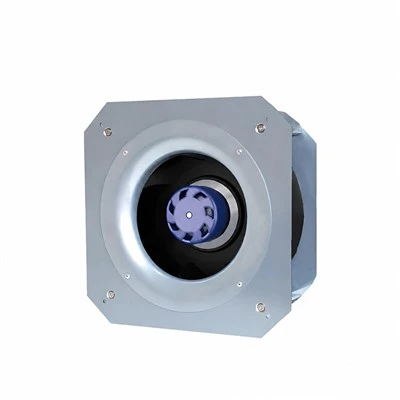
If you’re in the market for an axial flow fan, or you have questions about what type is right for your space, I’m here to help. I’ve worked with businesses of all sizes, from small workshops to large industrial facilities, and I can walk you through the details, from blade pitch to motor size, to make sure you get a fan that meets your needs without wasting energy. Reach out to me to discuss your requirements and find the perfect axial flow fan solution.
Compact Cooling Fans References
- Engineering ToolBox. "Axial Flow Fans: Characteristics and Capacity." Retrieved from industry engineering reference materials.
- Cengel, Y. A., & Cimbala, J. M. Fluid Mechanics: Fundamentals and Applications. 4th Edition, McGraw-Hill.
- Fan and Motor Association. "Industrial Ventilation Fan Selection Guide." Retrieved from trade association technical publications.
- American Society of Heating, Refrigerating and Air-Conditioning Engineers (ASHRAE). HVAC Applications Handbook. Chapter 20: Ventilation and Infiltration.
Suzhou Blauberg Motoren Technology Co., Ltd.
Suzhou Blauberg Motoren Technology Co., Ltd. is one of the most professional axial flow fans manufacturers and suppliers in China, featured by quality products and good service. Please rest assured to buy bulk customized axial flow fans from our factory. Welcome to contact us for quotation.
Address: No. 8, Zhu Street, Industrial Park, Suzhou, JiangSu, China
E-mail: Andie@blauberg.cn
WebSite: https://www.blaubergmotors.com/
