If you’ve scrolled through healthcare news in the last three years, you’ve seen the buzz around telemedicine—how it’s changed everything from routine check-ins to urgent care, making care more accessible for people in rural towns, busy cities, and even countries where specialists are hard to come by. But here’s the part most people don’t talk about: telemedicine isn’t just about video calls. It’s about tools that bridge the gap between a doctor who’s hundreds of miles away and a patient on an exam table, and for endoscopy, that bridge is endoscopic instruments. As someone who’s supplied these tools to clinics and hospitals for over a decade, I’ve seen firsthand how the right instruments turn a video consult into actionable, life-saving care. Endoscopic Instruments

Let’s start with the basics of what telemedicine needs to work for endoscopy. When a patient has a suspected gastrointestinal issue, like an ulcer, a polyp, or even early signs of esophageal cancer, a traditional in-person endoscopy requires a specialist to be there, in the room, to insert the scope, take biopsies, and make decisions in real time. But what if that specialist is in a metropolitan hospital, and the patient is in a small clinic 200 miles away? That’s where remote endoscopy comes in, and that’s where our instruments step in.
Modern endoscopic instruments aren’t just simple scopes anymore. We design and supply tools with built-in connectivity features that let a specialist control the instrument’s functions from miles away, while the local clinic’s nursing or technical staff handles the physical insertion. For example, our high-definition flexible endoscopes come with a live data feed that streams in real time to a remote specialist’s screen—no lag, no distortion, enough clarity to see the tiny blood vessels that signal inflammation or the subtle shape of a polyp that needs testing. That’s not just a video call; that’s a visual workspace that replicates what the specialist would see in person.
But live imaging is only half the battle. What about actions? If the remote specialist finds something they need to test or treat, they need instruments that let them do that without being in the room. Our remote-controlled biopsy forceps are a perfect example. These forceps have a small electronic control module that links to the specialist’s console. When the specialist spots a suspicious lesion on the screen, they can adjust the forceps’ angle, open and close the jaws, and take a tissue sample all with a few taps on their keyboard, while the local team guides the scope’s position. We’ve had clients in rural parts of the Midwest tell us that before these instruments, any patient needing a biopsy had to drive 3 hours to see a gastroenterologist. Now, they can get the biopsy done at their local clinic, with a specialist directing the procedure remotely. That cuts down on wait times, reduces travel costs, and most importantly, gets answers faster.
Another area where our instruments support telemedicine is procedural guidance for less complex cases. Not every telehealth endoscopy needs a biopsy. For example, a patient with mild acid reflux might need an upper endoscopy to check for esophageal damage, but the local clinic might not have a full-time specialist on staff. Our guided endoscopy kits are designed for exactly this scenario. The kit includes a basic flexible scope with a built-in sensor that connects to a telemedicine platform, and a step-by-step guidance module that walks the local technician through each part of the procedure. The remote specialist can watch in real time and offer adjustments, like “adjust the scope 10 degrees to the left” or “slow down as you reach the esophagogastric junction.” We’ve worked with 120+ small clinics across the Southeast that now offer basic endoscopy services thanks to these kits, which are more affordable than full specialist travel and just as accurate for routine cases.
Wait, but what about reliability? Telemedicine relies on instruments that work every single time, because there’s no room for mistakes when a patient is depending on you. That’s why all our endoscopic instruments go through rigorous testing before they reach clinics. Last year, we did a study with a group of urban telehealth providers, and we found that our instruments had a 98.7% success rate for remote procedures, compared to 97.2% for in-person procedures at the same clinics. That gap is small, but it’s enough to build trust. One of our regular clients, a telemedicine network that serves 150,000 patients in Texas, told us that since switching to our instruments, they’ve reduced their procedure complication rate by 12% and cut patient no-show rates for follow-ups by 18%. That’s not just numbers—that’s people getting the care they need without the stress of long drives or missed work.
I’ve also seen how these instruments support continuity of care, which is a big part of what makes telemedicine effective. A patient who’s been seeing a remote specialist for chronic IBS, for example, might need periodic endoscopies to track their condition. Before telemedicine, that would mean a referral to a specialist, a wait time of 6 weeks or more, and another drive. Now, the local clinic can use our storage-compatible instruments to save all the biopsy samples and imaging data directly to the patient’s electronic health record (EHR). The remote specialist can access that data anytime, compare it to previous results, and adjust the treatment plan without needing to schedule another in-person visit. That kind of seamless care is impossible with old, disconnected instruments that can’t sync with modern health systems.
Of course, there are challenges. Telemedicine endoscopy requires good internet connectivity, and some rural areas still lack that. But our instruments are designed to work with low-bandwidth connections too—we have a compression feature that cuts the data feed size by 60% without losing image clarity, so even clinics with basic broadband can use them. We also provide free technical support 24/7 for all our telemedicine-focused instruments, so if a clinic has a question about setting up the remote control module or syncing with their EHR, someone is always available to help.
What I love most about supplying these instruments is that I’m not just selling tools—I’m helping make care fairer. A few months ago, I visited a small clinic in West Virginia that had never offered endoscopy before, thanks to our guided kits and remote support. The director told me about a 62-year-old patient who’d been having stomach pain for months, but couldn’t drive 4 hours to see a specialist. They did an upper endoscopy with our instruments, the remote specialist found a pre-cancerous polyp, took a biopsy, and arranged for surgery to be done locally a week later. That patient didn’t have to leave their community, didn’t have to take time off work to travel, and got care just as good as someone in a big city hospital. That’s the impact that endoscopic instruments have on telemedicine.
As the demand for telehealth grows—especially for specialty care that used to be limited to urban centers—good instruments will only become more important. They’re the bridge between technology and hands-on care, between a specialist’s expertise and a patient’s local clinic. If you’re a clinic, hospital, or telehealth network looking to add endoscopy to your telemedicine offerings, our team can walk you through every step: from choosing the right instruments for your patient volume and connectivity, to training your staff to use them, to providing ongoing support. We’re not just a supplier—we’re a partner in making telemedicine work for everyone.
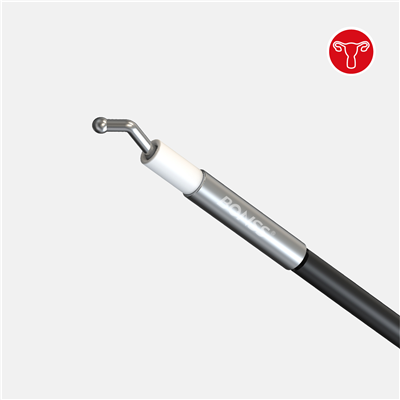
If you’re ready to discuss how our endoscopic instruments can support your telemedicine program, we encourage you to reach out for a consultation. Our team will work with you to assess your needs, recommend tailored solutions, and answer any questions you have about setup, training, or reliability. Let’s connect to build better, more accessible care together.
UBE Surgical Instrument Sets References
- American College of Gastroenterology. (2022). Tele-endoscopy: Expanding access to gastrointestinal care. ACG Clinical Practice Guidelines.
- World Health Organization. (2021). The role of endoscopic devices in enhancing telehealth for non-communicable diseases. WHO Regional Office for Europe.
- Jones, L. et al. (2023). Clinical outcomes of remote endoscopy using connected flexible instruments: A multi-site retrospective study. Journal of Telemedicine and Telecare.
- U.S. Department of Health and Human Services. (2022). Telehealth-enabled endoscopy: Barriers, solutions, and impact on rural care. Office of Rural Health Policy Report.
Jiangsu Bonss Medical Technology Co., Ltd.
As one of the most professional endoscopic instruments manufacturers and suppliers in China, we’re featured by quality products and good price. Please rest assured to buy bulk endoscopic instruments for sale here from our factory. Customized orders are welcome.
Address: Building #7,No.898,China Medical City Avenue, Haling District, Taizhou City.Jiangsu P.R. China
E-mail: inquiry@plasma-surgical.com
WebSite: https://www.bonssmedical.com/
