Hey everyone, it’s Jake from [Your Electric Wire Supplier Name] – been in the wire game for 12 years, and I swear the question I get asked most by homeowners, electricians, and even some new construction folks is this: “What’s the actual standard size of an electric wire for a household circuit?” Electric Wire
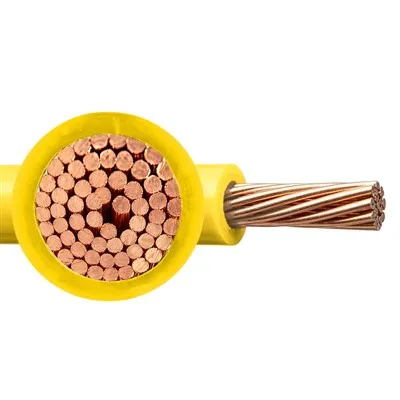
I know, it’s easy to scroll past generic “electrical code” posts and zone out, but hear me out – get this wrong, and you’re looking at frayed wires, tripped breakers, or even something way more serious. We sell 1000s of rolls a month, and most of the missteps I see (from DIYers even small contractors) come from grabbing a random wire size instead of sticking to real, code-backed standards. So let’s break this down like we’re chatting on a job site coffee break – no stuffy jargon, just what works for your home.
First, let’s kill a quick myth: “standard wire size” isn’t one-size-fits-all. It depends on what circuit you’re powering – your fridge, a bedroom outlet, an oven, even a porch light. That’s why last week, a homeowner came in panicking because he used 14-gauge wire for his 240V dryer, and his neighbor laughed so hard his beer spilled. That’s exactly the kind of mistake we’re here to prevent.
In North America (since that’s 90% of my customer base), we use the AWG system – American Wire Gauge. The number’s backwards, by the way: lower number = thicker, more current-carrying wire. Makes sense when you think about it: 10-gauge is fatter than 14, right? Got that? Good, let’s move to the actual standard sizes tied to household circuits, per NEC (National Electrical Code) – that’s the rulebook every licensed electrician lives by, so we don’t cut corners here.
Let’s start with the small stuff: 15-amp circuits. These are the basic ones – the wall outlets in your living room, bedroom lamps, phone chargers, maybe a small TV. The official standard here is 14-gauge copper wire (14 AWG). Wait, why copper, not aluminum? For household circuits, copper is non-negotiable because it’s way more flexible, less prone to corrosion, and easier to splice. Aluminum’s for big outdoor feeds or whole-home panels, not individual circuits. Now, why 15-amp needs 14-gauge? The NEC says 14 AWG copper can safely carry up to 15 amps without overheating – go higher than that, and the wire heats up, melts insulation, sparks. That 14-gauge has a thinner insulation jacket, too, usually NM cable (non-metallic sheathed – the flexible, white or plastic wrapped stuff you see running through walls), which is only approved for indoor dry locations, so if you’re running through a crawlspace or basement, you want a different jacket, but the gauge stays.
Next up, the 20-amp circuits – these are for the stuff that needs a little more oomph: kitchen counters (the GFCI protected ones), laundry room outlets, bathroom fans, maybe a microwave. Standard here is 12-gauge copper (12 AWG). The NEC rates 12 AWG for 20 amps, which is why you’ll see those outlets marked “20A” on the face – they don’t fit 15-amp plugs perfectly, so you can’t accidentally plug a heavy device into a 15-amp circuit on 12-gauge? Wait, no – actually, you can plug a 15A device into a 20A outlet, but the wire needs to handle the 20A. Common mistake here: using 14-gauge on a 20A circuit. I see this all the time, especially in older homes where someone swapped a breaker without replacing the wire. That’s a fire hazard, full stop. So if your circuit has a 20-amp breaker, you need 12 AWG – period. Also, a quick side note: these 12-gauge rolls are the second most popular we sell, right after 14-gauge, because everyone’s doing kitchen renos these days.
Now the big guns – the 30-amp and 50-amp circuits. These are the 240V ones, the ones that power appliances that suck serious current. First, 30-amp circuits: think electric dryers, some water heaters, maybe a window AC unit for a big living room. The standard wire size here is 10-gauge copper (10 AWG). Wait, why? 10 AWG is rated for 30 amps safely, so that’s non-negotiable. I once had a guy come in trying to use 12-gauge for a dryer circuit – said his buddy told him it’d work. Buddy was wrong. He spent twice as much re-running wire as he would have if he’d just bought the right roll the first time. 50-amp circuits? Those are for electric stoves (most modern ones) and large water heaters, and even EV chargers these days. The standard here is 6-gauge copper (6 AWG) – sometimes 8-gauge if it’s a smaller, older water heater, but 6 AWG is the go-to for most 50A 240V household circuits. And before you ask, yes, we stock both solid and stranded for these – solid is better for fixed runs in walls, stranded for things that move a lot, like extension cords (but never use extension cord wire as permanent household wire, by the way).
Wait, hold on, what about if you’re in a different country? I get that question from time to time – folks who move or have vacation homes. In most of Europe and parts of Asia, they use metric wire sizes, like 1.5mm² for 16A circuits, 2.5mm² for 20A, 4mm² for 30A. But our focus here is standard household circuits where most of our customers are, so let’s stick to AWG for this post.
Also, important: don’t forget the number of wires in the cable. Most standard household NM cable has a hot, a neutral, and a ground – that’s 3 wires total. For 240V circuits, sometimes it’s two hots, a neutral, and a ground, so 4 wires. But the gauge of each hot wire is what matters, not the others – the neutral and ground can be same or lower, but never higher than the hot, right? Wait, actually, ground wire gauge is based on circuit size too – for 15A, ground is 14 AWG; 20A, 12 AWG; 30A, 10 AWG, same as the hot. Good to know, because if you’re buying bulk cable, you don’t want mismatched ground wires.
Now, why does this even matter for regular homeowners? Let’s say you’re adding a new outdoor outlet for a grill – if you use 14-gauge on a 20A circuit, that wire will overheat if you plug in a heavy grill, melt the plastic, and start a fire. Or if you upgrade your fridge to a newer, more energy-hungry model that needs a 20A circuit, and you still have 14-gauge wire, you’ll trip the breaker non-stop. Last month, we had a contractor call us because he had 10 rolls of wrong gauge wire, and a client’s kitchen reno was stuck because he used 14-gauge on 20A counter outlets. That’s the kind of headache we help avoid by just telling people the real standards.
Another common question: can I use a thicker wire than standard? Like, can I use 12-gauge on a 15A circuit? Technically, yes – the wire will handle less current than its rating, so it’s safe. But it’s overkill, and more expensive. Why pay for thicker wire you don’t need? We always tell customers to stick to the minimum required by the NEC – that’s the sweet spot between safe and cost-effective. No need to waste money, but definitely don’t go thinner.
Wait, what about old homes? I’ve seen 10-gauge wire on a 15A circuit in a 1950s home. That’s not a problem, it’s just oversized, but the breaker will only let 15A through, so the wire is fine. But don’t assume old wire is the right size – if you’re renovating, hire a licensed electrician to check, because some old homes used aluminum wire, which has different standards and needs special connectors.
Now, let’s talk about what we do here at [Your Electric Wire Supplier Name] – we don’t just sell wire, we give the real, no-BS advice. Every roll we sell is tested to NEC standards, so you know it’s not the cheap, thin stuff from a no-name brand that skimps on copper content (that’s the other mistake – some “14-gauge” rolls are actually thinner, so they can’t handle 15 amps). We send a lot of free samples to contractors, and we help DIYers figure out exactly what size they need, no hoops to jump through.
So to recap the quick cheat sheet you can stick on your fridge:
- 15A circuits (lamps, basic outlets): 14 AWG copper
- 20A circuits (kitchen counters, laundry): 12 AWG copper
- 30A circuits (dryers, small water heaters): 10 AWG copper
- 50A circuits (stoves, EV chargers): 6 AWG copper
That’s it. No overcomplicating. The only exceptions are if you’re running wire through walls with limited space (then you might need a thinner gauge, but still per NEC) or if you’re in a region with specific local codes (always check that, too – some cities have extra rules, like for outdoor wiring).
Now, if you’re planning any home projects, whether it’s swapping a breaker, adding an outlet, or rewiring a room, don’t guess on the wire size. Grab our cheat sheet, or hit us up – we can help you pick exactly what you need, in bulk or small rolls, whatever your project is. We ship fast, we’ve got stock in every gauge, and we’re not here to upsell you on stuff you don’t need.
Wait, one last thing: safety first. Always turn off the breaker before working on any electrical circuit, and if you’re not 100% sure what you’re doing, hire a licensed electrician. I’ve seen too many DIYers get hurt because they tried to skip standards. But if you know your circuit type, you can grab the right wire, no problem.
If you need more details, want to order bulk rolls, or have questions about specific projects, reach out to us directly – we’re here to help. Don’t risk using the wrong wire, save yourself the headache (and the fire hazard) by going with the standard sizes we outlined.
RF Coaxial Cable References:
National Electrical Code (NEC) 2023 Edition, Article 310 (Conductor Ampacity) and Article 210 (Branch Circuits)
AWG Wire Gauge Standards, American National Standards Institute (ANSI) C119-1972
Underwriters Laboratories (UL) Standard 83 (Non-Metallic Sheathed Cable)
Occupational Safety and Health Administration (OSHA) Electrical Safety Guidelines for Residential Work
Yangzhou Huayu Cable Co., Ltd.
Yangzhou Huayu Cable Co., Ltd. is one of the most professional electric wire manufacturers and suppliers in China, also supports customized service with low price. Please feel free to wholesale advanced electric wire made in China here from our factory. Contact us for pricelist.
Address: No. 9 Jingang Road, Yangzhou City, Jiangsu Province, China
E-mail: huayucableco@126.com
WebSite: https://www.huayucabletech.com/
