If you’ve been in the auto parts game for more than five minutes, you’ve heard the hype around aluminum castings these days. Everyone’s chasing lightweight vehicles—you know, the kind that get better gas mileage, have longer electric range, and don’t just feel like a tin can on wheels. But here’s the tea no one talks about enough: none of that high-performance aluminum casting magic happens without one not-so-glamorous, totally essential material—graphite. And as someone who’s been supplying graphite for these exact auto aluminum castings for years, I’ve seen firsthand how this humble carbon-based stuff is the unsung hero of the whole operation. Let’s break down why graphite isn’t just a random add-on—it’s non-negotiable for making the lightweight auto parts you see on every new EV and gas car these days. Automobile Aluminum Casting Graphite
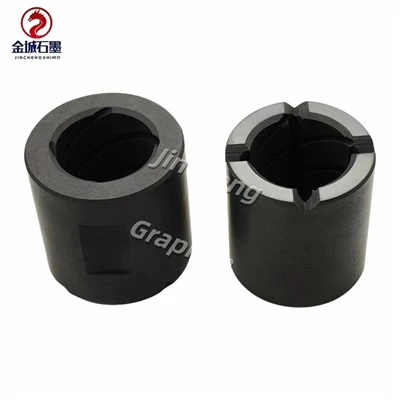
First, let’s get one thing straight: lightweight aluminum castings aren’t just “light metal stuff.” We’re talking about engine blocks, suspension components, brake calipers, wheel hubs, and even parts of the battery frame for EVs. Every ounce saved here adds up to better fuel efficiency, longer battery life, and safer handling. But aluminum is tricky to cast, right? It melts at around 1,220°F (way lower than iron, which melts at like 2,800°F), but it’s also super reactive when it’s hot. If you pour molten aluminum into the wrong mold, it’ll stick, crack, or form tiny imperfections that make the part weak or useless. That’s where graphite steps in.
Graphite is the go-to mold material for aluminum castings for one big reason: it’s non-wetting with molten aluminum. What does that mean exactly? Wetting is when a liquid sticks to a solid surface instead of beading up, and molten aluminum is super good at wetting all sorts of materials—ceramics, steel, even some other metals. But graphite? Nope. Because of its atomic structure (those flat, layered carbon sheets that slide over each other like a deck of cards), molten aluminum just rolls right off its surface. No sticking, no fusing, no messy residue that ruins the casting. For auto parts, where even a tiny imperfection can mean a part fails under stress (hello, safety recalls), that’s a game-changer. I’ve had a few clients come to me frustrated with castings that stuck to their steel molds, wasting hundreds of pounds of aluminum and hours of machining time. Once they switched to our graphite molds, their defect rates dropped by almost 30%—that’s real money saved for their shops, and way less scrap heading to landfills.
Then there’s thermal stability, which is huge here. When you pour molten aluminum into a mold, you need it to cool evenly and slowly enough that the metal doesn’t crack, but not so slow that it forms big, grainy crystals inside. Graphite has a super high thermal conductivity—way higher than most other mold materials like sand or even some advanced ceramics. It transfers heat consistently across the entire mold, so the aluminum cools uniformly. For lightweight auto parts, uniform cooling is key because it makes the metal’s internal structure stronger without needing extra material. If aluminum cools too fast on one side, it forms tiny gaps or weak spots; too slow, and you end up with a part that’s heavier than it needs to be (which defeats the whole purpose of lightweighting). I work with a handful of EV battery frame manufacturers, and they swear by our isotropic graphite (graphite that conducts heat the same way in all directions) for their large, complex molds. Those parts are two feet long, with tiny webbing and tight tolerances—if the cooling was off, the frame would warp and not fit the battery pack. Graphite eliminates that.
Wait, let’s not forget about machinability. Even the best aluminum casting needs to be machined to fit perfectly with other parts—engine cylinders need smooth walls, brake calipers need tight tolerances for seals, wheel hubs need to spin true. Graphite molds produce castings with really smooth surfaces right out of the mold, so you don’t have to do as much machining. But even when you do need to machine the casting itself, it’s way easier to work with a graphite-cast aluminum than, say, a sand-cast one. Because sand-cast parts have that rough, porous surface, machining them causes more tool wear and leaves tiny bits of sand embedded in the metal. With graphite, the surface is dense and uniform, so machining is faster, uses less tooling, and the final part is more consistent. For auto manufacturers, that translates to faster production lines and lower per-part costs—again, something that’s easy to overlook until you switch. And since every auto part has to meet strict industry standards (ISO, SAE, all that stuff), consistent machinability means every part coming off the line checks those boxes without extra testing.
But here’s the thing about graphite for auto castings specifically: it’s not just any graphite. There’s synthetic graphite, natural graphite, different grades with different particle sizes, different densities. I’ve had clients come in asking for “regular graphite” for their engine blocks, and it turns out they actually need high-purity isotropic graphite for their suspension components. Why does purity matter? If graphite has impurities like sulfur or metal oxides, those can react with molten aluminum and create tiny voids in the casting. For a suspension part, that void could lead to a crack while the car’s driving—total safety nightmare. So as a supplier, we don’t just send graphite; we work with each client to pick the right grade for their specific part. For example, brake calipers need graphite with high compressive strength because they have to hold up to the pressure of braking. EV motor housings need graphite with low porosity so no gases get trapped during casting, which would weaken the part. It’s not a one-size-fits-all, and that’s why graphite is so critical—you have to get it right for the application.
Also, let’s talk about the sustainability angle, because that’s huge in the auto industry right now. Everyone’s chasing net-zero, less waste, circular manufacturing. Graphite molds are way more durable than other mold materials. A steel mold might last a few hundred pours, a sand mold is single-use, but a high-quality graphite mold can last thousands of pours. That means less mold material being thrown away, less energy used to make new molds, less scrap aluminum from bad castings. I had a client that switched from sand casting to our graphite molds for their wheel hubs, and their yearly waste went down by over 40%—that’s less material going to landfills, lower energy use, and a smaller carbon footprint for their whole production process. And since lightweight aluminum already makes the car more fuel-efficient or extends EV range, pairing that with a more sustainable manufacturing process is a double win.
I know, I know—graphite isn’t the flashy part of the auto supply chain. You don’t see it advertised in car commercials, and most drivers have no clue it exists. But go behind the scenes at any auto casting plant, and you’ll see graphite molds everywhere. Every aluminum engine, every brake caliper, every EV battery frame part is made with it. I’ve been in this game for 12 years, and I’ve seen auto manufacturers try all sorts of alternatives to graphite—ceramic molds, 3D-printed sand, even some weird metal composites. None of them have stuck for high-volume, high-stress parts. Why? Because graphite checks every box: non-wetting, thermally stable, machinable, durable, and customizable. You can’t replace that with anything else right now.
If you’re an auto casting manufacturer reading this, or someone in the auto industry dealing with aluminum parts, you probably already know how frustrating it is when your castings have defects, production is slow, or parts don’t meet specs. I’ve been there. That’s why our team focuses on supplying not just graphite, but support—helping you pick the right grade, troubleshooting mold design issues, adjusting to your production volume. We’ve worked with small foundries making parts for classic cars all the way up to big OEMs making parts for top-selling EVs. No job is too big or too small, because we know how crucial that graphite is to your bottom line and your product quality.

Lightweight auto aluminum castings aren’t just a trend—they’re the future of cars. Whether you’re building a gas-powered truck that needs better towing capacity, or an EV that needs to go 300 miles on a single charge, you can’t do it without great aluminum castings. And great aluminum castings start with great graphite. If you’re tired of dealing with mold materials that waste your time and money, or if you just want to make better, stronger, lighter parts, hit us up to talk procurement. We can walk you through the different grades, show you data on defect rates and cost savings, and figure out what works best for your specific parts. Don’t sleep on the graphite— it’s the quiet MVP making those lightweight auto parts possible.
Graphite Rod References:
- American Foundry Society. (2021). Aluminum Casting Processes and Material Compatibility. AFS International.
- ISO 8062-3:2019. Geometrical Product Specifications (GPS) – Dimensional and geometrical tolerances for castings – Part 3: General tolerances for castings. International Organization for Standardization.
- Zhang, L., et al. (2022). Thermal Conductivity of Graphite Molds for Aluminum Alloy Castings. Journal of Materials Processing Technology, 298, 117245.
- U.S. Department of Energy. (2023). Lightweighting Strategies for Automotive Electric Vehicles. Office of Energy Efficiency & Renewable Energy.
Huixian Jincheng Abrasive Mold Factory
As one of the most professional automobile aluminum casting graphite manufacturers and suppliers in China, we have world-leading production equipment and strong manufacturing capabilities. Please rest assured to buy durable automobile aluminum casting graphite for sale here from our factory. Quality products and reasonable price are available.
Address: Mengzhuang Town, Huixian City, Henan Province
E-mail: graphite.jc@gmail.com
WebSite: https://www.graphite-jc.com/
