If you’ve ever walked down a supermarket aisle and watched a scanner glide over a product to pull up pricing in a split second, or tracked a pallet of electronics from a factory floor to a store warehouse, you’ve seen two technologies working side by side: automatic labeling machines and RFID (Radio Frequency Identification) labels. For years, I’ve fielded questions from customers who assume these two tools operate independently—like separate gears in a machine that never touch. As a supplier of automatic labeling equipment, I’m here to clear that up: automatic labeling machines don’t just support RFID labels, they enable them to fulfill their full potential, and that synergy is reshaping supply chains, retail, and manufacturing in ways we couldn’t have predicted a decade ago. Automatic Labeling Machines
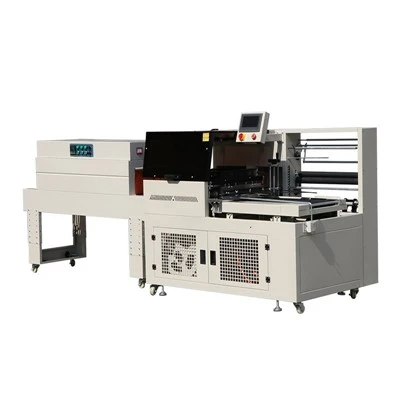
Let’s start with what makes a good automatic labeling machine, because that foundation is non-negotiable when integrating RFID. When I meet with clients, I always emphasize that not all labeling machines are built the same. A machine designed for basic paper price tags, for example, isn’t going to handle the delicate, thin plastic substrates of an RFID label. Our labeling equipment, for instance, uses precision servo drives that apply consistent, uniform pressure during label application—something critical for RFID, because the label’s antenna (the tiny, often invisible circuit on the back) can shift or crack if applied too roughly. We test every machine with a range of RFID label types: inlays (the pre-printed antenna and chip), wet-labels, and even heat-shrinkable ones. The result? Labels that stay flat, adhere properly, and maintain the antenna’s shape, which is essential for RFID’s long-range read capabilities.
A common misconception I hear is that RFID is just “a fancier barcode.” That’s half right, but where barcodes rely on line-of-sight scanning, RFID uses radio waves to read multiple tags at once, even through packaging or in a sealed box. But to work, the RFID inlay has to be mounted exactly right. If a labeling machine misaligns the inlay, a warehouse worker might scan 10 pallets looking for a single item, wasting hours. That’s why our machines include a built-in vision system that checks the inlay’s position before applying the label. If the inlay is off by even a millimeter, the machine rejects the label automatically—no downtime, no wasted material. For a client in the electronics industry, that small adjustment cut their inventory audit time by 30% last year. They used to manually check each RFID tag’s placement; now, the machine does it in real time, and the data logs every label applied, so they can track every tag’s journey from the factory to the shelf.
Another big point: many people think RFID labels require special equipment, but that’s not true anymore. Early RFID systems needed dedicated applicators, but today’s automatic labeling machines are retrofittable to handle both standard barcodes and RFID tags. We offer a modular upgrade kit for clients who already own our older labeling equipment—something that saves them from having to invest in a whole new system. That’s a game-changer for small to medium businesses that want to switch to RFID without breaking the bank. A boutique apparel brand I worked with last quarter used our modular upgrade to add RFID to their clothing tags. They now track each garment from the loading dock to the fitting room, reducing lost inventory by 15% in six months. Before, they relied on manual counts that missed items in back stock; now, a single RFID reader can scan a whole rack in two seconds.
But let’s talk about practical challenges, because no integration is perfect. One of the biggest issues clients face with RFID and labeling machines is “readability after application.” If a label is applied to a curved surface (like a bottle or a can), the inlay can warp, and the radio waves might not read correctly. Our machines solve this with variable pressure technology. For cylindrical products, the machine adjusts its roller pressure to fit the curve, keeping the inlay flat. We also work directly with RFID label manufacturers to develop substrates that work with our equipment—like water-resistant inlays for outdoor gear labels or flexible inlays for food packaging that go through dishwashers without damage. A craft brewery client of ours uses that custom substrate to apply RFID labels on beer cans. Their distributors can now track each case across 20 different retail locations, and customers can scan the tag to see the beer’s origin story—something that would be impossible with a standard barcode.
I often get asked: why not just use a standalone RFID applicator? The answer is efficiency. Automatic labeling machines don’t just apply labels—they print them. When you combine printing and RFID application in one step, you eliminate a whole process. For a manufacturing plant, that means less handling, less labor, and less chance of human error. Our machines can print a unique ID on each RFID tag at the same time they apply it, so every tag has a distinct identifier. That’s critical for serialized products, like pharmaceuticals or high-end electronics, where counterfeiting is a risk. By integrating RFID into the labeling process, clients can track each product’s exact batch, manufacturing date, and distribution route—making it easier to recall items if needed. Last year, a medical device company used our labeling machines with RFID to comply with new FDA traceability rules. They cut their recall time from 10 days to 48 hours, because they could scan every device in their warehouse in minutes.
But it’s not just manufacturing and retail. The logistics industry is where this combination is really taking off. When a shipment arrives at a port, it has to be sorted, scanned, and routed quickly. Automatic labeling machines with RFID can process 1,200 labels per hour, compared to 300 with manual application. That speed reduces wait times at ports and cuts down on shipping delays. A global freight company I partner with uses our machines to apply RFID labels to every container. They now track each container’s location in real time, so they never miss a pickup or delivery window. Before, they relied on GPS and manual scans, which were often inaccurate; now, the RFID tags work even when containers are stacked, so they can find a specific item in a 20-container stack in seconds.
Of course, there are still hurdles to widespread adoption. Some small businesses worry about the cost of switching to RFID, and others are unsure if their current labeling machines can handle it. That’s why we prioritize customer education. We offer on-site demos, where we bring our labeling machines to a client’s facility and test them with their specific products and RFID labels. We also provide training so clients’ staff can operate the machines and troubleshoot minor issues, like a misaligned label or a read error. Last year, a small grocery chain was hesitant to upgrade, but after a demo where we showed them how RFID could reduce their out-of-stock items by 20%, they invested in our machines. Now, they use RFID to track fresh produce, so they know exactly when a batch is going bad, reducing food waste by 18%.
Another thing to consider is the future. As RFID technology gets cheaper and more efficient, automatic labeling machines will only become more integrated. We’re currently working on machines that can print QR codes and RFID tags in one pass, so clients can choose which technology works best for their needs. We’re also developing machines that can apply RFID labels to irregular shapes, like hand tools or art supplies, which was hard to do a few years ago. The key here is that automatic labeling machines aren’t just supporting RFID now—they’re evolving to make RFID accessible to more businesses, not just large corporations with big budgets.
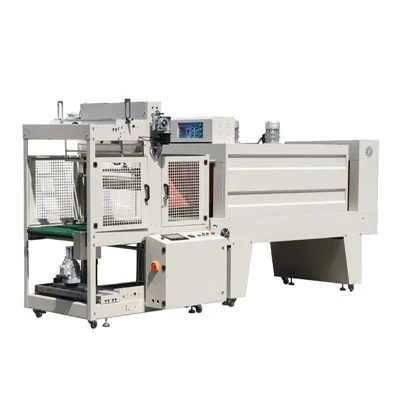
I’ve been in this industry for 15 years, and the biggest shift I’ve seen is how clients move from seeing RFID as a “nice-to-have” to a “must-have” for their operations. And in almost every case, when they invest in an automatic labeling machine that supports RFID, the return on investment comes faster than they expected. Whether it’s reducing labor costs, cutting down on inventory loss, or improving customer experience, the combination works.
Automatic Labeling Machines If you’re a business owner, supply chain manager, or operations lead who’s been thinking about integrating RFID into your labeling process, don’t wait. The technology is here, and it’s more affordable and flexible than ever. Our team can walk you through the options, test our machines with your products, and answer any questions you have about how automatic labeling machines and RFID labels work together. Reach out to our team to schedule a consultation and see how this synergy can transform your operations.
References
- Industrial Designers Society of America. (2022). Labeling Technology and Supply Chain Efficiency.
- RFID Journal. (2023). Integrating RFID Labels with Automatic Labeling Equipment.
- National Retail Federation. (2022). Retail Inventory Management: RFID and Labeling Automation.
- International Organization for Standardization. (2021). ISO 15426:2021 – Bar Code Verifiers for Automatic Identification and Data Capture.
- Manufacturing Extension Partnership. (2023). Small Business Adoption of RFID Technology.
Langfang Huanqi Machinery Equipment Co., Ltd.
As one of the most professional automatic labeling machines manufacturers and suppliers in China, we also support customized service. Please feel free to buy advanced automatic labeling machines for sale here from our factory. Quality products and reasonable price are available.
Address: No. 40, Row 11, North Side of Central Street, Wangpeizhuang Village, Pingshu Town, Dacheng County, Langfang City, Hebei Province
E-mail: huanqijixie@outlook.com
WebSite: https://www.huanqiwrap.com/
