Hey there, if you’ve ever wandered through a warehouse loading dock, a retail storage bay, or even a workshop, chances are you’ve brushed up against wire mesh decking panels without even noticing. These unassuming, grid-patterned panels hold up everything from pallets of toilet paper to heavy machinery parts, and they do it without sagging, rusting, or going out of shape anytime soon. As a supplier who’s been deep in the thick of this stuff for years, I get a lot of questions that boil down to one: “What even are these panels made of, exactly?” It’s a fair question—skipping the material specs can lead to buying something that’s either overkill for your needs or not tough enough to last. Let’s break this down like I’d talk to a guy who just walked into my shop looking to stock up for his new warehouse. Wire Mesh Decking Panels
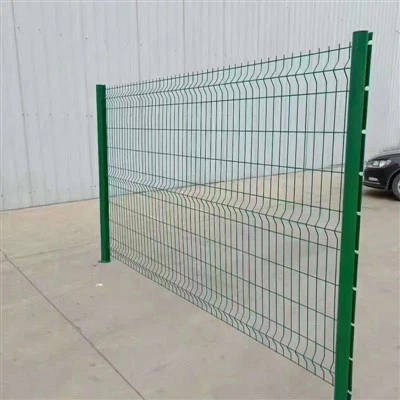
First off, the core material here is almost always steel, but it’s not just any steel. We’re talking low-carbon steel, sometimes called mild steel, right? Wait, let me keep it casual—low-carbon steel is the workhorse of the metal world, and for good reason. It’s cheaper than fancy alloy steels, easy to bend and weld when we’re fabricating the panels, and has that perfect balance of strength we need for decking. The carbon content here is super low—usually less than 0.25%—so it’s not brittle like those high-carbon steels you use for tools or springs. That brittleness is a dealbreaker for decking, because you drop a pallet of 50-pound boxes on this, you don’t want the mesh to crack and leave a gap. Low-carbon steel bends a little, not breaks, which is exactly what we need.
But wait, raw steel rusts. Big problem, right? If your warehouse is in a damp spot, or you’re storing food, beverages, or outdoor gear, rusting isn’t just unsightly—it’s a safety hazard. A rusted mesh deck can be slippery, and if it eats through the steel over time, it’s gonna collapse under weight. That’s why almost every wire mesh decking panel we sell gets a coating, and not just any old paint. The most common coating here is galvanized steel. Wait, let me explain galvanizing like you’re 5— it’s a process where we dip the raw low-carbon steel into molten zinc, so the zinc literally fuses to the metal, not just sits on top. That’s way more durable than spray-painting it, because even if you scratch the galvanized layer, the zinc around that scratch still protects the steel underneath. No rust, no peeling paint halfway through the panel’s life.
But galvanized isn’t the only option. Some customers need something even tougher, or for environments where moisture is non-stop—like a seafood processing plant, or a dock storage area. For those, we go with stainless steel. Stainless steel is an alloy, so it has a little extra chromium (around 10-30%, depending on the grade) that forms that invisible chromium oxide layer on the surface. That layer is self-healing, by the way—if you scrape it, the chromium in the steel reacts with oxygen in the air and fixes itself. No rust, ever, basically. It’s way more expensive than low-carbon galvanized, but it’s worth it for the right gig. I had a customer last year who runs a craft brewery, and he needed the mesh to hold grain bins without any cross-contamination from rust or chemicals—stainless steel was the only call for him. We also use aluminum sometimes, though that’s less common for heavy-duty applications. Aluminum is lightweight, doesn’t rust, but it’s not as strong as steel, so we save that for things like retail display racks, not industrial warehouse decking.
Now, it’s not just the base metal and coating that matters. The wire itself—what it’s made of, how thick it is, how we weave it—makes a huge difference. We use two main types of wire for the mesh: welded wire and woven wire. Welded is the go-to for most industrial stuff, because it’s just two layers of wire (the warp, running front to back, and the weft, running left to right) that we spot-weld together at every intersection. That makes the grid super rigid, no shifting wires, so the panel can hold more weight without deforming. Welded wire is also faster to manufacture, which keeps costs down for customers. Woven wire is a little more flexible, but it’s usually for lighter use—like outdoor patio screening, not warehouse decking.
Wait, let’s talk about wire thickness, or gauge, because that’s a term that confuses a lot of people. Lower gauge number means thicker wire, fyi. So a 6-gauge wire is way thicker than a 12-gauge. For heavy-duty decking, we almost never go thinner than 9-gauge— that’s thin enough to keep the mesh open, so dust falls through and air circulates (super important for stored goods, prevents mold), but thick enough to hold 5,000 pounds per panel, easy. I’ve seen cheap panels out there with 14-gauge wire—they look the same, but drop a full pallet of cast iron on ’em, and they’ll bend so bad the grid is like a origami crumple. Not worth saving a few bucks up front, trust me.
Another thing: the openings in the mesh, called the aperture. Most industrial panels have 2×2 inch openings, which is perfect for letting debris, pallets’ wooden slats, or even small parts fall through without clogging. Some customers want smaller openings—1×1 inch, for example—if they’re storing tiny hardware or parts that could fall through. But smaller openings mean less airflow, more debris buildup, so we only recommend that for specific use cases. Larger openings, like 4×4 inch, are for super heavy pallets, but you have to make sure the pallet’s slats are spaced right so they don’t fall through.
Wait, I should mention some special coatings too, because not everyone needs galvanized. For food-grade facilities, some coatings are food-safe, like epoxy powder coating. That’s a dry, smooth coating we apply electrostatically, then bake on, so it’s non-porous, easy to wipe down, and won’t leach chemicals into food. We had a restaurant supply company order a bunch of panels last month for their new cold storage warehouse, and they needed epoxy instead of galvanized because galvanized can sometimes leave zinc dust that’s not good for food. And for outdoor use, sometimes we do a polyester powder coating, which is UV-resistant so it doesn’t fade or crack when exposed to sun and rain for years. That’s a nice middle ground between galvanized and stainless, cheaper than both but way more durable than basic paint.
Let me also clear up a common misconception: a lot of people think all wire mesh decking is the same, but the material specs are what separate the good stuff from the junk. I once had a customer come to me after buying a cheap set of panels from a big-box supplier, and within six months they were rusted through in the corners. Turns out that supplier used cold-rolled steel, not hot-dipped galvanized—cold-rolled is just raw steel, no zinc coating, so any moisture at all made it rust fast. Hot-dipped galvanizing is the industry standard for a reason, even if it adds a little to the cost. It’s not a luxury, it’s a necessity for most applications.
Another point: the structural supports for the panel, not just the mesh. The panel itself is usually laid on top of pallet rack beams, right? So the edges of the decking (called the “flange”) are also steel, either the same low-carbon steel or galvanized, welded or bolted to the mesh. Some panels have reinforced edge bars that add extra strength, which is great if you’re stacking super heavy loads right up against the edge of the panel, not just in the middle. That’s another thing to check when you’re picking panels—are the edges reinforced? If not, you might end up with a gap where the load pushes the edge down, or even breaks off.
Wait, let’s talk about how all this adds up for different use cases, because that’s the whole point of knowing the material. If you’re storing general retail goods in a dry warehouse, galvanized low-carbon steel mesh is more than enough, and it’s the most cost-effective. If you’re in a food or pharma plant, epoxy-coated or stainless steel is a must to avoid contamination. If you’re outdoors or in a damp climate, galvanized or polyester powder-coated will outlast uncoated steel by years. If you’re dealing with extremely heavy loads, high-grade stainless steel or thick-gauge galvanized steel with reinforced edges is the way to go.
I’ve been in this business for 12 years, and I’ve seen every mistake you can make with wire mesh decking. The number one mistake? Buying cheap because it’s cheaper, not because it fits your needs. Those cheap panels aren’t made of the right material—they use thin wire, no proper coating, and they don’t reinforce the edges. I tell every customer this: a good set of wire mesh decking will last 10, 15, even 20 years if you get the right material. A cheap set might last two, and that’s money thrown away.
So to wrap this up, here’s the quick breakdown: wire mesh decking panels are mostly made from low-carbon steel, coated with either hot-dipped galvanized zinc for rust protection, epoxy for food safety, or polyester for UV resistance. For heavy-duty or corrosive environments, stainless steel is the go-to, though it costs more. The wire gauge, mesh aperture, and edge reinforcement also depend on your specific needs, but the base material is always steel (or aluminum for lighter uses, which is rare).
If you’re in the market for wire mesh decking panels and you’re not sure what material is right for your space, your load weights, or your environment, don’t guess. Reach out to me, and I’ll break it down for you. I can walk you through the pros and cons of each material, show you samples, and make sure you get exactly what you need without overpaying for stuff you don’t. No pushy sales talk, just straight answers—this is my business, and I want customers who are happy for years, not just one order.
Now, let’s make sure we didn’t skip anything important. Wait, another thing: sometimes people confuse wire mesh decking with perforated metal panels, but those are totally different. Perforated panels are solid sheets with holes punched in them, while wire mesh is woven or welded strands. The material is similar (steel, aluminum, stainless), but the structure is different, so that’s a whole other conversation. But for our stuff, it’s all about the steel core and the right coating. And don’t forget—if you have a special request, like custom-sized panels, or a specific coating for a unique environment, we can make that happen too. We work with customers on all kinds of setups, from small retail storerooms to big industrial distribution centers.
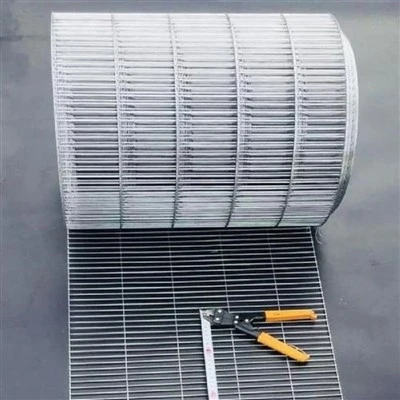
I get it, specs can be boring, but when you’re talking about something that holds your entire inventory, it’s not boring—it’s necessary. That’s why we’re always transparent about what our panels are made of, no hidden tricks. You won’t find cheap cold-rolled steel disguised as galvanized here, and you won’t find thin wire pretending to be thick gauge. We stand behind every panel we sell, and the material is the foundation of that warranty.
Wire Mesh Decking Panels So yeah, that’s the lowdown on what wire mesh decking panels are made of. No fancy jargon, just straight talk from a guy who’s been doing this way too long to care about sounding official. If you’re ready to chat about your next order, hit me up—we can work out all the details, no pressure, no nonsense.
References
- Steel Structures Education Foundation. (2021). Low-Carbon Steel: Properties and Industrial Applications.
- American Galvanizers Association. (2022). Hot-Dip Galvanizing for Corrosion Protection.
- Stainless Steel Industry Association. (2020). Stainless Steel Grades for Commercial and Industrial Use.
- Wire Mesh Manufacturers Association. (2019). Best Practices for Wire Mesh Decking Panel Fabrication.
Anping County Nuocheng Wire Mesh Co., Ltd.
As one of the most professional wire mesh decking panels manufacturers and suppliers in China, we also support customized service and OEM service. Please feel free to buy high quality wire mesh decking panels for sale here from our factory. For price consultation, contact us.
Address: 100 meters southeast of Beimanzi Village, Dahezhuang Township, Anping County, Hengshui City, Hebei Province, China
E-mail: lixuhao0888@gmail.com
WebSite: https://www.ncwiremesh.com/
