Can you bend metal wire with pliers? It’s a question I get at least a dozen times a week, from hobbyists crafting custom jewelry, small fabricators putting together prototype parts, and even engineers testing basic material properties for student projects. As a metal wire supplier who’s worked with everything from 18-gauge stainless steel for crafts to 2-gauge mild steel for industrial racks, I’ve seen this scenario play out in dozens of different ways—some successful, some messy, and some that left people wondering why their pliers wouldn’t do what they expected. Let’s break this down, not just as a yes-or-no answer, but with the real-world context that only someone who sells metal wire for a living can share. Metal Wire

First, the short answer: Yes, you can bend metal wire with pliers—but only if you match the plier type to the wire’s material, gauge, and intended bend. It’s not a one-size-fits-all task, and that’s where most people run into trouble. Let’s start with what actually happens when you bend metal. Every metal has a thing called “yield strength”—that’s the amount of force needed to permanently bend it, as opposed to just flexing it temporarily and letting it snap back. Soft, low-carbon steel wire (like the kind used in ordinary clothes hangers) has a yield strength of around 30,000 to 50,000 psi, so a basic pair of household pliers will bend it easily. Push that to a harder material, like 304 stainless steel wire, which has a yield strength of about 30,000 to 70,000 psi depending on how it’s drawn, or even spring steel wire at 100,000+ psi, and suddenly those same household pliers start slipping, leaving flat, unsightly marks, or even snapping the wire instead of bending it.
I remember a time a few years back, a guy came into the shop with a armful of 14-gauge 304 stainless wire he’d bought elsewhere, complaining his pliers wouldn’t bend it to make custom keychains. He was using a cheap pair of slip-joint pliers from a big-box store, the kind with rubber handles that give you a little grip but not much leverage. When I handed him a pair of heavy-duty needle-nose pliers with non-marring jaws (the kind we keep in stock for just this kind of job), he bent that wire in 10 seconds flat. The difference? Plier design matters more than most people realize for wire bending. Slip-joint pliers are made for gripping and turning nuts and bolts, not for applying concentrated, controlled force to a small, thin piece of wire. Needle-nose pliers have long, narrow jaws that let you get close to a bend point without messing up surrounding sections, and linesman’s pliers—another common type—have thicker jaws that can handle thicker, higher-strength wire.
That’s not to say all pliers work for all wires. Let’s talk about gauge, which is the measurement of a wire’s thickness. The smaller the gauge number, the thicker the wire. A 20-gauge wire is thin enough that even needle-nose pliers will leave a small indent, maybe even a slight kink if you’re not careful, but a 2-gauge wire is as thick as your finger. You can’t bend that with any pair of hand pliers—you’d need a hydraulic bender, or at the very least a pipe wrench and a come-along to apply enough force without breaking the pliers or your own hand. I’ve had customers try to bend 6-gauge mild steel wire with a pair of regular vice grips before, and the vice grips’ jaws literally bent inward, leaving them with a broken tool and a wire that was still only half-bent. That’s a mistake we see all the time, and it’s why we always ask customers about their intended use when they’re buying wire—so we can tell them what tools they’ll need to work with it.
Another common mistake is not accounting for the metal’s temper. Temper is how much the metal has been work-hardened, which makes it stronger but also more brittle. Dead-soft wire, like the annealed copper wire we sell for electrical work, is extremely easy to bend—you can shape it with your fingers if you’re careful. Half-hard wire, often used for fence posts or craft wire that needs to hold its shape, is a little stiffer, so you’ll need pliers with more leverage. Hard temper wire, like spring steel or hard-drawn steel wire, is so work-hardened that bending it with pliers without a heat source can cause it to snap abruptly. I had a customer last year who was making bird cages out of hard-drawn 12-gauge steel wire; he tried to bend the top loops with his regular pliers, and three wires snapped mid-bend, cutting his hand and leaving him with a week’s worth of extra work. That’s why we advise anyone working with hard temper wire to either use a tube bender or heat the bend point with a propane torch first—heating metal reduces its yield strength, making it far easier to bend without breaking, even with pliers.
There’s also the issue of damaging the wire, which is a big deal for us as a supplier because we want our customers’ finished products to look good and last. If you use a plier with hard, serrated jaws on soft wire, like copper or aluminum, those jaws will leave deep, permanent marks that can weaken the wire over time. That’s why we stock plastic-tipped pliers and nylon jaw pliers for customers working with thin, decorative wire, like 18-gauge copper for jewelry making. A lot of hobbyists skip this step and end up with finished pieces that look cheap because of those indentations, or worse, a piece that breaks a month after they make it because the plier mark became a stress point. I once had a jewelry maker come back to the shop complaining that a batch of wire we sold her was defective, only to show me a piece that had a 1/8-inch deep serration from a pair of slip-joint pliers. We replaced the wire, of course, but it was a reminder that the tools you use are just as important as the wire itself.
Now, let’s get into some real, actionable tips from someone who’s been in the wire business for over 15 years, because this isn’t just theory—it’s what works in the shop and for customers out in the field. First, always match your plier type to your wire’s thickness and material. For thin wire (16 gauge and thinner, like craft or electrical wire), use needle-nose pliers with smooth or plastic jaws to avoid marks. For medium wire (10 to 16 gauge, like mild steel for small racks or fence repairs), use linesman’s pliers or heavy-duty needle-nose pliers with steel jaws. For thick wire (gauge 9 and thicker, like structural wire or industrial parts), forget hand pliers entirely—use a manual or hydraulic wire bender, which is designed to apply even force without damaging the wire or the tool.
Second, don’t force a bend that your pliers can’t handle. I see this all the time: someone gets frustrated because their pliers won’t bend the wire, so they lean their whole body weight into it, leading to a broken plier, a bent wire that’s lopsided, or even a trip to the emergency room if the plier slips. If you’re straining so hard that your arms are burning to make a bend, you’re using the wrong tool—or the wrong wire thickness. Take a step back, adjust your pliers, or upgrade to a tool designed for thicker wire.
Third, if you’re working with hard temper wire, heat the bend point. You don’t need to turn it red hot—just warm it up enough that it’s comfortable to hold with a pair of pliers, which will reduce its work-hardened strength. Let it cool slowly after bending, and it will regain most of its strength, with none of the risk of snapping. We recommend this for anyone working with spring steel, hard-drawn steel, or stainless steel wire thicker than 12 gauge—trying to bend it cold with pliers is just asking for trouble.
There’s a common myth that pliers are only for bending thin wire, but that’s not true either. Industrial fabricators use heavy-duty pliers and hand tools to bend wire up to 8 gauge for small parts, and specialty pliers even exist for bending wire into specific shapes, like loops or angles, with consistent results. The key is knowing your tools and your wire—something we help our customers with every single day. If someone calls us and says they want to make a set of coat hooks out of wire, we’ll ask them how thick they want the hooks, if they need to hold 10 pounds or 50 pounds, and what tools they have on hand, then recommend the right wire and the right pliers to go with it. That’s the value of working with a local metal wire supplier, not a big online retailer that just sells wire without context.
Let’s also talk about when bending wire with pliers might not be the best option. If you need a precise bend, like a 90-degree angle that’s exactly 1 inch from the end of the wire, pliers can work, but a dedicated wire bending tool will give you a much more consistent result. If you’re making a lot of bends, like 100 pieces of wire for a project, pliers will get tiring, and you’ll get inconsistent bends if your hands start to cramp. For those cases, investing in a small manual wire bender is worth the cost—most are less than $100, and they last for years, which is cheaper than replacing broken pliers or defective wire from bad bends.
I’ve seen so many projects go sideways because of a mismatch between wire and pliers, and so many turn out perfectly because the customer took the time to get the right tools. Last month, a high school robotics team came into the shop asking for wire to make a chassis support for their robot. They’d tried to bend 12-gauge steel wire with household pliers, and it kept kinking. We sold them 12-gauge mild steel wire and lent them a pair of heavy-duty linesman’s pliers from the shop, and when they came back the next day, they had a perfect support frame, no kinks, no broken wire, and they saved themselves from having to buy a $200 wire bender for just one project. That’s the kind of small, practical help we pride ourselves on providing, beyond just selling metal wire.
At the end of the day, the question “Can you bend metal wire with pliers?” comes down to context. Yes, you can—if you choose the right pliers for your wire’s gauge and material, and you don’t try to force a bend that’s beyond your tools’ capacity. But if you try to bend 2-gauge wire with a pair of slip-joint pliers, or hard temper stainless steel with a pair of jewelry pliers, you’re going to end up with a mess. That’s where our expertise comes in: as a metal wire supplier, we know the properties of every wire we carry, and we can tell you exactly what tools you need to work with it successfully, whether you’re a hobbyist making a necklace, a small fabricator building a prototype, or a team putting together a robot.
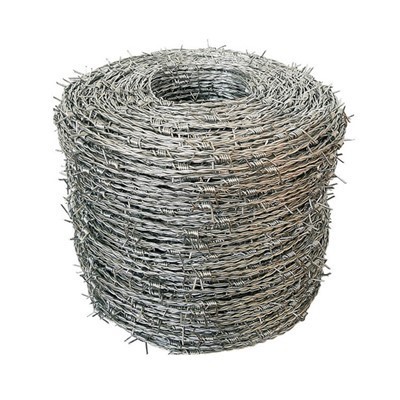
If you’re planning a project that involves bending metal wire, and you’re not sure what tools or wire to use, reach out to our team to discuss your needs. We can help you select the right wire for your application, recommend the best pliers or bending tools, and answer any questions you have about working with metal wire. Don’t let a bad bend or a broken tool derail your next project—let us help you get it right.
Copper Wire Mesh References
- ASTM International. (2020). Standard Test Methods for Tension Testing of Metallic Materials. ASTM E8/E8M-20.
- Callister, W. D., & Rethwisch, D. G. (2019). Materials Science and Engineering: An Introduction (10th ed.). John Wiley & Sons.
- Wire Association International. (2021). Practical Guide to Wire Drawing and Processing. WAI Press.
- Machinery’s Handbook. (2022). Tool and Materials Section: Plier Design and Application. Industrial Press.
- Copper Development Association. (2020). Working with Copper Wire: Best Practices for Bending and Forming. CDA Publication 212.
Anping Chenran Wire Mesh Co., Ltd.
We’re well-known as one of the leading metal wire manufacturers and suppliers in China. With a professional production team, we are able to meet the needs of the majority of our customers. Please rest assured to buy high quality metal wire in stock here from our factory.
Address: 500 Meters North of Guozhuang Village, Daziwen Town, Anping County, Hengshui City, Hebei, China
E-mail: sales@chenranwiremesh.com
WebSite: https://www.chenranwiremesh.com/
