If you’ve ever scrolled through a flour mill parts catalog at 2 a.m., half-expecting the brand new grinding roller you just ordered to slide perfectly into place, only to find it’s 1/8 of an inch too short to connect to your shaft drive, you know how costly compatibility mismatches can be. I’ve been there, too—12 years ago, when I first started this small flour mill spare parts supply business out of a garage in the Midwest, I made that exact mistake with a batch of rubber screening cloths. I sent a customer 100 yards of cloth designed for a 12-foot grader, and they needed 10-foot. By the time we swapped them, their mill was down for 36 hours, costing them roughly $18,000 in lost production. That’s when I stopped just selling parts and started focusing on helping customers test compatibility before they hit “buy.” Because at the end of the day, a spare part isn’t just a hunk of metal or fabric—it’s part of a machine that keeps millions of pounds of grain turning into flour, day in and day out. Compatibility isn’t a nice-to-have; it’s how we keep mills running and families fed. Flour Mill Spare Parts
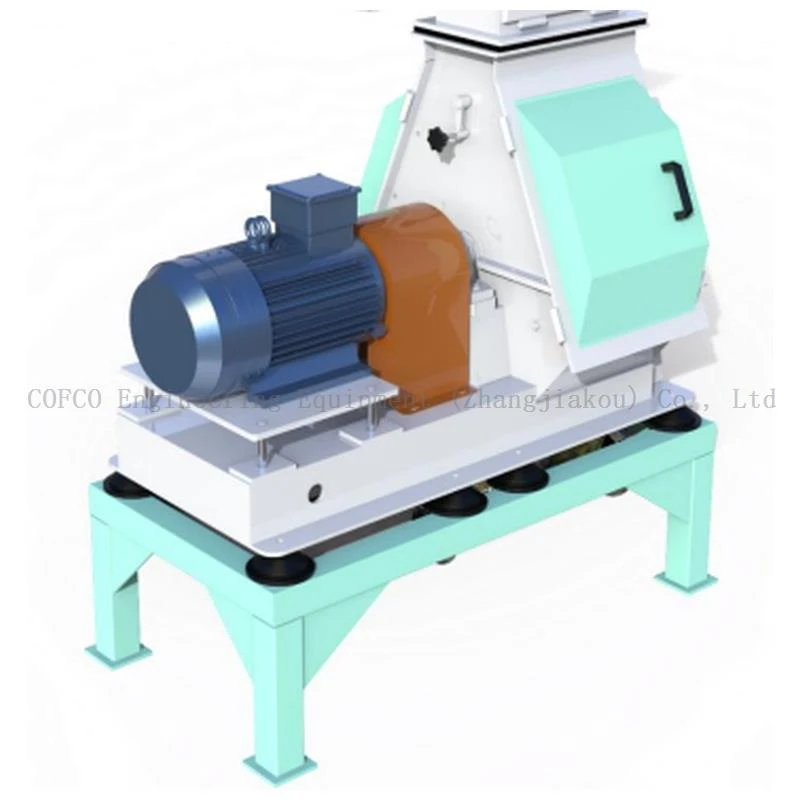
Let’s start with the most obvious, yet often overlooked, step: gathering exact, verified data from your current mill. You wouldn’t try to fit a new tire on a truck without knowing the tire size, so why would you pick a replacement part without its specifications? But here’s the thing: I’ve seen mill operators grab an old grinding roller, read the number stamped on the end, and assume that’s all they need. Too often, the original manufacturer changed part specs mid-production, or the part got worn down over time, making the stamped number misleading. Last year, a customer called me panicking because a “correct” replacement screen for their bran finisher didn’t fit. Turns out, their original mill was a 2015 model, but the supplier that originally fitted it had swapped to a slightly narrower screen in 2014—so the stamped number matched, but the dimensions were off. The fix? Instead of just checking the part number, they measured the old screen’s inner and outer width, the height of the frame that holds it, and the spacing of the mounting holes. That’s the data you need, not just a number. If you don’t have the old part, you can pull mill schematics from the original manufacturer or use a digital caliper to measure the mating component on your machine. I keep a printed cheat sheet in my supply truck for exactly this: inner bore diameter, outer diameter, length, thread pitch, and mounting hole center-to-center distance. No guesswork here.
Once you have your specs, the next test is dimensional fit testing with a temporary mock-up. This is where so many people skip ahead to ordering, but it’s the cheapest insurance you can buy. Let’s take a feed screw, for example—one of the most common parts we supply, used to move grain from the elevator to the roller mill. I had a customer in Iowa last year who ordered a feed screw from a competitor because they said it “fit their model.” When it arrived, the shaft was 2mm too thick to slide into their existing coupling, and the flighting was 5cm too short, leaving gaps that let grain spill out. Instead of waiting for another part, we suggested a quick mock-up: we cut a length of 3D-printed plastic (we have a small in-house 3D printer for these tests) to the exact dimensions of their old feed screw, slotted it into the mill’s feed mechanism, and checked for tightness, alignment, and clearance around adjacent parts. It only took 45 minutes, and it let us adjust the new part’s flighting length before it was even manufactured. For metal parts that can’t be 3D-printed, we use cardboard templates or even a section of scrap steel to test the fit. I’ve heard some mills use old grain to test flow, too—if a new screen’s mesh size or slope is wrong, grain will clog, so running a small batch of test grain through the mock-up setup catches that.
Then there’s material compatibility, which is a whole other layer of testing most people don’t consider. Flour mill parts are exposed to some brutal conditions: constant friction from grain and bran, moisture from washing or condensation, sometimes even high temperatures from grinding. A part that fits perfectly could fail in a week if the material is wrong. Let’s talk about grinding rollers, for instance. They’re made from two main materials: chilled iron and porcelain-lined. Chilled iron is hard, great for grinding hard wheat, but it rusts if it’s exposed to moisture. Porcelain-lined is more resistant to moisture, but it’s more brittle and can chip if it hits a rock in the grain. Last year, a customer in Georgia swapped to a porcelain-lined roller because they thought it would last longer, but their mill is in a humid climate, and the porcelain absorbed moisture, leading to it cracking within two weeks. We ended up swapping them back to chilled iron with a protective coating, and it’s been running for 10 months now. How do you test material compatibility? Start by checking the mill’s operation manual—it will tell you what materials are approved for each part. Then, check the new part’s material specs: if it’s a rubber screening cloth, is it made from nitrile for oil resistance, or neoprene for high-temperature use? If it’s a gear, is it cast steel for heavy loads, or aluminum for light-duty mills? I keep a material reference guide in our warehouse that cross-references mill model, operating conditions, and recommended part materials—so I can tell a customer right away if a part’s material will hold up, not just fit.
Alignment testing is another critical step that’s often missed. Even if a part is the exact right size and material, if it’s not aligned with the rest of the mill, it will wear out fast or cause damage. Take a shaft coupling, for example—two metal halves that connect the motor to the main mill shaft. If one coupling is tilted just 1 degree relative to the other, it can cause vibration that wears out bearings in months, instead of years. I learned this the hard way with a customer in Kansas. They replaced their coupling themselves, and even though it was the exact same size as the old one, they didn’t align it. By the end of the first week, their mill’s main bearing seized up, costing them $22,000 in repairs. How do you test alignment? You don’t need fancy equipment, though some mills use laser alignment tools. For most small to medium mills, a simple straightedge and a feeler gauge work: lay the straightedge across both coupling halves, check the gap between the straightedge and each half at the top, bottom, and sides. If the gap is more than 0.5mm at any point, it’s misaligned. For rotating parts like fans or grinders, you can run a slow test (with the mill empty, of course) and look for excessive wobble. If the new part wobbles more than the old one, it’s either not balanced or not aligned. We always include a quick alignment checklist with every part we sell, so customers don’t have to guess.
Operational testing is the final, make-or-break step. This is where you don’t just check if a part fits on the shelf—you run it under actual mill conditions. We recommend a “test run” of 100 pounds of grain, instead of full production, to catch issues without risking downtime. Last month, a customer in Ohio ordered a new bran screen from us, and even though all the specs matched, the test run showed that bran was getting trapped in the mesh, leading to uneven sifting. We went back and adjusted the mesh tension on the screen before it left the warehouse, so when they installed it, it worked perfectly. What do you look for in operational testing? For screening parts, check for even flow of grain, no clogging, and consistent separation of bran, endosperm, and germ. For grinding parts, check the grind consistency—if your flour is too coarse or too fine, the roller gap or mesh size is wrong. For moving parts like conveyors, check for slipping, vibration, or noise that wasn’t there with the old part. I always tell customers: if it feels off during the test run, stop. It’s better to adjust or return the part before you run 10 tons of grain through it.
Here’s the thing: every flour mill is a little different. Even two mills of the same model, made the same year, can have slight variations because of wear and tear, or previous repairs. That’s why generic parts are never as good as custom-fit, tested parts. At our company, we don’t just pull a part off the shelf and ship it—we walk customers through each of these steps, because we know that a part that works for one mill might not work for yours. If you’re not sure how to test compatibility, don’t guess. Reach out. We don’t just sell parts—we’ve been working with flour mills for decades, and we know the ins and outs of every part, every model, every common issue. Whether you need help measuring an old part, testing a mock-up, or troubleshooting a misaligned coupling, we’re here to walk you through it, no sales pressure, no hidden fees. Because at the end of the day, our reputation depends on your mill running smoothly.
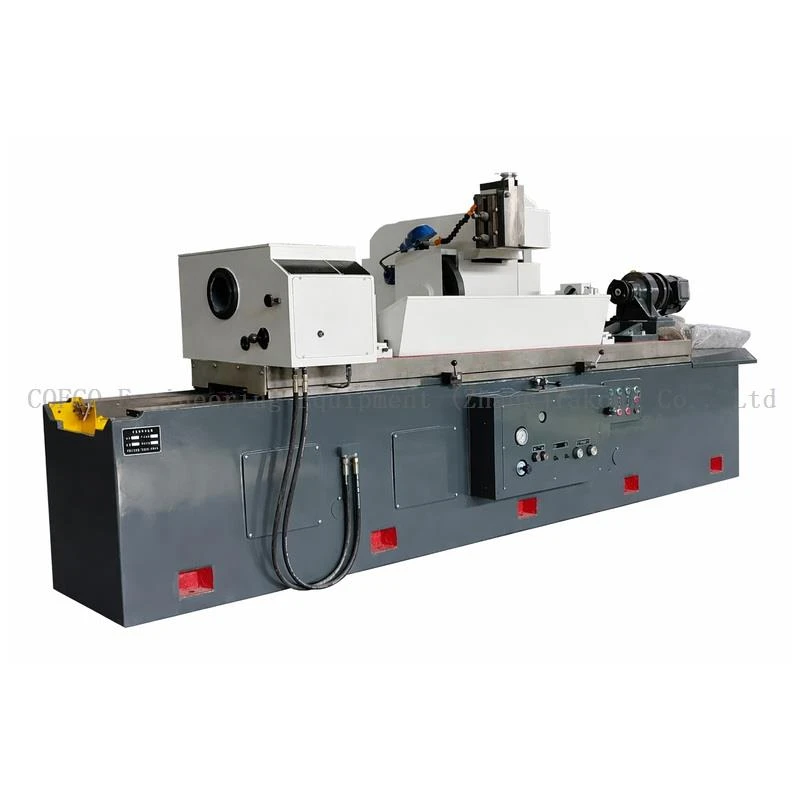
If you’ve ever had a mill down for an unexpected repair, you know how much it costs—lost production, missed deliveries, frustrated clients. Don’t let a compatibility mismatch be the reason that happens to you. Take the time to gather your specs, do the dimensional and material tests, check alignment, and run an operational test. And if you need a hand, we’re just a call away. Let’s make sure your next spare part fits, works, and keeps your mill running like it should.
Plansifter References:
- American Institute of Flour Millers. Flour Mill Spare Parts Compatibility Guide. 2021.
- Miller, John D. Maintenance Best Practices for Small-Scale Flour Mills. 2nd ed. Grain Processing Press, 2019.
- Occupational Safety and Health Administration (OSHA). Guidelines for Machine Part Alignment and Fit in Agricultural Processing Equipment. 2020.
- Wheat Association of America. Standard Specifications for Flour Mill Screening and Grinding Components. 2022.
COFCO Engineering Equipment (Zhangjiakou) Co., Ltd.
COFCO Engineering Equipment (Zhangjiakou) Co., Ltd. is one of the most professional flour mill spare parts manufacturers and suppliers in China, also supports customized service. Please feel free to wholesale advanced flour mill spare parts for sale here from our factory. Quality products and reasonable price are available.
Address: No.4 ZhongLiang Street, high-tech industrial development zone, Zhangjiakou, Hebei, PRC
E-mail: mayihui@cofco.com
WebSite: https://www.ceeflourmill.com/
