If you’ve ever walked into a showroom and ran your fingers over a perfectly buffed car hood, a sleek stainless steel appliance, or a set of silverware that looks brand new decades after it was bought, you know the difference a good polish makes. For years, customers have come to me—owner and lead operator of a local polishing service—asking the same question: “How much is this going to cost?” It’s a fair question, and one that doesn’t have a one-size-fits-all answer. Over 12 years in this business, I’ve learned that pricing depends on far more than just the material being polished; it’s about labor, skill, prep work, and the unique condition of each item. Let me break down what goes into polishing service costs, and what you can expect when you reach out to us for a quote. Polishing Services

First, let’s start with the basics: what is polishing, exactly? In simple terms, polishing is the process of smoothing a surface to create a high-gloss finish, remove scratches, tarnish, oxidation, or minor dents, and restore an item to its original (or better) appearance. It’s not just for cars—we do metal, stone, wood, even hard plastics. But the cost varies drastically depending on three core factors: the type of material, the size of the item, and the severity of the damage or wear it has.
Let’s talk about material first, because that’s the biggest single variable. Metals, for example, have different properties that affect how long polishing takes and how much supplies we use. Soft metals like aluminum or brass require gentler abrasives, because a too-aggressive polish can actually wear away the metal over time. That means more hands-on work, slower speeds, and sometimes multiple passes to get a smooth finish. Stainless steel, on the other hand, is harder and more durable, so we can use heavier compounds and buffing wheels, which cuts down on labor time per square inch. Noble metals like silver, gold, or platinum are in a league of their own: they’re soft, require precise, delicate polishing to avoid removing too much of the precious metal layer, and often have intricate details (like filigree on jewelry) that need hand work instead of machine buffing. That’s why silver polishing, for example, is rarely cheap.
Then there’s the item’s condition. A brand-new stainless steel refrigerator that just has minor smudges from delivery is going to cost a lot less than a 10-year-old fridge with deep scratches, rust spots, and decades of baked-on food residue. The same goes for cars: a sedan with a clear coat that’s just dull from sun exposure takes 2-3 hours to machine polish, but a truck with a clear coat that’s peeled, oxidized, and has tree sap stains etched into the paint can take 8-10 hours, plus extra prep work to strip old wax and sealers. We always say: the worse the shape the item is in, the more it costs, because we have to spend time prepping before we even start polishing. Prep work is a huge, often overlooked part of the cost—things like masking off areas you don’t want polished, sanding out deep scratches, degreasing, and even repairing minor damage before we can buff a surface. Without that prep, the final finish won’t hold, so it’s never something we skip to save money.
Size matters, too, but not just in a linear way. A 4-inch silver platter isn’t twice as expensive as a 2-inch silver dish—its smaller size means the intricate edges and details take up the same amount of time per inch as a larger item, but there’s less surface area to cover. For larger items, like a 15-foot yacht deck, the cost is usually calculated per square foot, because the labor is more about covering a large, flat surface evenly without missing spots. But even with large items, we factor in accessibility: a car that’s easy to pull into our shop takes less time than a vintage tractor that has to be pulled apart, or a stone countertop that needs to be polished in place in a client’s home. On-site services always have an extra cost because of travel time and the specialized equipment needed to work in a client’s space.
Now, let’s get into actual numbers, because that’s what most people are here for. I’m basing these on our local market (we’re in the mid-Atlantic U.S., so prices here are fairly standard) and our 12 years of experience, but keep in mind that prices can vary by region, the skill level of the technicians, and whether you’re getting service from a small local shop versus a national chain.
For small, personal items: jewelry is a big one. A basic silver ring polish takes about 15 minutes, costs around $15-$25. A set of 10 silverware pieces (forks, spoons, knives) is $20-$35, because each piece has small edges and crevices that need hand buffing. For gold or platinum jewelry, it’s a bit more: a simple gold band is $20-$30, because we have to be extra careful not to wear down the gold plating or the metal itself. If you have a piece with engravings or stones, add $10-$20 per item, because those areas need even more delicate work.
Next, household items. Appliances: a stainless steel refrigerator polish is $50-$100, depending on how many doors and panels we have to work on. A washer and dryer set is $70-$120, because the exterior panels have more surface area but fewer crevices than a fridge. Stone countertops: polishing quartz or granite is usually calculated per square foot, at $15-$30 per square foot. If there are deep scratches to sand out, that jumps to $30-$50 per square foot. For marble, which is softer and more porous, the cost is a bit higher, at $20-$35 per square foot, because we have to use gentler compounds to avoid etching.
Cars and automotive items are another big category. A full exterior paint polish for a sedan is $150-$250. That includes washing, decontaminating, clay bar treatment, machine polishing, and a final wax seal. For a truck or SUV, it’s $200-$350, and for a van or full-size pickup, it’s $300-$450, because of the larger surface area. If you just want to polish specific areas—like the headlights, which get cloudy and yellow over time—headlight polishing is $40-$80 per pair. Chrome bumper polishing is $100-$150 for a standard sedan bumper, more for heavy-duty truck bumpers. We also do wheel polishing: a set of 4 alloy wheels is $80-$120, and chrome wheels are $100-$150 per set.
For larger items, like boats or heavy machinery: a small fishing boat (16-20 feet) hull polish is $300-$600, a mid-sized boat (21-30 feet) is $700-$1,200, and larger yachts start at $1,500 and up, depending on hull size and condition. Heavy machinery, like construction equipment or farm tractors, is priced by the hour, at $75-$125 per hour, because these items have a lot of nooks, crannies, and surface area that takes time to cover properly.
Wait, but what about hidden costs? A lot of people don’t realize that some items need extra work that adds to the price. For example, if you have a piece of silver that’s been tarnished for years, we might need to use a chemical dip to remove heavy tarnish before polishing, which adds $10-$20 per item. For car paint, if there’s oxidation that’s gone deep, we might need to do a two-step polish (one step to remove the oxidation, another to create the gloss) which adds $50-$100 to the total. If we have to repair minor damage before polishing—like a small scratch on a stainless steel fridge that goes all the way through the finish— that can add $20-$50 per repair to the final cost. We always do a full inspection before starting any job, so we can tell you about any extra work upfront, no surprises.
Now, is it cheaper to do it yourself vs. hiring a professional? A lot of people ask that, and the short answer is: it depends on what you’re polishing. For small items like jewelry, a DIY polish kit from a craft store can work for light tarnish, but for deep scratches or intricate details, you’ll end up spending more on kits and ruining the item if you use the wrong tools. For cars, DIY polishing kits are popular, but most people don’t have the right buffer tools, the skill to avoid burning through the clear coat, or the patience to do a thorough job. We’ve seen too many people come to us after DIY attempts, with scratch marks they can’t remove or clear coat damage that costs twice as much to fix as a professional polish would have. For large items like yachts or countertops, DIY is almost never worth it—you need specialized equipment to get an even finish over a big surface, and mistakes are hard to fix without redoing the entire surface.
What about when you should get a professional polish, and what can wait? If you have an item that’s valuable (sentimental or monetary), has deep scratches or tarnish, or has a hard-to-reach shape (like silverware with lots of tines), you should definitely hire a professional. For light maintenance—like a quick buff to remove fingerprints from a stainless steel fridge—you can do that with a microfiber cloth and a mild cleaner, but that’s not the same as a professional polish that seals the surface and protects it from future wear.
At our shop, we try to make the process as transparent as possible. When you reach out, we’ll ask for a few details: what item you need polished, what its material is, how big it is, and what condition it’s in. We’ll sometimes ask for photos, especially for larger or more complex items, to give you a rough estimate over the phone or via email. Then, when you bring the item to our shop, we’ll do a free, no-obligation inspection, walk you through any extra work we find, and give you a firm price before we start. We never charge extra for work we don’t discuss upfront.
Pricing isn’t just about paying for a service—it’s about paying for skill, equipment, and quality. We use commercial-grade buffers, polishing compounds that are formulated for each material, and sealants that last for months (not just a few weeks, like DIY products). Our technicians have years of training, so they know how to work with soft metals, delicate stone, and clear car coats without causing damage. When you get a professional polish, you’re not just getting a shiny surface—you’re extending the life of your item, protecting it from future wear, and making it look like new again.
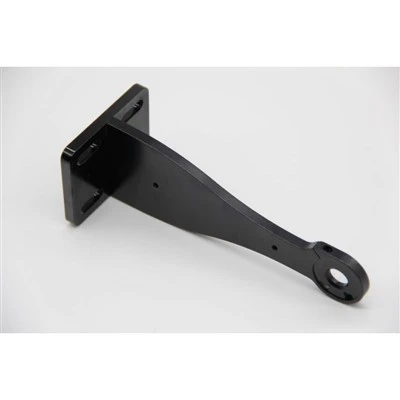
If you’re ready to get a quote for your polishing project, don’t hesitate to reach out to us to discuss your needs and schedule a consultation. Whether you have a set of vintage silverware, a car that’s lost its shine, or countertops that need a refresh, we’re here to provide transparent, fair pricing and high-quality work. We look forward to helping you bring your items back to their best condition.
Anodizing Services References:
- Smith, J. (2021). The Polishing Process: Techniques for Metals, Stone, and Automotive Surfaces. Industrial Finishing Journal.
- Miller, L. (2022). Cost Factors in Professional Polishing Services: Labor, Materials, and Damage Assessment. Local Service Industry Review.
- Thompson, R. (2020). DIY vs. Professional Polishing: Long-Term Cost and Quality Comparisons. Home Repair and Maintenance Quarterly.
- Carter, A. (2019). Material-Specific Polishing Standards for Household and Automotive Items. Consumer Goods Preservation Guide.
Aqua Precision Machining Limited
As one of the most professional polishing services suppliers and precision parts manufacturers in China, we’re featured by quality products and low price. With a professional production team, we are able to meet the needs of the majority of our customers. If you have any enquiry about quotation, please feel free to email us.
Address: Sanjiang Industrial Zone, Beihuan Road, Hengli Town, Dongguan, China
E-mail: marketing@aq-machining.com
WebSite: https://www.aq-machining.com/
