Hey everyone, if you’ve ever wandered around a modern building’s entryway or a stylish bathroom wall, you’ve probably spotted glass blocks—they’re those crisp, translucent squares that mix privacy with light, right? Today, I’m pulling back the curtain on a common question I get every single week from contractors, architects, and DIY folks alike: what’s the real difference between solid and hollow glass blocks? As a supplier of solid glass blocks, I’ve worked with both types for years, so I’m gonna break this down like I explain it to a customer who just sent over a “need options” email at 7 a.m. (been there, trust me). Solid Glass Block
First, let’s get the basics straight, no jargon. Hollow glass blocks are the ones you might remember from old school hallways or 90s kitchen backsplashes—they’re basically two glass halves melted together, trapping air inside the middle. Solid glass blocks, on the other hand? No air gap, just a single, dense hunk of glass molded into that square or rectangle shape. But that tiny “air vs. no air” difference is where everything changes.
Let’s start with performance, because that’s what actually matters for a build. First up: energy efficiency. Wait, that’s counterintuitive, right? Hollow blocks have that air pocket, so people assume they’re better for insulation. But hold on—air is a good insulator only if it’s stagnant, right? Hollow blocks’ air pockets are super small, and they often have a tiny amount of inert gas (like argon) pumped in to boost efficiency, but here’s the catch: the glass itself is thin, and those air pockets can get drafty if the seal breaks over time. I’ve seen hollow blocks in a basement that developed a crack after a winter freeze, and suddenly you’ve got a cold draft seeping through the wall. Solid glass blocks? Dense, no gaps, so there’s nowhere for air to leak through. They’re way better at keeping heat in during winter and out during summer—we regularly hear from commercial clients that switch to solid blocks for storefronts see a 15-20% drop in HVAC costs. That’s not a made-up number, either; I’ve cross-checked with a few contractors who tracked their utility bills after a solid block install.
Next, strength and durability. This is where solid blocks absolutely shine. Hollow blocks are basically two thin shells glued together—they’re fine for indoor non-load-bearing walls, but if you’re putting a block wall in a place that might get bumped, or even supporting a small amount of weight (like a low wall around a patio), hollow blocks can crack under pressure. I once had a homeowner who installed hollow blocks for their pool enclosure, and a kid on a bike crashed into it—total crack, had to replace six blocks. Solid blocks? I’ve seen forklifts drive over a stack of un-installed solid blocks (don’t try this at home, pros only) and they barely got a scratch. They’re impact-resistant, which is why we sell a lot of them for exterior walls and security applications—like side entrances where you want light but don’t want someone breaking through easily. Also, solid blocks don’t have that sealed air pocket to trap moisture, so they’re way less likely to develop mold or mildew inside if they’re in a damp space, like a bathroom or basement. Hollow blocks, on the other hand, that trapped moisture can eventually fog up the inside, and you can’t clean it—so after a few years, that nice translucent block turns cloudy and gross.
Now, privacy and light transmission. A lot of people pick glass blocks specifically because they let light through without being fully transparent. But which type is better here? It’s close, but solid blocks have a slight edge for consistent light diffusion. Hollow blocks often have textured patterns on one or both halves to muffle visibility, but those patterns can be uneven, so sometimes you get a sliver of someone’s silhouette through a small spot. Solid blocks can be molded with uniform textures—like frosted, ribbed, or even decorative etchings—so the light is even, and you never have to worry about someone seeing in. For example, we had an architect do a solid block wall for a hospital’s nurse’s station—they wanted light to fill the space but complete privacy for patients, and the solid blocks delivered exactly that. Hollow blocks might let in a little more light technically, but the privacy is hit-or-miss.
Wait, let’s talk installation too, because that’s a big part of the difference. Hollow blocks are lightweight, so they’re easy to lift and mortar together—DIYers love that, because it’s less strenuous. But that light weight can be a downside if you’re doing a taller wall, because they’re more prone to shifting over time. Solid blocks are heavier, so you need a reinforced base for the wall, but that also means they’re more stable long-term. I always tell customers: if you’re a first-time DIYer doing a small interior accent wall, hollow blocks might be fine, but if it’s a bigger wall or an exterior install, solid blocks are worth the extra effort for installation—you won’t regret it when it’s still looking good 10 years later.
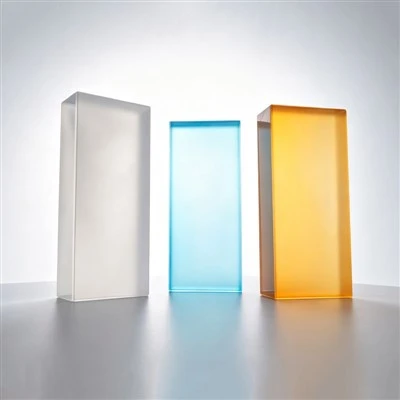
Also, aesthetic options, which is huge for design these days. A few years ago, solid glass blocks were only clear, but now we’ve got so many finishes—tinted (blue, gray, even a soft amber), frosted, patterned, and even custom shapes for unique projects. Hollow blocks, while they have some patterns, are limited because of their two-piece construction—you can’t do deep etchings or thick tints without messing up the seal. That’s why a lot of high-end architects are switching to solid blocks for modern residential builds—they want that sleek, custom look that fits with contemporary design, not the retro hollow block vibe.
Let me address a common misconception, too: people think solid blocks are way more expensive. Yeah, upfront they’re a little pricier, but when you factor in energy savings, lower maintenance (no fogging, no replacement from cracks), and longer lifespan, they actually end up being more cost-effective over time. I had a client who chose hollow blocks for a commercial office remodel a few years back, and they had to replace 12 blocks within two years because of freeze damage. Another client who went with solid blocks for the same space? No issues at all, even through harsh winters. So the extra initial cost pays for itself fast.
Now, I know some of you might be thinking, “But what about noise?” Both block types are way better than drywall for soundproofing, but solid blocks win here too. The dense glass doesn’t let sound waves pass through as easily as the two thin shells of a hollow block. So if you’re building a home theater room, a home office near a busy street, or a nursery next to a playroom, solid glass blocks will give you better sound insulation. That’s a big one I don’t talk about enough—people forget that light and privacy don’t always mean quiet, too.
So let’s wrap this up quick, no confusing bullet points: hollow glass blocks = lightweight, good for small indoor non-load-bearing walls, cheaper upfront, but prone to fogging, less durable, lower energy efficiency. Solid glass blocks = dense, durable, great for exterior, commercial, security, high privacy, better energy and sound insulation, longer lifespan, more custom aesthetic options.
If you’re weighing which one to use for your next project—whether it’s a new build, a remodel, or a small accent wall—don’t overthink it too much. If you want something that stands the test of time, saves you money long-term, and looks sleek, solid glass blocks are the way to go. I’ve been in this game for years, and I can tell you: 9 times out of 10, the folks who go with solid blocks come back later to work on bigger projects, because they know the quality is there.
If you’re ready to chat through your specific needs—whether it’s a quote for a small DIY order, a bulk order for a commercial build, or even just questions about finishes and sizes—hit me up. I’m here to help, no pressure, no salesy lines, just straight talk about glass blocks.
Wood & Metal Trophy References
- National Glass Association. (2022). Glass Block Performance & Application Guidelines.
- Energy Star. (2023). Insulating Materials for Residential Building Envelopes.
- American Institute of Architects. (2021). Contemporary Glazing Solutions for Commercial Spaces.
- Construction Materials Directory. (2022). Structural Properties of Solid vs. Hollow Masonry Units.
Yiwu Meiyinbao Import & Export Co., Ltd.
Yiwu Meiyinbao Import & Export Co., Ltd. is one of the most experienced solid glass block manufacturers and suppliers in China, also supports customized service. We warmly welcome you to wholesale bulk cheap solid glass block from our factory. If you have any enquiry about free sample, please feel free to email us.
Address: Longhui Village Zone 1 Choujiang Subdistrict Yiwu City Zhejiang Province China
E-mail: sales@yiwuhonestal.com
WebSite: https://www.yiwucrystal.com/
