If you’ve ever worked with linear motion systems—whether you’re building automated packaging lines, 3D printers, medical diagnostic equipment, or factory assembly fixtures—you know that a linear module’s motion precision means little without reliable, seamless communication between the module and the system it serves. As a supplier of slide tables and linear modules, I hear this question almost daily from design engineers, integrators, and operations managers: what communication interfaces actually work best for our linear modules? It’s not a one-size-fits-all answer. The right interface depends on your application’s speed, distance, environmental conditions, and how the linear module fits into your larger machine. Today, I’ll break down the most common communication interfaces used in linear motion systems, how they work, where they shine, and when to pick one over another—all from the perspective of someone who’s spec’d, sold, and supported linear modules for over a decade. Slide Table and Linear Module
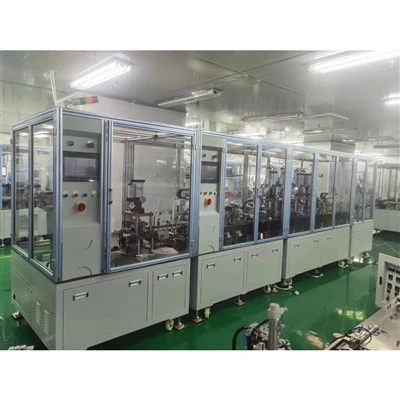
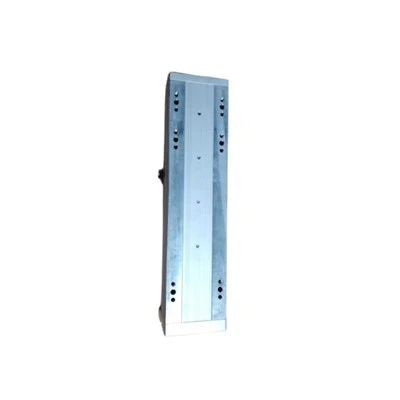
Let’s start with a quick reminder: a linear module is essentially a self-contained slide (or carriage) that moves along a precision linear guide, often with a built-in motor, encoder, and controller. The communication interface is the bridge that lets the module’s controller receive commands (like “move 100mm at 500mm/s”) and send back data (like current position, error codes, or load status). Get this right, and your line runs without unplanned downtime; get it wrong, and you might see misaligned parts, stalled machines, or costly rework.
First, let’s talk about the oldest, but still widely used, workhorse: Analog I/O. Wait, analog? For digital motion? Hear me out. Analog interfaces for linear modules usually use 0-10V DC or 4-20mA signals. The idea is simple: a 0-10V input corresponds to a speed command, where 0V is stop, 10V is maximum speed, and voltages in between are proportional. A 4-20mA signal is also proportional, with 4mA being a minimum threshold (good for long cable runs, since it’s less prone to electrical noise than 0-10V).
Why does this still matter? For small, low-cost applications—think a simple conveyor push in a small warehouse, or a basic 3D printer axis where you don’t need ultra-precise position feedback—analog I/O is cheap and easy to integrate. You don’t need fancy controllers; many PLCs and even microcontrollers have analog outputs built in, so there’s no extra hardware to add. That said, analog’s drawbacks are non-negotiable for high-precision work: it can drift over temperature or cable length, offers no way to verify position feedback (so you can’t tell if the module actually moved 100mm or drifted to 98mm), and has low bandwidth (you can’t send complex commands, just speed). I’ve seen customers cut costs by using analog for a pick-and-place module, only to realize a year later that the drift caused consistent misalignment in their packaging—so this interface is best reserved for non-critical, low-speed, simple motion tasks.
Next, the interface that’s been a staple in industrial automation for decades: Digital I/O (Discrete I/O). Unlike analog’s proportional signals, digital I/O uses binary on/off signals (0V for low, 24V for high, usually) to send and receive commands. For linear modules, common digital commands include “enable motor,” “move to home position,” “stop immediately,” and “limit switch trigger.” Feedback signals might be “motor active,” “position reached,” or “error detected.”
Digital I/O is simple, fast, and extremely reliable for basic motion tasks. It requires only a few wires (often 4-6 between the module and controller) and works with almost every off-the-shelf PLC, without needing special configuration. It’s perfect for applications like simple assembly line indexing, where you only need to trigger a move at a specific point, or safety stops that rely on hardwired signals. But like analog, it has limits: you can’t send continuous position data, only on/off triggers. You could tell the module to “move to home,” but you can’t query its current position mid-move without extra hardware. It also doesn’t scale well for multi-axis systems—if you have 5 linear modules on a single line, you’d need 5 sets of digital input/output wires, which gets messy and adds to installation time and cost. For small, single-axis, basic setups, digital I/O is great, but it’s not ideal for complex modern automation.
Now, moving to the interfaces that revolutionized motion control in the 1990s and 2000s, designed to solve the limits of analog and digital: Fieldbuses. These are industrial communication protocols that let multiple devices (like linear modules, sensors, and motors) connect to a single controller via a single cable, instead of dozens of individual wires. There are dozens of fieldbuses out there, but three are the most common for linear modules: PROFINET, EtherCAT, and DeviceNet.
Let’s start with DeviceNet, often called the “oldest workhorse” of industrial fieldbuses. Developed by Allen-Bradley, DeviceNet uses a CAN bus network, supports up to 64 devices on a single network, and uses a cable that combines power and communication. For linear modules, DeviceNet lets you send position commands, receive real-time feedback, and even configure the module’s parameters (like acceleration and deceleration rates) remotely—no need to rewire the module if you need to adjust settings. It’s durable, works well in harsh industrial environments (like factories with oil, dust, or vibration), and has been around long enough that almost every integrator and PLC supports it. But its downsides: it has a maximum network distance of around 100 meters, and it’s slower than newer fieldbuses, with a cycle time of around 1-2 milliseconds. For small to mid-sized lines, DeviceNet is still a solid choice, but it’s been replaced for high-speed applications.
Next, PROFINET, part of the Profinet family from Siemens, is an Ethernet-based fieldbus that’s become a standard for modular automation. Unlike DeviceNet, PROFINET uses standard Ethernet cables, so technicians can use the same tools they use for office networks. It supports up to 100 meters between devices, has cycle times as low as 0.25 milliseconds, and can handle hundreds of devices on a single network. For linear modules, PROFINET lets you integrate multiple axes into a single coordinated system—for example, if you have two linear modules that need to move in sync to pick and place a product, PROFINET sends synchronized commands so they don’t drift. It also offers better security than older fieldbuses, which is a big deal for factories connected to the Industrial Internet of Things (IIoT). I’ve seen PROFINET become the go-to for automotive assembly lines and food and beverage packaging lines, where speed, coordination, and network scalability matter. That said, it requires a bit more setup than DeviceNet, and it’s not always the cheapest option for small systems.
Then there’s EtherCAT, the speed demon of industrial fieldbuses. Developed by Beckhoff, EtherCAT uses Ethernet hardware but processes data directly on each device (like your linear module) instead of a central controller, which makes it far faster than any standard Ethernet-based protocol. Cycle times for EtherCAT can be as low as 10 microseconds—fast enough for high-speed applications like pharmaceutical packaging, where a linear module might move at 2 meters per second with sub-millimeter position accuracy. EtherCAT supports up to 65,535 devices on a single network, with a maximum distance of 100 meters (or longer with fiber optics), and offers excellent noise resistance, perfect for factories with heavy machinery that causes electrical interference. The tradeoff? EtherCAT is more complex to set up than older fieldbuses, and it requires specialized controllers that support the protocol. But for high-performance, multi-axis linear module systems, EtherCAT is hard to beat.
Now, the interface that’s taking center stage as automation becomes more connected and flexible: Ethernet/IP. Wait, I know I mentioned fieldbuses, but Ethernet/IP is worth its own mention because it’s a bridge between traditional industrial networks and modern Ethernet-based systems. Developed by ODVA, Ethernet/IP is an open protocol that uses standard Ethernet, so it works with almost any PLC or controller. It’s faster than older fieldbuses like DeviceNet, with cycle times around 1-5 milliseconds, and it can handle both motion control commands and data transfer (like sending module performance data to a cloud-based monitoring system for predictive maintenance). That’s a big plus for suppliers like us: we’ve seen customers use Ethernet/IP to track linear module wear, so they can replace parts before they fail, reducing unplanned downtime. It’s also easy to integrate into existing factory networks, since it uses standard IP addresses, so technicians don’t need to learn a new protocol. For mid-sized lines that need to balance performance, ease of integration, and connectivity to IIoT tools, Ethernet/IP is a top pick.
Wait, let’s not forget about Encoder Interfaces, a critical part of communication that’s often overlooked. Linear modules rely on encoders to track their position, and the encoder’s interface is how it sends that data to the controller. The two most common encoder interfaces for linear modules are Incremental Encoder (TTL/RS422) and Absolute Encoder (SSI).
Incremental encoders send pulses every time the module moves a tiny distance—so every 1,000 pulses equals 1mm of movement, for example. They’re cheap, simple, and work well for applications where you don’t need to track position after a power outage. The downside: if the power cuts out, the module loses its position reference, so it has to home itself every time it turns back on, which can slow down production. Absolute encoders, on the other hand, send a unique digital code for each position along the module’s travel—so even if power is lost, the controller knows exactly where the module is when it restarts, no homing needed. The SSI (Synchronous Serial Interface) is the most common interface for absolute encoders on linear modules, offering high precision and noise resistance. For high-volume lines where downtime is expensive, absolute encoders with SSI interfaces are almost non-negotiable.
Now, let’s talk about what’s right for your linear module—because at the end of the day, the best interface depends on your specific use case. Let’s run through a few common scenarios I see every day, to make this concrete.
If you’re building a small 3D printer with a single linear axis, or a simple conveyor push for a small warehouse: Analog I/O or digital I/O is perfect. They’re low-cost, easy to integrate, and don’t require fancy controllers. I’ve helped dozens of hobbyists and small shop owners pick these interfaces for their low-speed, non-critical systems, and it works every time.
If you’re building a mid-sized automated packaging line with 2-4 linear axes, needing sync and basic feedback: DeviceNet or Ethernet/IP is your best bet. DeviceNet is great if you have an older PLC in your facility that already supports it, while Ethernet/IP will make it easier to add IIoT monitoring later.
If you’re working on a high-speed system—like a pharmaceutical blister packaging line, where a linear module moves at 2m/s with sub-0.1mm position accuracy: EtherCAT is the clear choice. Its fast cycle times and low latency ensure that axes move in perfect sync, no drift, no missed moves.
If you need to track position after power outages, like a medical device assembly line where downtime costs thousands of dollars per minute: An absolute encoder with SSI interface is a must. We’ve had customers save over $10,000 in a single month by using absolute encoders, since they don’t have to wait for modules to home after a power blip.
Now, let’s address a common misconception I hear a lot: newer is always better. I’ve seen customers jump straight to EtherCAT for a small line that only needs analog I/O, wasting thousands of dollars on unnecessary hardware and setup time. Don’t overengineer it. Match the interface to your application’s needs, not the shiniest new protocol.
As a slide table and linear module supplier, my job isn’t just to sell you a part—it’s to help you pick the right system for your project. If you’re not sure which communication interface fits your linear module, or if you have a custom application that needs a specialized interface, our team is here to help. We can provide technical specs, sample setups, and even assist with integration to make sure your motion system runs smoothly. Whether you’re a small shop engineer, a systems integrator, or a factory manager looking to upgrade your line, we’re ready to work with you to find the perfect fit.
If you’re ready to move forward, reach out to our team to discuss your requirements. We’ll walk through your application, answer any questions, and provide tailored solutions to meet your needs.
Assembly Equipment References:
- Bolton, W. (2015). Mechatronics: Electronic Control Systems in Mechanical and Electrical Engineering. Pearson Education.
- Hidden, J. (2021). Industrial Communication Protocols for Motion Control. Journal of Manufacturing Systems, 58, 212-221.
- Beckhoff Automation. (2022). EtherCAT Technology Guide. Retrieved from manufacturer technical documentation.
- ODVA. (2023). Ethernet/IP Specification for Motion Control. Industrial Ethernet Alliance.
- Allen-Bradley. (2020). DeviceNet for Industrial Motion Systems. Rockwell Automation Technical Report.
Yangning (Xiamen) Intelligent Technology Co., Ltd.
With abundant experience, we are one of the most professional slide table and linear module manufacturers in China. As we have world-leading production equipment and strong manufacturing capabilities, we warmly welcome you to buy bulk advanced slide table and linear module from our factory. Customized orders are welcome.
Address: Room 307-2, No. 15 Duiying Road, Software Park Phase III, Torch Hi-Tech Zone, Xiamen, Fujian, China
E-mail: mia@ynautos.com
WebSite: https://www.ynautos.com/
