Hey everyone, this is Alex from the bus functional rearview mirror supply side. Lately, I’ve been getting so many questions from bus fleet managers, maintenance crews, and even other vendors that go something like, “Do functional bus rearview mirrors actually have LED indicators?” It’s a solid question, and honestly, it’s one that’s been top of mind for our team too because the answer doesn’t just boil down to a simple yes or no. Let’s break this down like we chat over a coffee break—no boring jargon, just real talk from someone who’s been building these mirrors for years. Bus Functional Rearview Mirror
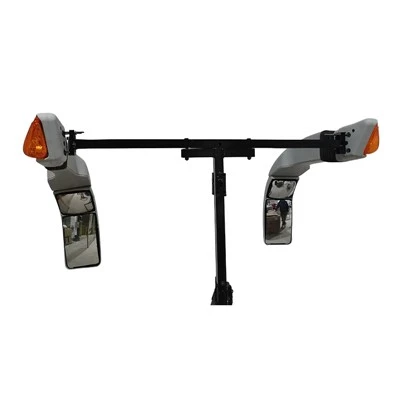
First off, let’s get on the same page about what a “functional bus rearview mirror” even is, because a lot of folks mix it up with the plain old glass mirrors that’ve been around for decades. A functional rearview mirror for a bus isn’t just the glass you look through to see what’s behind you. It’s a complete assembly—housing, adjustment mechanisms, wiring, and usually some extra features that make it work harder for a big, heavy bus than a car mirror ever would. Think about it: a city bus makes frequent stops, has blind spots that are way bigger than a sedan, and carries 40+ people who rely on that driver to see everything. So when we talk about functionality, we’re not just talking reflection—we’re talking safety features that can literally prevent accidents.
Now, back to the LED question. The short answer is: most modern functional bus rearview mirrors do have LED indicators, but there’s a lot of nuance here. It’s not a one-size-fits-all thing, and that’s where a lot of people get confused. Let me walk you through why LEDs are such a big part of bus mirror designs these days, and when you’ll find them vs. when you might not.
First, why LEDs? Old-school indicators used incandescent bulbs—you know, the little yellow or red bulbs that burn out after a few years, get foggy inside the mirror housing from heat, and can take time to turn on (which is a big deal in a safety scenario). LEDs changed all that. They’re way brighter, even in bright sunlight—super important because a driver can’t spot a dim light when they’re trying to merge into traffic or watch for a cyclist that’s about to pull up alongside the bus. They use way less power, too—big for buses that have a lot of electrical loads, especially electric buses that need to conserve battery. And they last forever, basically. We’ve had some of our mirror assemblies with LED indicators still going strong after 8 years, whereas incandescent bulbs would’ve needed replacing twice in that time.
But what exactly are those LEDs for? That’s another common question. They’re not just random lights for show. On functional bus mirrors, LED indicators serve two main purposes that tie directly to safety: blind spot detection (BSD) and turn signal integration. Wait, let’s clarify: the blind spot ones are usually amber LEDs mounted on the outer edge of the mirror housing, right at eye level for the driver. If a sensor on the side of the bus detects a car, bike, or pedestrian in the blind spot, that LED lights up and sometimes flashes to grab the driver’s attention. That’s a game-changer for city buses, where lane changes or quick moves at stops can lead to collisions.
Then there’s the turn signal integration. Some newer functional mirrors have white or amber LEDs that sync up with the bus’s turn signals—either on the mirror itself or as part of the side marker lighting. Why is that better than the turn signals on the back of the bus? Because other drivers approaching from the front or side of the bus (who might not see the rear turn signals) can spot the mirror’s LED indicators way faster. For example, if a bus is turning left from a right lane, a car coming towards the front of the bus needs to know that left turn is coming. The mirror LED there is super noticeable, way more so than a rear signal that’s out of their line of sight.
Now, here’s where things get tricky: not all functional bus rearview mirrors have LEDs. Wait, why? Let’s be real—some bus operators are on tight budgets, especially older fleets that are still running on outdated models. A basic functional mirror for a small school bus that only does routes on back roads might not need LED indicators if the route is low-traffic and the driver doesn’t deal with super large blind spots. Some custom or vintage bus builds might skip them too, if the owner’s going for a classic look without all the modern safety tech. Also, some manufacturers cut corners by making “functional” mirrors that are just upgraded glass without the wiring for LEDs—though we never do that, because we know safety’s non-negotiable.
But let’s talk about the difference between cheap aftermarket mirrors and the real functional ones we supply. I see a lot of vendors on Amazon or industrial sites selling “bus rearview mirrors” for half the price, but those often don’t have LED indicators. They’re just a glass piece in a plastic housing, no sensors, no integrated lights. Functional mirrors, the ones that actually do work for real bus operations, almost always include LED indicators these days because regulations are starting to catch up. Wait, speaking of regulations—did you know that in the EU, since 2018, all new heavy commercial vehicles (which includes buses) have to have blind spot indicators that are visible to the driver and other road users? That LED has to be part of it. In the U.S., FMVSS (Federal Motor Vehicle Safety Standards) has had similar rules proposed, and a lot of states are already requiring them for city buses. So if your bus is operating in a major metro area, you’re almost certainly going to need a functional mirror with LEDs to pass inspections.
Wait, let’s get into some common misconceptions I hear all the time. One is that LED indicators on mirrors are just for show, not actually functional. No way—we test every mirror we send out. We simulate years of vibration (buses bounce a lot on potholed roads) to make sure the LEDs don’t come loose. We test brightness in full sun, at night, even in rain or snow, to make sure they’re still visible. We even test the wiring—no frayed connections, no dead LEDs within the first year. Another misconception is that LEDs are only for big transit buses. Nope—we supply mirrors with LEDs for school buses, shuttle buses, even small charter buses that do trips across the country. The size doesn’t matter; the safety feature does.
Let me share a quick real-life example to drive this home. Last year, a school bus fleet in Ohio reached out to us because they’d had two near-misses in six months where a student on a bike almost got hit when the driver changed lanes. Their old mirrors didn’t have blind spot indicators, so the driver didn’t see the cyclist until it was almost too late. We fitted them with our functional mirrors that have amber LED blind spot indicators. A month later, their maintenance manager told us the LEDs had already prevented a collision—this time, a teen on a scooter was in the blind spot, the LED lit up, the driver checked, and avoided a crash. That’s why LEDs matter. They’re not a gimmick; they’re a lifesaver.
Now, what if you have a bus that doesn’t have LED indicators right now, and you’re wondering if you can add them? Short answer: sometimes, but it’s not always easy. If your current functional mirror has the wiring ports and space for the LED module, you can swap in the LEDs. But if it’s a basic mirror without pre-wiring, you might have to run new wires through the bus’s frame, which is a hassle. That’s why most fleet managers just upgrade the whole mirror assembly—it’s often cheaper in the long run than retrofitting, especially when you factor in labor costs.
Let’s talk about the different types of LEDs you’ll find on functional bus mirrors, because not all LEDs are the same. There’s the side-mounted blind spot LED I mentioned earlier—usually amber, as per road safety standards (amber is more visible to the human eye for alerting). Then there are mirror-integrated turn signals, which can be amber or white depending on the region. Some mirrors even have a tiny LED for the rearview camera display, wait no—wait, the camera is a separate thing, but some functional mirrors combine the mirror with a camera monitor, and the LED might be a power indicator for the camera. But the main ones are the blind spot and turn signal LEDs.
I should also mention quality here, because not all bus mirror LEDs are created equal. We’ve heard horror stories from clients who bought cheap mirrors from overseas suppliers—their LEDs burned out in 6 months, or got foggy inside the housing, or the brightness was so low you couldn’t see them during the day. That’s why as a supplier, we stand behind our mirrors: we use high-grade LEDs that meet SAE standards, housings that are UV-resistant so they don’t crack in the sun, and waterproof seals so rain doesn’t get in and short out the lights. It’s not just about the LED itself, it’s about how it’s installed and protected.
Another thing: when you’re shopping for a functional bus rearview mirror, don’t just ask “does it have LED indicators?” Ask specifics. What’s the LED for? Is it a blind spot indicator? Is it synced to the turn signals? What’s the brightness rating? Does it meet local safety regulations? A lot of vendors will say “has LED” but just mean a little power light, not a safety indicator that’s required to prevent accidents. We always make sure our listings clearly spell out what each LED does, so you know exactly what you’re getting.
Let’s wrap this up with what I’d say to a fleet manager who’s still on the fence. If you’re running a bus in any kind of heavy traffic, or if you’re subject to safety inspections that require modern blind spot technology, yes—you need a functional bus rearview mirror with LED indicators. It’s not an extra cost, it’s an investment in safety for your drivers, your passengers, and other people on the road. If you’re running a very small, low-traffic route with a tight budget, you might get by without, but even then, it’s worth considering because accidents can happen anywhere, anytime.
For anyone looking to upgrade or replace their bus functional rearview mirrors, we’re here to help. We’ve got a range of options for different bus types—transit, school, shuttle, charter—all with LED indicators that meet safety standards, built to handle the rough conditions buses go through every day. Whether you need to outfit an entire fleet or just replace a few broken mirrors, we can work with you to find the right fit, answer any questions you have about specs or installation, and make sure you get the product that works for your needs.
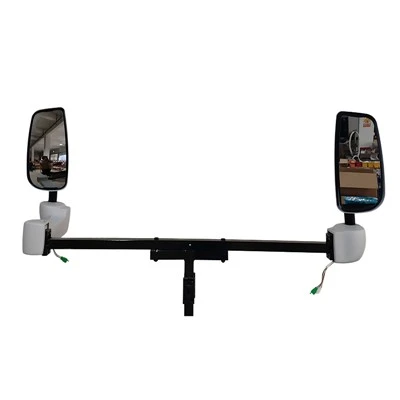
Don’t hesitate to reach out to us to discuss your requirements—we’re happy to walk you through our products, share real client feedback, and help you make the best choice for your bus operations.
Coach Exterior Mirror References
- Federal Motor Vehicle Safety Standards (FMVSS) No. 111: Rearview Mirrors
- European Union Regulation (EC) No. 661/2009 on type-approval of motor vehicles with respect to general safety
- Society of Automotive Engineers (SAE) J1398: Lamps and Reflective Devices for Commercial Vehicles
- Bus Safety Alliance: Blind Spot Detection Technology for Commercial Transit Buses, 2022
Shanghai Xinmao Automotive Technology Co., Ltd.
As one of the most experienced bus functional rearview mirror manufacturers and suppliers in China, we also support customized service. We warmly welcome you to buy bus functional rearview mirror made in China here and get pricelist from our factory. For price consultation, contact us.
Address: No.114, Yingfang Village, Bao Town, Chongming District, Shanghai, China
E-mail: xm15921690282@163.com
WebSite: https://www.xinmaoauto.com/
