Hey there, if you’ve ever worked with industrial piping systems—whether you’re a plant operator, maintenance tech, or even someone who just dabbles in valve specs—you’ve probably heard of globe valves. But why are they the go-to for throttling when there are so many other valve types out there? As a globe valve supplier, I get this question all the time, and it’s not just a random choice. There’s solid engineering behind it, and I’m gonna break it down like I would when chatting with a customer who’s weighing their options. Globe Valve

First off, let’s define what throttling even means here. Throttling is controlling the flow rate of a fluid (liquid, gas, slurry—you name it) by partially opening a valve, right? You’re not just fully opening it for max flow or closing it tight to stop flow; you’re adjusting that sweet spot in between to match your process needs. That’s where globe valves stand out way more than, say, ball valves or gate valves for this specific job.
Let’s start with the basic design of a globe valve, ‘cause that’s the root of why it works so well for throttling. Unlike a gate valve, which has a flat disk that slides up and down to open or close a big port, globe valves have a spherical body (hence the name) with a baffle inside called a “partition,” and a movable disk that seats against a ring (the seat) to control flow. The fluid has to take a winding path through the valve—enter one side, go up and over the partition, then exit the other. That winding path isn’t just for pressure management; it lets you adjust the disk’s position super precisely. If you want less flow, you lower the disk partway so it sits higher off the seat, narrowing the gap the fluid has to squeeze through. If you want more flow, you lift it higher. You can fine-tune that position way easier than you can with most other valve types.
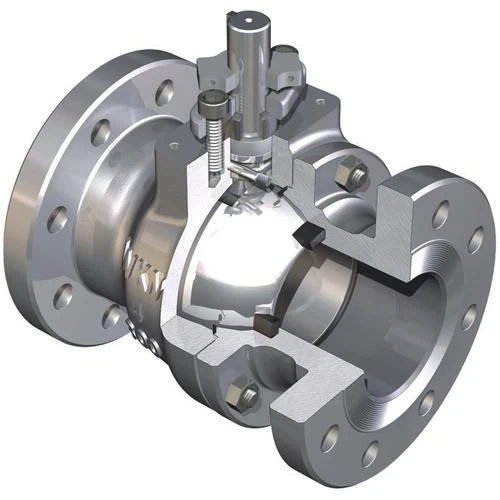
Wait, let’s compare that to a ball valve. Ball valves have a quarter-turn operation—you spin a 90-degree ball with a hole in it to open or close. Sure, they’re great for on/off, but if you try to use a ball valve for throttling, you run into a problem: the flow only changes at the extremes. Like, if you turn the ball just a little off center, the hole is still almost fully open, and flow doesn’t drop much. Then suddenly, when you get to like 10 degrees open, it slams shut. That’s called “non-linear flow control,” and it’s terrible for throttling. You can’t get consistent, precise flow adjustments with a ball valve mid-travel. Gate valves? They’re even worse for throttling. Most gate valves are designed to be either fully open (where the gate is out of the flow path) or fully closed. If you leave a gate partway open, the gate can vibrate really bad against the seat, cause wear, and even erode the valve or the pipe over time. That’s called “wire drawing,” right? The fluid rushing through the narrow gap creates tiny, high-velocity streams that can eat away at metal. Globe valves minimize that? Well, not totally, but way more than gate valves.
Another big point: linear flow characteristic. That’s a fancy way of saying, if you move the valve stem (the part that turns or lifts the disk) by a certain amount, the flow rate changes by a predictable, proportional amount. With globe valves, especially ones designed for throttling, the disk shape and seat profile are machined so that each millimeter of stem lift translates to a specific shift in flow. So if you need to dial back flow by 20%, you can adjust the stem 20% of the way, and it works. That consistency is a game-changer for process control—think about a chemical plant where you need to keep a reaction’s flow exact to avoid waste or safety issues, or a water treatment plant where you have to balance multiple lines. You can’t do that with a valve that’s finicky mid-travel.
Durability matters too, especially when you’re throttling. I’ve seen so many customers try to use a gate valve for throttling and end up replacing it in 6 months ‘cause the seat got chewed up from wire drawing. Globe valves, though, their disk and seat are designed to handle partial opening. Wait, but not all globe valves—you have to get a “throttling globe valve” specifically, right? Those have a softer seat sometimes, or a disk shape that’s resistant to erosion. Standard globe valves are fine for on/off, but throttling ones are machined for that constant partial operation. Also, the stem on a globe valve is a direct lift—no gear changes needed for fine adjustment. Some have handwheels with really fine threads, so you can turn it a tiny bit and get a small flow change. That’s way more control than a ball valve’s lever, which is designed for quick quarter turns, not tweaking.
Let’s talk about pressure and temperature too, ‘cause that’s a big part of industrial work. Globe valves can handle a wide range of pressures (from low domestic plumbing to high industrial process pressures) and temperatures (from cryogenic to superheated steam). When you’re throttling high-pressure fluid, the globe valve’s design helps distribute the pressure drop more evenly across the disk and seat, instead of concentrating it in one spot like a ball valve might. That reduces stress on the valve parts, so it lasts longer. For example, in a power plant’s steam lines, they use globe valves for throttling steam flow to turbines ‘cause you need precise control and the valve has to handle extreme heat and pressure. I’ve supplied globe valves to a few local power plants, and they swear by ‘em ‘cause they don’t have the flow control issues that other valves bring.
Wait, what about slurries or dirty fluids? Yeah, globe valves work here too, better than gate valves sometimes. Gate valves can get clogged with sediment when you leave them partway open, but the globe’s path—even when partially open—has fewer dead spots where sediment can build up? No, wait, actually, no—if you have really thick slurry, you might need a different valve, but for moderate slurries, the disk’s shape can scrape some buildup off the seat when you adjust it. Also, you can repair or replace the disk and seat really easily on a globe valve, which is a huge plus for maintenance. If a gate valve’s gate gets worn, you pretty much have to replace the whole valve, but with a globe valve, you just unscrew the old disk and seat and put in a new one. That saves downtime and money for customers, which is why a lot of maintenance teams prefer ‘em for throttling.
But let’s be real, globe valves aren’t perfect. They have higher pressure drop when fully open, right? The winding flow path means more friction than a straight-through valve like a ball valve, so if you never need to throttle, a ball valve is more efficient. But if throttling is part of your regular operation, that small pressure drop is worth the tradeoff for control. Also, they’re slower to open and close—since you have to turn the handwheel multiple times, not a quarter turn—so they’re not great for emergency on/off. But again, if your main job is throttling, that slow actuation is a non-issue, and the control is worth it.
As a globe valve supplier, I hear a lot of pushback sometimes—customers say “why not just use a control valve?” Wait, control valves are usually globe valves, right? Most industrial control valves are globe-style ‘cause they’re built for precise throttling. The actuators (pneumatic, electric) on control valves work with the globe valve’s linear lift to adjust flow automatically. If you’re automating your process, a globe valve is the base component that makes that control work. You can’t automate a ball valve for precise throttling easily, ‘cause its flow isn’t linear.
Let me give a quick example from a recent customer I worked with. They ran a small brewery, and they were using gate valves to control hot water flow to their mash tun. They kept having issues: one day flow would be too high, the next too low, and after 8 months, two of the gate valves had wire drawing on the seats. I suggested switching to throttling globe valves. They installed them, and within a month, they noticed their water temperature consistency improved, and the valves didn’t need replacing. That’s the kind of real-world win you get from picking the right valve for throttling.
Another thing: noise. When you throttle, fluid can create noise from turbulence. Globe valves, especially when they’re designed with noise-reducing trims, can cut down on that turbulence way more than other valves. That’s a big deal for facilities where noise levels are regulated—like refineries or food processing plants where workers are nearby. Globe valves’ internal baffles break up the flow into smaller streams, reducing turbulence and noise, which is a compliance and comfort thing.
Wait, let’s make sure I’m not mixing up anything here. Throttling vs. regulating flow—sometimes people use those interchangeably. Throttling is manual adjustment, regulating is automatic, but both rely on the valve’s ability to adjust flow precisely. Globe valves excel at both. The key design features that make that happen: linear flow, precise stem lift, durability in partial opening, and the ability to handle pressure/temperature stress. Other valves either can’t adjust flow precisely, wear out fast, or aren’t built for constant partial operation.
Now, if you’re someone who’s reading this and wondering if a globe valve is right for your throttling needs, don’t just take my word for it. But as someone who’s been supplying globe valves for years, I’ve seen the mistakes people make when they pick the wrong valve for throttling—premature replacement, inconsistent flow, safety issues from overpressure. Globe valves solve those problems because their design is built around that specific use case.
At the end of the day, it all comes down to matching the valve’s design to your application. If throttling is a regular part of your process—whether you’re in manufacturing, water treatment, food and beverage, or any other industry—globe valves are the standard for a reason. They’re reliable, precise, and easy to maintain when you get the right throttling-specific model.
If you’re looking to upgrade your throttling valves or replace worn-out ones, I’d be happy to chat through your specific needs. We can go over flow rates, pressure, temperature, and make sure you get the right globe valve for the job. Don’t waste money on valves that can’t handle constant throttling—reach out to work out the best solution for your system.
Floating Ball Valve References:
- Valve Institute International. (2021). Globe Valve Design and Application Standards.
- Miller, E. (2019). Industrial Flow Control: Valve Selection for Throttling Applications.
- American Society of Mechanical Engineers (ASME). (2020). B16.10: Face-toface Dimensions for Valves.
Zhejiang Sunawei Valve Co., Ltd.
As one of the most professional globe valve manufacturers and suppliers in China, we offer a wide range of valves with superior quality. Please feel free to wholesale high quality globe valve at competitive price from our factory. We also accept customized orders.
Address: Anfeng Industrial, Oubei Town, Wenzhou City, Zhejiang, China
E-mail: snv@sunawevalve.com
WebSite: https://www.sunay-valves.com/
