What’s up, fellow two-wheel fanatics? If you’ve ever stared at an electric motorcycle zipping past you, no loud rumble, no smelly exhaust, just a smooth silent whoosh, you’ve probably wondered—how the heck does that thing even work? As someone who’s been in the electric motorcycle supply game for years, sourcing parts, testing builds, and helping dealers and fleet operators switch over, I get way too many questions about this. Let’s break it down like we’re chatting over a coffee (or a beer, no judgment on your post-ride drink) without all the boring jargon. Electric Motorcycle

First, let’s get one thing straight: electric bikes aren’t just “gas bikes without the gas.” They’re a totally different system, built from the wheels up. Let’s start with the heart of the whole thing—no, not the engine, because electric doesn’t have an engine. We call it a motor, and these days, almost all e-motorcycles use what’s called a permanent magnet synchronous motor (PMSM). Why that one? It’s way more efficient than old brushed motors, which were bulky and lost energy just heating up. Think of a PMSM like two magnets: one is fixed to the center of the wheel (that’s the stator, it has copper coils wrapped around it), and the other spins around it (the rotor, with strong neodymium magnets stuck to it). When you send electricity from the battery to those copper coils, they create a magnetic field that pushes and pulls the rotor’s magnets, and boom—your wheel spins. No pistons, no valves, no messy combustion explosions. That’s why they accelerate so fast off the line, by the way. Gas bikes have to wait for fuel to burn and push a piston, but electric motors deliver torque instantly. That’s the thrill you feel when you twist the throttle.
Wait, let’s not skip the throttle, because that’s another part that’s totally not like a gas bike. On a regular motorcycle, twisting the throttle opens a butterfly valve in the carburetor or fuel injection system, letting more gas and air in. On an e-bike? It’s not a valve—it’s a sensor. Most use a Hall effect sensor, which measures how much you twist the handle and sends a tiny electronic signal to the controller. Oh right, the controller! That’s the middleman between the battery, the throttle, and the motor. It’s basically the e-bike’s brain. Its job is super important: it takes the high-voltage DC power from the battery and converts it into AC power that the motor can use, and it adjusts how much power is sent based on that throttle signal. Twist a little, it sends low power; twist all the way wide, it cranks up the power. It also manages things like regenerative braking, which is a big one for range. Speaking of range, let’s talk about the battery—this is the second big star of the show.
Modern electric motorcycle batteries are almost all lithium-ion, same as your phone or laptop, but way bigger and built for heavy-duty use. We’re talking high-density lithium-ion cells, arranged in packs that fit right where a gas tank would normally sit, or sometimes lower down for better weight balance. Why lithium-ion? They hold way more energy per pound than old lead-acid batteries, charge faster, and last way longer. A typical e-motorcycle battery might be 4kWh to 10kWh, depending on the model, and that dictates how far you can go on a full charge—think 60 miles for a city commuter, up to 200 miles for a longer-range touring bike. But here’s the cool part about batteries: they’re not just a one-and-done part. When you hit the brakes, the motor switches from acting as a driver to acting as a generator. That’s regenerative braking. Instead of wasting all that kinetic energy as heat like gas bikes do, the motor sends that energy back to the battery to top it off a little. If you’re commuting in stop-and-go city traffic, that can add 10-15% extra range without you even noticing. Smart, right?
Let’s put this all together with a quick ride example, so it makes sense. You get on your e-motorcycle, tap the start button (no key, usually—just a fob like a car), and the controller powers up, checks all the systems to make sure everything’s good. You twist the throttle slightly to pull away from the stop sign. The Hall sensor sends a signal to the controller that says “medium power, please.” The controller grabs DC power from the battery, converts it to AC, sends it to the motor’s coils, which create a magnetic field that spins the rotor. The rotor’s connected to the rear wheel, so off you go, smooth as butter, no shifting (wait, almost no shifting—some high-end e-bikes have gearboxes, but most entry to mid-level ones are single-speed, because the motor has so much torque across all RPMs) and way quieter than a gas bike. You’re cruising along, so you ease off the throttle a little. The controller dials back the power, maybe uses a tiny bit of that regenerative braking if you need to slow down. Then you hit a stop sign, squeeze the brake lever. That signal goes to the controller, which tells the motor to switch to generator mode. The wheel’s spin turns the rotor, which generates electricity that flows back to the battery, adding a few miles to your range. Once you’re home, you plug the charging cable into the port (usually on the side of the bike, near the battery) and the charger sends AC power from the wall to DC power that the battery can store. Done.
Now, I know what a lot of skeptics say: “What about charging time? What about battery lifespan?” Let’s be real, it’s not perfect, but it’s way better than it was five years ago. A standard Level 2 charger (the one you use at home or at a public station) will fully charge most e-motorcycle batteries in 2-4 hours. Fast DC fast chargers? You can get 80% charge in like 20 minutes, which is way better than waiting around at a gas station. As for battery lifespan? A good lithium-ion e-motorcycle battery will last 8-10 years, even with daily charging, if you take basic care—like not leaving it in extreme heat or cold for months on end, and not letting it fully drain every single time you charge it. Most of the batteries we supply come with 3-5 year warranties, so that’s peace of mind right there.
As an electric motorcycle supplier, I’ve seen this technology go from a weird niche thing to a legitimate alternative for every type of rider. We’ve sold commuter bikes for delivery drivers who save hundreds a year on gas, off-road bikes for weekend trail riders who want to leave no emissions, even touring bikes for people who want to cross the country without ever stopping at a gas station (well, stopping to charge, which is getting more common every day). The biggest questions we get from potential buyers are exactly the ones we’re talking about here: how does it work, is it reliable, is it worth it?
If you’re a fleet manager looking to switch your delivery bikes, a dealer wanting to add e-models to your lineup, or just someone curious about making the switch from gas, don’t overcomplicate it. At the end of the day, electric motorcycles work because they cut out all the messy, inefficient parts of gas engines. No oil changes, no spark plugs, no air filters to replace every few thousand miles, no paying $5 a gallon for gas. The math adds up really quickly.
So if you’re tired of the noise, the fumes, the constant maintenance of gas bikes, and you want something that’s both fun to ride and better for the planet, let’s talk. Whether you’re buying a few units to test with your team or looking to stock your showroom, we can help you find the right model for your needs, with transparent pricing and support every step of the way. No hidden fees, no pushy sales pitches—just honest info about how these bikes work, and why they’re the future of two wheels.
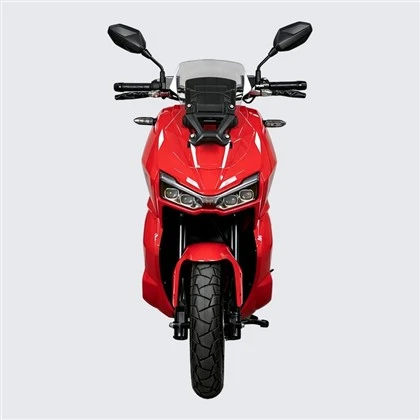
If you want to dive deeper into the tech, or chat about specific models, reach out whenever. Let’s get you on the right electric motorcycle for your lifestyle.
Two-Wheeled Motorcycle References
- Electric Vehicle Technology Explained, James Larminie and John Lowry
- Society of Automotive Engineers (SAE) International, Electric Motorcycle Performance Testing Standards
- U.S. Department of Energy, Advanced Lithium-Ion Battery Research and Development Reports
Zhejiang Siekon Motor Technology Co., Ltd.
Zhejiang Siekon Motor Technology Co., Ltd. is one of the most professional electric motorcycle manufacturers and suppliers in China, featured by quality products and good service. Please feel free to wholesale advanced electric motorcycle made in China here from our factory. Also, custom service is available.
Address: Building 3, No. 112 Gaoxin East 1st Road, Tongxiang Economic Development Zone, Tongxiang City
E-mail: wsy@xkjsq.com
WebSite: https://www.siekonmotorcycle.com/
