If you’ve ever worked in a research lab, you’ve probably seen industrial sponges and written them off as just another messy supply—something to wipe spills, clean glassware, or toss out when they get grubby. But as someone who’s supplied industrial sponges to R&D teams for over 10 years, I’m here to tell you these durable, versatile materials are way more than lab cleaning tools. We’ve had researchers call us at random to ask for sponges that can withstand acid baths, mimic biological tissue, or even pull tiny contaminants out of tricky samples. Let’s break down the actual uses that make industrial sponges a secret workhorse in R&D, no stuffy lab jargon required. Industrial Sponge

First off, let’s clarify: industrial sponges aren’t the soft, squishy kitchen or craft sponges you grab at the grocery store. We make them with closed-cell or open-cell polymers, tailored density, and sometimes chemical additives to fit specific tasks. They’re tough—no falling apart mid-use like a cheap sponge—and consistent, which is key for research where precision matters. One of the most common, underrated uses in R&D is sample prep. You know that step before running a test (like HPLC for chemicals or PCR for biology) where you need to clean tiny liquid samples, remove debris, or separate particulates? Industrial sponges do that way better than filter paper or plastic pipette tips sometimes. For example, environmental researchers working on water quality tests will use specially porous industrial sponges to pull microplastics or sediment out of river or tap water samples. Unlike filter paper, which can trap the tiny plastic bits they’re looking for, sponges with a calibrated pore size let liquid flow through easily while catching only the contaminants. We even supply sponges treated with surfactants that make them selective for certain chemicals—so a team studying oil spills can use a sponge that only absorbs oil, not water, to extract samples from test water tanks. I’ve had a PhD student call me last year saying this cut their sample prep time by 40%; before, they were using centrifuge tubes and filters that took hours to process, and the sponges did the same job in 20 minutes.
Then there’s cell and tissue research, which is a big area we’ve expanded into lately. Traditional lab tools for 3D cell culture are super expensive—those fancy gel matrices or plastic scaffolds that cost hundreds of dollars for a small batch. Industrial sponges, though, can be custom-made to mimic the extracellular matrix (the stuff cells grow on in the body) without breaking the bank. Open-cell polyurethane sponges, for example, have a porous structure that lets cells attach, spread, and even grow in 3D, just like they would in living tissue. We supply these to biotech teams testing new drug delivery systems: they seed cancer cells onto our sponges, treat them with a new drug, and watch how the cells behave in a more realistic environment than a flat petri dish. One of our regular clients is a university lab working on wound care products—they’re using soft, biocompatible industrial sponges to test how different growth factors seep out to heal tissue. The sponges are easy to sterilize (autoclave-safe, no weird chemicals that would kill cells) and can be cut into exact shapes for their experiments, which saves them from having to wait weeks for custom lab scaffolds. I’ll admit, I was skeptical at first when they told me a sponge would replace their $500 scaffold, but their data showed the sponge cultures had 20% more consistent cell growth than the commercial ones. That’s the kind of win we love to hear about.
Don’t sleep on industrial sponges for prototyping and testing in engineering or product R&D either. If a team is developing a new material, like a battery component, or a cushion for a wearable device, they need to test how their product holds up to pressure, moisture, or temperature changes. Industrial sponges are perfect for this because we can adjust their hardness, density, and resistance to chemicals or heat to match the conditions they’re testing. For example, a startup we work with is building flexible sensors for smart clothing—they use thin, porous industrial sponges as a base layer. The sponge’s pore structure lets the sensor bend and stretch without breaking, and they can treat the sponge with conductive materials to make it sensitive to movement. Another client is a construction R&D team testing new insulation materials: they use thick, heat-resistant industrial sponges to simulate the insulation’s performance in different climates, since the sponges can handle extreme hot and cold without deforming. Way cheaper than using the actual raw insulation material for every small test, and just as accurate. I get calls from engineering teams all the time saying they’d never thought to use a sponge here, but now they can run 10 more tests a month without blowing their budget.
Wait, there’s also the niche stuff, like contaminant detection and microfluidics. Microfluidics is that field where you work with tiny amounts of liquid on chips, right? You need materials that don’t let the liquid stick or get contaminated, and industrial sponges can be machined into tiny parts for these devices. We supply small, precise sponge components for microfluidic chips that act as valves or filters, because their porous structure controls flow better than glass or plastic parts. A research team studying blood flow in tiny vessels used a custom sponge part to simulate the vessel walls, which let them test how new blood thinners work at the micro level without using live animals. Even in pharmaceutical R&D, where they’re testing new drug formulations, some teams use industrial sponges to absorb and release drugs slowly—they impregnate the sponge pores with the drug, and it seeps out at a steady rate, which is way easier to handle than liquid drug solutions for small-scale testing.
Now, I should mention why this matters for R&D specifically, not just general industrial use. One big pain point for researchers is that supply chains for lab-specific materials are often slow and expensive. When a lab needs a custom filter or a scaffold for a one-off experiment, they might wait weeks for a specialized order. We make industrial sponges that can be cut, shaped, or treated in days, and they’re a fraction of the cost of those specialty materials. Plus, consistency is key for research: if one batch of sponge has way different porosity than the last, their data won’t be reproducible. That’s why we test every batch for pore size, density, and chemical resistance, so researchers don’t have to worry about their sponge ruining their results. We even work with teams to tweak the sponge formula mid-project if they run into a problem—last year, a team studying bioremediation (using microbes to clean up waste) needed a sponge that would hold microbes without killing them, so we adjusted the surface of the sponge to be more bio-friendly, and they got way better microbial growth than with their previous material.
I know a lot of people out there still think industrial sponges are just for cleaning, but that’s the thing—most of the best lab tools start out as something boring and everyday, just tweaked for the job. We’ve seen this firsthand: when a researcher calls us saying, “I need a sponge that can survive soaking in hydrochloric acid for 24 hours,” or, “I need a soft sponge that won’t scratch cell cultures,” we get to help solve a problem that’s been holding their research back. It’s not glamorous, but it’s essential.
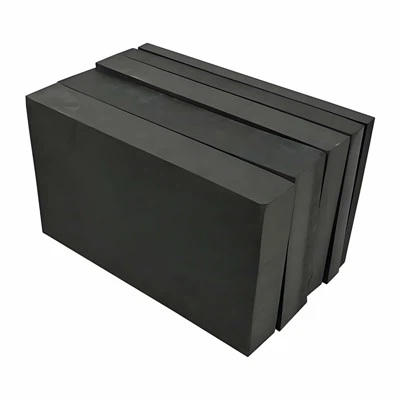
If you’re in R&D—whether you’re at a university lab, a biotech startup, or an engineering firm—and you’re tired of overpaying for specialized materials or waiting weeks for supplies, we can help. Industrial sponges are adaptable, cost-effective, and consistent, no matter what your project is. We work with small-scale one-off experiments and large batch testing alike, so just reach out to us to talk through your needs. No long forms, no corporate hoops—just straight talk about what you need to get your research done.
Foam Sponge References
- Standards for Industrial Sponge Materials in Biomedical Applications, ASTM International, 2021
- Open-Cell Polymer Sponges as Scaffolds for 3D Cell Culture, Journal of Tissue Engineering and Regenerative Medicine, 2020
- Microplastic Extraction from Water Samples Using Porous Sponge Media, Environmental Science & Technology, 2019
- Industrial Sponges for Microfluidic Device Components, Lab on a Chip, 2022
Jiangsu Palatus Latex Products Co., Ltd.
As one of the leading industrial sponge manufacturers and suppliers in China, we warmly welcome you to buy discount industrial sponge from our factory. All customized products are with high quality and low price. For quotation, contact us now.
Address: No.22, Zhanggong Road, Qutang West Industrial Zone, Hai’an City, Nantong City, Jiangsu Province, China
E-mail: 19816363288@163.com
WebSite: https://www.jsplts.com/
