If you’ve ever worked with ZNC die sinker EDM machines—whether you’re a toolroom manager, mold maker, or someone who just knows enough to avoid messing with expensive precision gear—you’ve probably heard someone mention “servo control” as make-or-break for getting good cuts. But let’s be real: most of us don’t deep-dive into why that tiny (but critical) system matters. As a supplier of these machines, I get so many calls from folks asking, “Why can’t I just lower the electrode manually and call it a day?” Today, I’m breaking down exactly what the servo control does for ZNC die sinker EDM, no stuffy engineering jargon (promise). ZNC Die Sinker EDM

First, let’s ground this in what ZNC die sinker EDM is, quick. ZNC stands for “Zero Numerical Control” (wait, no, actually it’s Z-axis Numerical Control—we abbreviate it because no one wants to say that every time). It’s the kind of EDM that uses a single-axis (usually vertical Z-axis) to move a copper or graphite electrode toward a work piece, eroding tiny bits of material using controlled electrical sparks. No cutting tools, no contact between electrode and work piece—super important, because that means you can make shapes that’d snap a end mill or a mill would never reach, like deep mold cavities with super fine details.
Now, here’s the problem with manual movement: if you push the electrode too fast, it touches the work piece. EDM sparks need a gap—usually a fraction of a millimeter, like 0.01mm to 0.05mm, depending on the material. If they touch, you get a “short circuit” instead of a spark. That’s bad: it could damage the electrode, mess up the work piece, or even make the machine shut down mid-job. If you move too slow, the gap gets too big, the sparks are weak, and you waste time—slow cuts, low productivity, maybe inconsistent finish.
That’s where the servo control steps in. Think of it as the machine’s “brains” for keeping that gap perfect. Let’s put it in relatable terms: if you’ve ever held a power sander and adjusted how hard you press against wood so it doesn’t bog down the motor, that’s basically what the servo does, but 100x more precise, 100x faster, and no human can match it.
Wait, let’s get specific about what the servo actually monitors to do that. The servo doesn’t just move the Z-axis randomly—it’s reading two real-time signals every split second:
- The gap voltage between the electrode and work piece. When there’s a proper spark, that voltage hovers around a set point (usually 20-50 volts, depending on the process). If it drops way down, that’s a short circuit (too close). If it spikes, that’s a gap too big (no spark).
- The gap current from the spark. If the current gets too high, that means the electrode’s digging in too hard, which will cause short circuits or uneven erosion.
The servo’s job is to adjust the Z-axis speed constantly based on those two signals. No human can react fast enough—when you’re making a mold for a plastic part that goes into a car dashboard, a 0.001mm gap change can ruin the entire part. The servo adjusts that in milliseconds.
Let’s talk about a concrete example. Last month, a customer of ours— a small mold shop making caps for baby bottles—was having issues with their old ZNC machine. They’d manually lowered the electrode, kept getting short circuits, so they’d move it up a little, wait, lower it again… and their cycle time was 3x what it should be, and the cavities had uneven walls. We swapped out their old, outdated servo unit (it was like a 1990s model) for a modern closed-loop servo, and suddenly their cycle time cut in half. Why? The servo was keeping that gap exactly where it needed to be—no guesswork, no waiting for short circuits to happen and then fix them, just steady, controlled movement.
Wait, not all servos are the same, right? That’s a big point for anyone buying a ZNC machine. Some entry-level machines use open-loop servos, which are cheaper but less precise. Open-loop means the servo sends a command to move, but doesn’t check if it actually moved—so if there’s a little friction in the Z-axis (common with dirty ways), it might move less than it should, messing up the gap. Closed-loop servos (which we use on all our ZNC models) have a feedback sensor—like a linear encoder—that tells the servo exactly where the Z-axis is, so it adjusts immediately if something’s off. That’s why our machines give consistent cuts even when you’re running a 8-hour job with no operator babysitting it.
Another thing most folks don’t realize: the servo also handles stop positions—not just moving during cutting. When the EDM job finishes, the servo slowly retracts the electrode, so you don’t yank it away and drag it through the just-cut cavity, which would leave burrs or scratch the surface. That’s a tiny detail, but it’s why our customers get a “finish right out of the machine” instead of having to hand-polish every cavity.
Let’s address a common misconception: some people think “ZNC is basic, so servo control doesn’t matter” compared to full CNC EDM machines. But here’s the thing: ZNC is for shops that don’t need 3D contouring, just precise vertical movement for simple cavities, blind holes, or small mold inserts. But even for ZNC, bad servo control turns a $10,000 machine into a $5,000 paperweight. We’ve seen it: a shop bought a cheap ZNC machine from a overseas vendor, saved $3,000, but had to hire a part-time operator just to babysit it, and ended up scrapping 20% of their work pieces because of short circuits. That’s a cost way bigger than the extra $3,000 for a good servo.
Why does this matter for your shop? Let’s break down the real-world impact:
- Less scrap: No short circuits mean no ruined work pieces. For a mold that costs $2,000 to make, scrapping it because of a bad servo is a huge loss.
- Faster cycle times: Steady gap = steady sparks = material eroding at the maximum safe rate. We’ve had customers go from 8-hour jobs to 4.5-hour jobs just with a better servo.
- Consistency: Same gap every time, same movement every time. That means your parts are uniform, no rework, no complaints from your customers.
- Less wear on the machine/electrode: If the electrode isn’t touching the work piece, it doesn’t wear unevenly, so you save on electrode costs (graphite and copper electrodes aren’t cheap—$50-$200 each, depending on size).
Now, as a supplier, I don’t want to bore you with specs, but if you’re shopping for a ZNC die sinker EDM, here’s what to look for in a servo: closed-loop control, real-time gap monitoring (not just periodic checks), and a servo that can adjust speed both ways (fast retraction when there’s no spark, slow feeding when you need precision). Our models use a high-resolution linear encoder for feedback, which means the Z-axis moves with 0.001mm accuracy—way more than you need for most ZNC jobs, but it’s that accuracy that makes the difference.
Wait, let’s make sure we’re not skipping the basics of how the servo connects to the rest of the machine. The servo is linked to the EDM’s power supply unit (PSU). The PSU sends the voltage/capacity readings to the servo controller, which processes that data and sends signals to the servo motor. The motor moves the Z-axis, and the encoder sends position data back to the controller to close the loop. It’s a feedback loop, basically—think of it like a thermostat: it reads the temperature (gap voltage), adjusts the heat (Z-axis movement), and checks again. No thermostat, you’d have a heater running full blast when it’s already warm, or cold when you need it. Same with the servo.
I’ve had so many customers tell me they think “servo control is just a fancy add-on,” but it’s the core of what makes EDM work. Without it, ZNC die sinker EDM is just a metal tool with a power supply and a big guess. With a good servo, it’s a precision machine that can hold tolerances you can’t get with milling or turning.
Let’s wrap this up for anyone who’s still on the fence: if you’re running a shop that uses ZNC die sinker EDM, the servo control isn’t a “nice to have”—it’s the reason your cuts are good, your jobs finish on time, and you don’t lose money to scrap. If you’re in the market for a new ZNC machine, don’t cut corners on the servo. If your current machine is giving you issues with short circuits, slow cycles, or inconsistent finishes, a servo upgrade might be all you need to get your productivity back up.
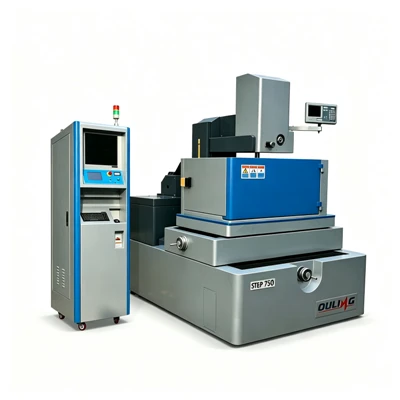
If you’re ready to talk through your specific needs—whether you’re a small shop needing a reliable entry-level ZNC machine, or a medium shop looking to upgrade your current setup—reach out to discuss your requirements. We can walk you through what our machines’ servos do, how they’ll fit your jobs, and answer any questions you have about getting the most out of your EDM.
Drill EDM References
- Digital Engineering Library. (2022). Fundamentals of Electrical Discharge Machining. McGraw-Hill Education.
- Society of Manufacturing Engineers (SME). (2021). Precision Control Systems for Modern Machine Tools. SME Press.
- EDM Network. (2023). Servo Control Applications in Z-Axis EDM Processes. Industrial Manufacturing Journal.
Taizhou Ouling CNC Equipment Co., Ltd.
As one of the most professional znc die sinker EDM manufacturers and suppliers in China, we’re featured by quality products and good price. Please rest assured to buy advanced znc die sinker EDM made in China here from our factory. Welcome to contact us for quotation.
Address: No. 9 jingang Road, Yangzhou City Jiangsu Province, China
E-mail: 574751243@qq.com
WebSite: https://www.oulingedm.com/
