Hey everyone, and welcome back to the blog! If you’ve ever spent time around remote sites—think construction zones, wildlife reserves, or even those long, tricky stretches of highway—you’ve probably seen a monitoring tower. Those tall, sturdy structures with cameras, lights, and all sorts of tech gear that just feel like they’ve got your back, right? As someone who’s been in the monitoring tower game for years now, I get so many questions, and one that comes up all the time is: “Do these things actually have a remote control function?” Monitoring Tower
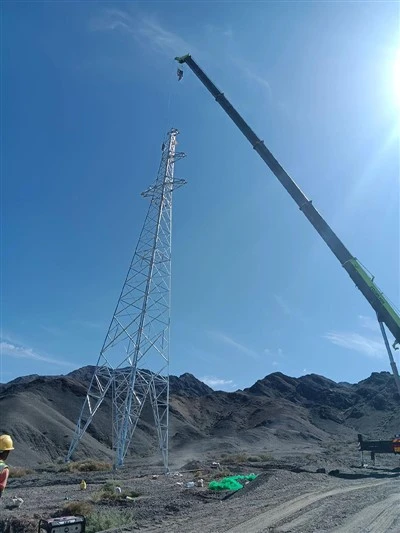
I get why it’s such a common question. When you see a tower standing alone in the middle of nowhere, you might assume it’s just a passive observer—like a really expensive security camera on a stick. But here’s the thing: that’s the old-school way of doing things. Modern monitoring towers? They’re way more like a high-tech command center on a pole, and yeah, remote control is a huge part of that. Let’s break this down like I’m chatting with you over coffee, no boring jargon.
First off, let’s start with what “remote control” even means here. We’re not talking about pointing a little clicker at a TV from across the room (though that’s the vibe we’re going for, honestly). We’re talking about being able to tweak every single part of the tower’s setup from anywhere—like your office, a truck parked 10 miles away, even a laptop on your couch. Back in the day, if you wanted to adjust a camera’s angle, you had to climb the tower (and trust me, that’s a nightmare when it’s raining, windy, or you’re wearing bulky gear). Now? You just tap a screen.
Let’s talk camera control first, because that’s the most obvious part. Our towers have high-res cameras—some with 4K, some with night vision, even thermal for low-light or no-light situations. Before remote control, you’d set the camera to a fixed angle, and that was it. If a bear wandered into a wildlife reserve and you wanted to get a closer look, or a construction crew was working in a spot that wasn’t covered by the original angle, you had to send someone up there. Now? Our remote system lets you pan, tilt, and zoom that camera with a few clicks. I’ve had customers track a stray vehicle on a remote job site at 2 a.m. just by twisting their mouse. No driving, no climbing, no wasting time. That’s a game-changer.
But it’s not just cameras. Let’s talk about lights. Some sites need deterrent lights—like highway construction zones where you need to slow down traffic after dark, or perimeter fences to scare off trespassers. Old towers had those lights on timers, which sucked because if a storm rolled in and made it way darker than the timer set for, the lights might not be bright enough. With remote control? You can turn the lights up or down instantly, or even flash them if you spot someone approaching. Last year, a customer of ours had a break-in at a remote storage yard, and the security team used the remote to trigger the flashing lights right when the trespassers were on site. They left so fast, the cops barely even had time to get there.
What about sensors? A lot of our towers come with motion sensors, vibration sensors, even weather sensors. If a sensor picks up something weird—like a branch falling on the perimeter fence, or unexpected movement in a restricted area—you don’t just get an alert. You can use the remote to check the camera feed right then, adjust the sensitivity of the sensor so you don’t get false alarms (hello, squirrel season!), or even shut down the whole system temporarily if you need to do maintenance. That’s not passive monitoring—that’s active control.
Wait, but let’s get real—there are limits, right? I don’t want to overhype this like it’s a magic wand. A few years back, a customer thought they could remote-control the tower from a cell phone signal that was barely there. Spoiler: that didn’t work. Remote control only works if the tower has a solid connection—cellular, satellite, or even a wired internet link. That’s why we always test the connectivity at a site first before we set up the remote system. If there’s no signal, we’ll add a satellite dish or a booster, because we don’t want our customers frustrated. Also, we build in security—this is a monitoring system, so we can’t have random people accessing it. All remote controls are password-protected, with different levels of access. The site manager can do everything, a security guard might only be able to check feeds, and no one else gets in. That’s non-negotiable for us.
Another thing: over time, the remote control function gets smarter. We roll out firmware updates all the time, and most of them are done remotely, too. Instead of sending a tech out to every tower to update the software (which is a huge hassle when you have 20 towers spread out across a state), we just push the update over the connection. Last month, we added a feature that lets customers set up “presets”—so if a construction zone’s entry point is a key spot, you can save that camera angle as a preset and just click it instead of adjusting every time. That’s the kind of stuff that makes remote control actually useful, not just a fancy add-on.
Let’s talk about a real example to make this concrete. We did a job for a mining company out in Wyoming—they had monitoring towers spread over 50 square miles, which is basically the middle of nowhere. Before our remote system, they had to send a truck driver out every morning to check each tower, adjust cameras, and make sure everything was working. That was costing them thousands in gas, labor, and downtime. Now? Their security team sits in an office in a nearby town, and uses the remote control to check all 12 towers in 10 minutes. Last winter, when a blizzard hit, they couldn’t send anyone out for days, but the remote system let them keep an eye on the mine’s perimeter, track equipment, and make sure no one wandered onto the site. That’s the kind of impact remote control has—it’s not just convenient, it saves money and keeps people safe.
I know some people still wonder if remote control is reliable. Maybe they’ve had issues with other tech that cuts out, so why trust a remote system for something as important as a monitoring tower? That’s why we build redundancy into every part of our system. The connectivity has a backup (like if cellular drops, it switches to satellite), the power has solar panels and batteries, and the remote control interface has a built-in fail-safe. We’ve been testing this stuff for years, and I haven’t had a customer call me at 3 a.m. panicking because the remote system died on them in a long time.
Here’s the thing I want you to take away: monitoring towers aren’t just big cameras standing alone. They’re intelligent systems, and remote control is one of the most powerful tools they have. It turns a tower from a passive observer into an active protector, a problem-solver, and a time-saver. Whether you’re managing a remote construction site, a wildlife reserve, a storage yard, or a highway, being able to control your tower from anywhere means you can respond faster, work smarter, and don’t have to waste time on tedious, dangerous trips to remote spots.
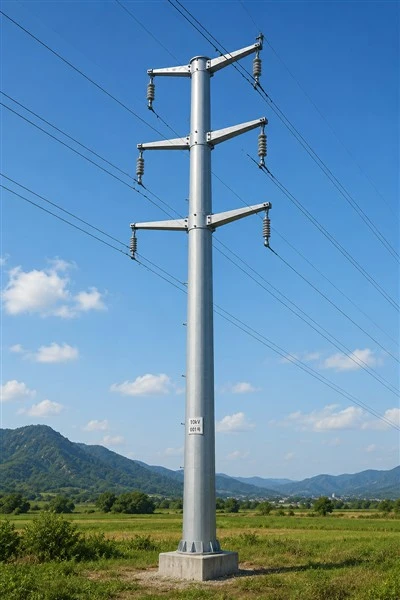
If you’re thinking about adding a monitoring tower to your site, or you want to upgrade an existing one with remote control, hit us up to chat about your specific needs. We don’t do one-size-fits-all—we’ll walk through your site, the challenges you’re facing, and build a system that fits exactly what you need, including the remote control features that’ll make your life way easier.
Power Transmission Tower References:
- National Fire Protection Association. (2021). NFPA 731: Standard for the Installation of Electronic Premises Security Systems.
- U.S. Department of the Interior. (2022). Remote Monitoring Technology for Federal Land Management: Best Practices and Case Studies.
- Security Industry Association. (2023). SIA Guide to Remote Management and Control for Physical Security Systems.
- Construction Industry Institute. (2022). Remote Site Monitoring: Reducing Operational Costs and Improving Safety.
- International Society of Automation. (2021). ISA-100: Wireless Systems for Industrial Automation.
Hunan Zhubang Hongsheng Construction Technology Co., Ltd.
As one of the most professional monitoring tower manufacturers and suppliers in China, we’re featured by quality products and good price. Welcome to buy high-grade monitoring tower made in China here and get quotation from our factory. Customized orders are welcome.
Address: Lutang Village, Yong’an Town, Liuyang City, Changsha City, Hunan Province, Hunan Zhubang Hongsheng Construction Technology Co., Ltd.
E-mail: 19898838989@163.com
WebSite: https://www.chinaenerto.com/
